Why Shimano Makes Both Bike Components and Fishing Reels
 By Kotaro·Updated Sep 13, 2026·7 min read
This guide contains affiliate links: if you buy through one, the shop may pay me a small commission at no extra cost to you. How I choose and how I earn
To most cyclists Shimano means gears; to most anglers it means reels. It's the same company. A short history from Shimano's own records: a one-lathe ironworks in 1921, bicycle freewheels, a fishing division in 1970, the first DUX reels, and the Stella — and what the bike side actually carried over. Plus two Shimano reels to give, chosen by how the person fishes.
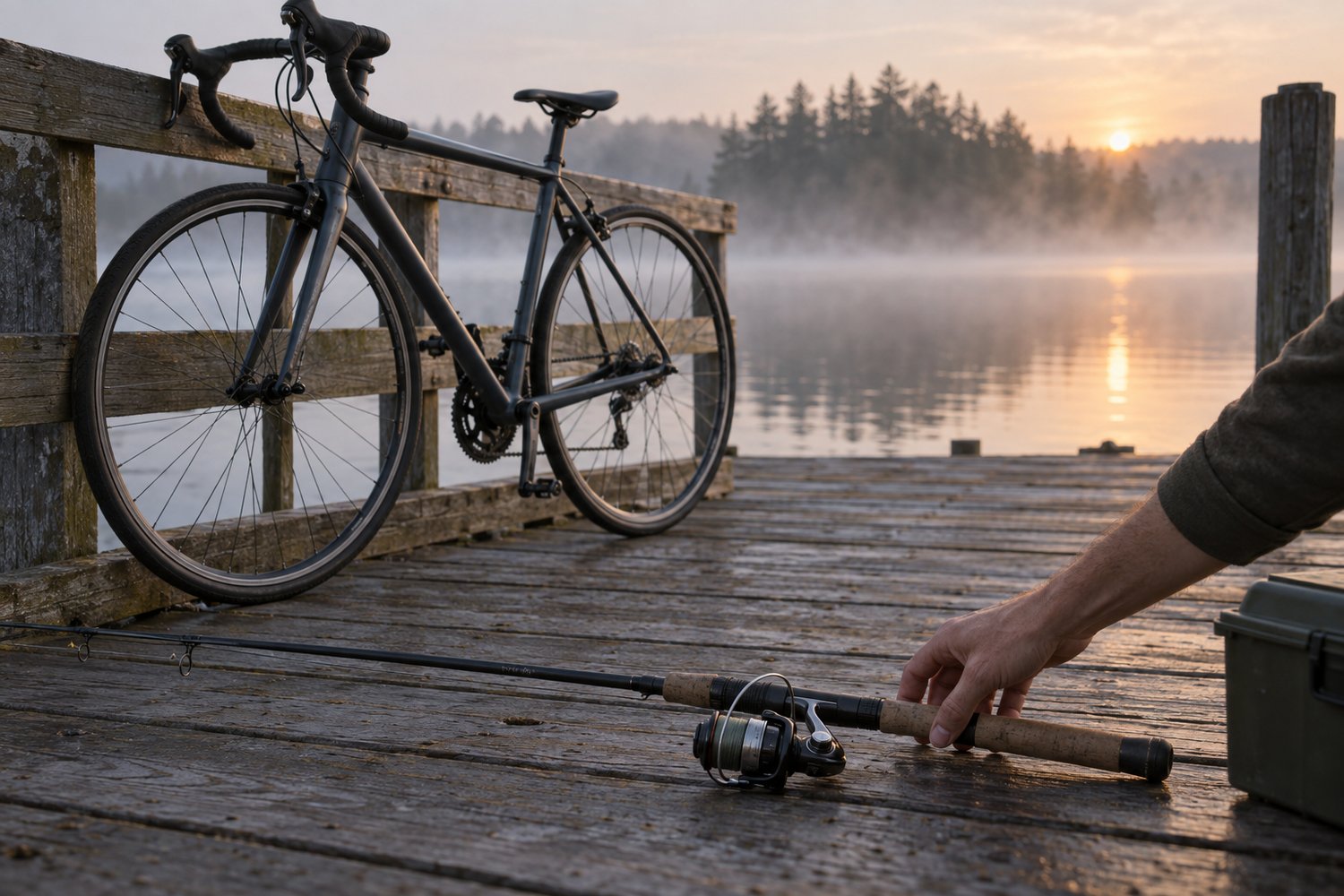
Say “Shimano” to a cyclist and they’ll think of derailleurs and gear shifters. Say it to an angler and they’ll think of reels. It’s the same company.
It isn’t a coincidence, and it isn’t simply a brand name stretched over two businesses. Shimano’s own history draws a line from the parts it made for bicycles to the reels it began making in the 1970s. This page follows that line, from Shimano’s own records, and is careful about what they do and don’t say. At the end are two Shimano reels to give, chosen by how the person fishes.
One lathe in Sakai, 1921
In February 1921, Shozaburo Shimano, aged 26, set up Shimano Iron Works in Sakai City with a single lathe. In 1922 it began making the bicycle freewheel, the part that lets the rear wheel spin while the pedals stay still. Shimano describes it as the bicycle component that needed the highest level of technology to make (Shimano, History).
That choice set the pattern: precise, small, rotating metal parts that have to work every time.
In 1957 Shimano began research into cold forging, shaping metal at room temperature under high pressure rather than cutting it. That technique would matter later, in reels.
1970: a second business
In 1970 Shimano launched a fishing tackle division. Its history describes it as a second pillar for the business, connected to promoting health through outdoor activities (Shimano, History).
The first product came in 1971: the DUX series of spinning reels. Shimano’s anniversary page for the DUX is headlined as Shimano’s first spinning reel “that harnesses the engineering capabilities derived from the manufacture of bicycle components”. It says the reel used technologies refined in making bicycle parts, such as gears and body structures. A 1972 DUX added an automatic shifting feature, in which the gear ratio changed with the load while winding (Shimano, DUX).
So the honest answer to “why does Shimano make reels?” has three parts in Shimano’s own telling: a business reason, a health-and-outdoors reason, and an engineering one.
What carried over from bicycles
Here Shimano’s sources are specific, and it’s worth being specific too.
- Gears and body structures. Named directly for the first DUX.
- Cold forging. Shimano’s first cold-forged reel gear came in 1980, according to its anniversary records. Its Stella heritage page credits cold-forging expertise “developed through decades of bicycle component manufacturing” for accurately forming the gear teeth of the 1995 Stella (Shimano, Stella heritage 02). Today Shimano’s HAGANE gear is cold-forged; Shimano describes it as compressed at around 200 tons without cutting the tooth surface, which is its own claim for why the metal is dense and smooth.
- Precision manufacturing. The Stella heritage page says fishing tackle was a field where precision skills “cultivated through bicycle components could be applied”.
- Quality control. The same page ties Shimano’s strict quality standards to bike-making, where a malfunction can directly affect someone’s life, and says that approach carried over to reels.
What Shimano doesn’t say, in any source this page found, is that bikes and reels share physical parts. The connection is know-how, methods and standards, not components.
The Stella: 1992
In 1992 Shimano launched the first Stella, its flagship spinning reel (Shimano, History). The Stella heritage page calls it the “92 Stella” and describes it being unveiled at that year’s fishing show (Shimano, Stella heritage 01). One of Shimano’s anniversary pages gives 1991 instead; this page follows the majority of Shimano’s sources, and the model’s own name.
The heritage page describes the ambition behind it. Having reached world-class status in bicycle components, management’s direction was to be the best in the world in fishing tackle too. The targets were smoothness, quietness, strength, beauty and pride of ownership. Among the changes Shimano lists: rotational balance aimed at “zero vibration”, a precision die-cast aluminium body instead of resin, a cold-forged drive gear, and a bearing in the line roller.
The name has a bicycle connection too. According to the heritage page, Shimano’s chairman first came across the name “STELLA” while researching the US mountain-bike market in the bicycle planning division.
The Stella has been updated many times since. Current models use technologies with names such as Infinity Xross (a gear design that spreads the load over more of each tooth) and Infinity Drive (a way of supporting the main shaft so the reel winds easily under heavy load), as Shimano describes them.
From history to the reel you give
Knowing all this is a nice thing to tell someone. It isn’t a reason on its own to give the most expensive reel. The right Shimano reel depends on how the person fishes: what size they use, what they fish for, and how light they like their tackle. And first, whether they fish Shimano at all; see Shimano or Daiwa?
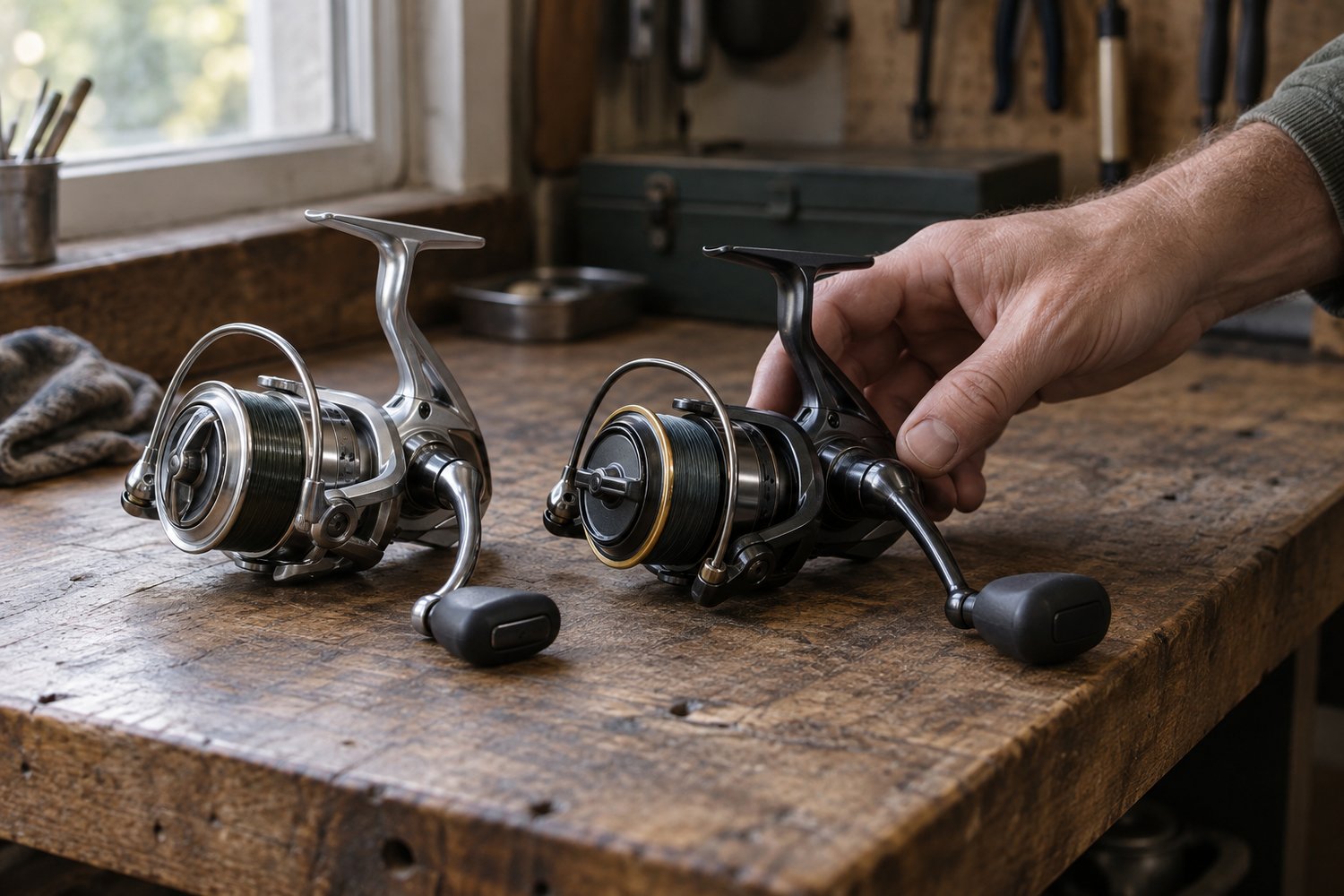
Two current reels show two sides of the company. Specifications are Shimano Japan’s; prices are Discovery Japan Mall’s in yen on 13 September 2026, before shipping, and both were listed as in stock.
| 22 Stella 4000M | 24 Vanford C3000XG | |
|---|---|---|
| Suits | A committed angler; general saltwater and larger fish | Light lure fishing where weight and feel matter |
| Weight | 260g (9.2 oz) | 180g (6.3 oz) |
| Gear ratio / per turn | 5.3 / 87cm | 6.4 / 94cm |
| Max drag | 11kg (practical 7kg) | 9kg (practical 3.5kg) |
| Shop price | ¥94,429 | ¥29,531 |
For the angler who’s been fishing Shimano for years: 22 Stella 4000M
Who it suits. A husband or father who already fishes Shimano, uses a 4000-size reel, and has never bought himself the top model. Retirement, a big birthday, a milestone.
Why this one. It’s the current generation of the reel whose history is above. Shimano describes it as reaching new heights with three “Infinity” technologies, plus an anti-twist fin to reduce line trouble and a Duracross drag for durability (Shimano, Stella, in Japanese).
Shimano’s specifications. Gear ratio 5.3; practical drag 7kg, max drag 11kg; 260g; spool 52mm diameter, 19mm stroke; PE line capacity 1.2-250m / 1.5-200m / 2-150m; 87cm per handle turn; 55mm handle; 12 ball bearings plus 1 roller.
Know before you buy. It’s a 4000 size, suited to general saltwater and bigger fish; for light freshwater lure fishing, it’s more reel than he needs. Match the size to the reel he uses most.
For the angler who likes light, responsive tackle: 24 Vanford C3000XG
Who it suits. Someone who fishes lures on light line — bass, trout, sea bass from the shore — and cares about how light the reel feels in the hand.
Why this one. Shimano describes the Vanford as the core model of its Magnumlite series, built for a light feel and reeling response, and says the 2024 model adds Infinity Xross and Infinity Drive for more winding power and gear durability, with a Duracross drag that it rates at about ten times the durability of the previous design by its own standard (Shimano, Vanford, in Japanese).
Shimano’s specifications. Gear ratio 6.4; practical drag 3.5kg, max drag 9kg; 180g; spool 47mm diameter, 17mm stroke; PE line capacity 1-400m / 1.5-270m / 2-200m; 94cm per handle turn; 55mm handle; 7 ball bearings plus 1 roller.
Know before you buy. The XG is a high-speed retrieve; if he prefers a slower, steadier retrieve, check Shimano’s lineup for other gear ratios before ordering. It’s a light reel for lighter fishing, not a heavy saltwater reel.
For more reels chosen as gifts, see the reels guide.
How to buy from Japan
Okurimono Japan doesn’t sell anything. “Check Price” takes you to the product page on Discovery Japan Mall, an independent Japanese retailer (not Shimano’s own shop). You buy and pay there, and the shop handles shipping, returns and support.
- Price. Prices above are the shop’s in yen on 13 September 2026, before shipping and any duties. Shipping is added at checkout.
- Duties and taxes. The shop’s Customs Duties page says they aren’t included and are collected on delivery.
- Returns. The shop’s Returns & Exchanges page accepts returns only for damaged, defective or incorrect items reported within 7 days of delivery, with photos.
- Warranty. The same page says Japanese-market products carry the domestic warranty only in Japan unless a worldwide warranty card is included; warranty repairs mean shipping to Japan at the buyer’s cost.
- Box and wrapping. Reels ship in Shimano’s retail box; the shop’s listings don’t itemize contents, and gift wrapping isn’t listed as a service.
More on ordering from Japan is on How to Buy; more in the Fishing Tackle category.
Sources
Checked 13 September 2026. All are Shimano’s own accounts.
- Shimano, Company history: 1921 founding, 1922 freewheel, 1957 cold forging, 1970 fishing division, 1971 DUX, 1992 Stella, HAGANE.
- Shimano 100th anniversary, DUX: bicycle engineering in the first spinning reel.
- Shimano, Stella heritage 01 and 02: development goals, quality control, cold-forged gears, the name.
- Shimano Japan, Stella and Vanford product pages (Japanese): current specifications.
Frequently asked questions
- Is the Shimano that makes bike parts the same company that makes fishing reels?
- Yes. Shimano was founded in Sakai, Japan, in 1921 and began making bicycle freewheels in 1922. It launched a fishing tackle division in 1970 and its first DUX spinning reels in 1971.
- Do Shimano bikes and reels share parts?
- No Shimano source this guide found says they share physical parts. Shimano does say that engineering from bicycle components carried over — gears and body structures in the first DUX reels, cold forging in later reel gears, and a strict approach to quality control.
- Why did Shimano start making fishing reels?
- Shimano's history describes the fishing division as a second business pillar, linked to promoting health through outdoor activity, and a field where its existing technology could be used.
- When was the first Stella released?
- Most Shimano sources, including its company history and the Stella heritage page, give 1992, and call the first model the '92 Stella'. One Shimano anniversary page gives 1991. This guide uses 1992 and notes the difference.
- Should I give a Stella or a Vanford?
- Depends on how they fish, not on which is more expensive. The Stella is Shimano's flagship spinning reel; the Vanford is the core model of Shimano's lightweight Magnumlite series. Match the size and weight to their fishing, and check they fish Shimano rather than Daiwa.