Edo Kiriko · Buying Guide
The Most Beautiful Edo Kiriko Glasses You Can Buy from Japan (2026)
By Yuki Watanabe · Updated August 22, 2026
The best Edo Kiriko glass for most people is a Kagami Crystal rock glass in the ¥20,000–27,000 range (about $140–185). It is the size the craft was built around, it holds a whisky or a generous pour of sake, and the cut pattern does its work every time light hits it. Below that, around ¥11,000, you can get a genuine hand-cut tumbler; above ¥40,000 you move into vases, carafes and display pieces that are more about presence than daily use.
I’m a designer based in Japan, and I chose everything here from Kagami Crystal — the Tokyo house founded in 1934 as Japan’s first crystal glass factory, and the maker whose pieces are used by the Japanese Imperial Household. If you are new to the craft, start with what Edo Kiriko actually is; if you already know, here are the pieces worth your money right now.
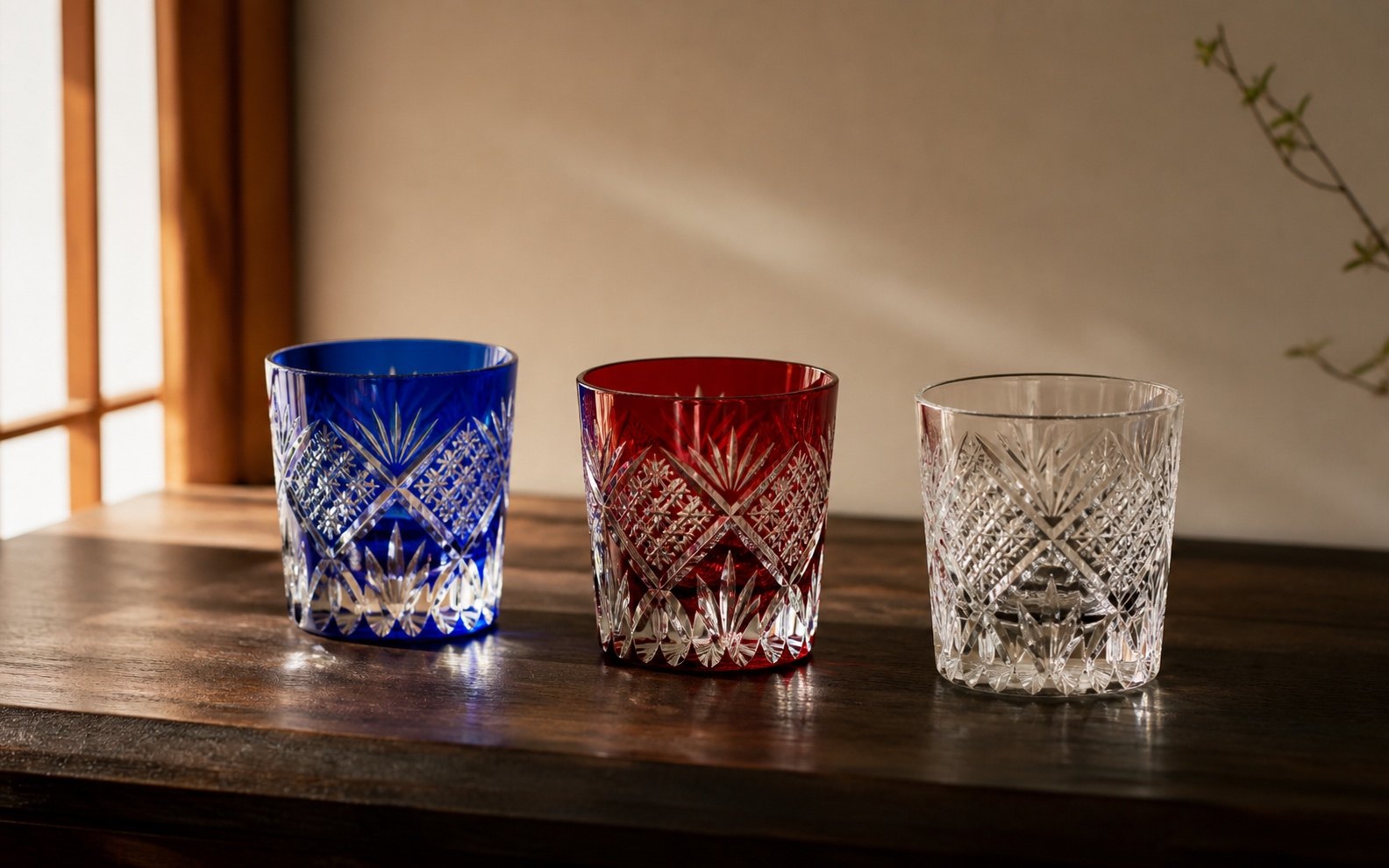
Note: photographs on this page are illustrative images of the craft. Product photos in each card come from the shop’s own listing.
The three picks, if you want the short answer
| Piece | Price | Why | |
|---|---|---|---|
| Top Pick | Rock Glass, Octagonal Basketweave (T444-1) | ¥20,460 | The everyday classic — right size, right price, wooden box |
| Designer’s Choice | Sake Cup in Black (T535-2641-BLK) | ¥30,008 | The rarest overlay; reads modern without leaving tradition |
| Budget Pick | Tumbler / Sake Glass (T483-1) | ¥10,912 | Genuine hand-cut Kagami at the lowest entry point |
Best for most people: the rock glass
A rock glass is where Edo Kiriko makes the most sense. It is heavy enough to feel like an object, the cuts sit exactly where your fingers land, and it works for whisky, shochu, sparkling water or cold sake. This one is cut in yatsude-kagome — an eight-way basketweave that keeps catching light as you turn it.
If you want color rather than clear crystal, the violet kikuhana (chrysanthemum) cut is Kagami’s signature piece and the one I photograph most often. Chrysanthemum means longevity — which makes it a quietly perfect gift for a parent or a milestone birthday.
Designer’s Choice: the black sake cup
Most Edo Kiriko is blue or red because those are the traditional overlays. Black is unusual, and it changes the whole character of the craft: instead of light passing through color, you get cut lines glowing against something almost opaque. It is the piece I would put on my own shelf, and the one that will look least like “a souvenir” in a Western interior.
Pair it with the matching carafe and you have a set that will stop conversation at a table.
Best sake cups (guinomi)
Sake cups are the most giftable format in the craft: small enough to be affordable, personal enough to feel chosen. The yaraiju lattice below is as traditional as Edo Kiriko gets — and it comes in clear or in cobalt blue, which is the color most people picture when they think of this craft.
For chilled sake in summer, the Japanese preference is a wide, shallow glass — the surface area is part of the drink. This one is cut in nanako, the “fish roe” pattern, which means prosperity.
Best budget entry: under $80
If you want to own real Edo Kiriko without spending $150+, this is the honest entry point. It is the same house, the same hand-cutting, in a simpler form and clear crystal. I would take this over any $40 “Edo Kiriko style” glass on a marketplace listing.
Beyond glasses: bowls, vases and one serious plate
Edo Kiriko is not only drinkware, and the non-glass pieces are where the craft gets its most sculptural. A small bowl is the sleeper pick of this whole list — it holds sweets, snacks, rings, or nothing at all, and it earns its place on a table every day.
A cut-crystal vase is a different proposition: it makes even a single stem look considered.
The gift-scale pieces
In Japan, a set of five is the traditional celebration gift — five because it cannot be split evenly in two, a quiet wish that a couple or a family stays together. This five-color wine glass set is the piece I would send for a wedding.
And at the top of the range, a decorative plate is not tableware at all — it is a display object, cut across a much larger surface, where you can actually read a master’s hand.
How to choose: a designer’s shortcut
Four questions, in order:
- Will it be used or displayed? Used → rock glass, sake cup, small bowl. Displayed → vase, lidded container, plate.
- Clear or colored? Clear shows the cutting most precisely and suits any interior. Colored (blue, red, green, violet, black) is what makes a photograph — and what people remember.
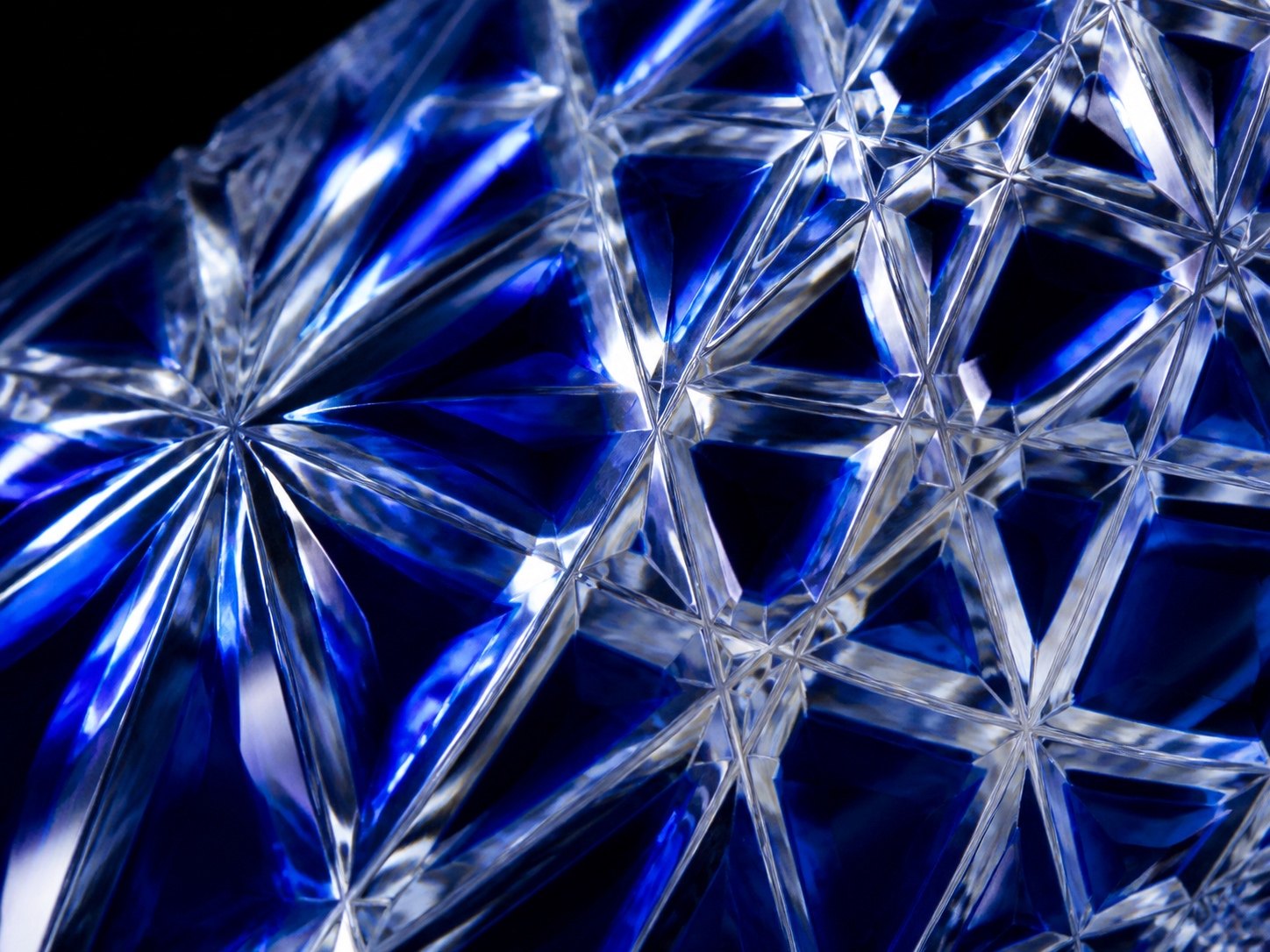
- Which pattern? If it is a gift, let the meaning choose: chrysanthemum for longevity, hemp leaf for growth, fish roe for prosperity, bamboo fence for protection.
- Solo or pair? Pairs read as a couple’s gift in Japan; sets of five as a family or wedding gift; a single piece is for someone specific — which is the most personal message of the three.
Buying from Japan
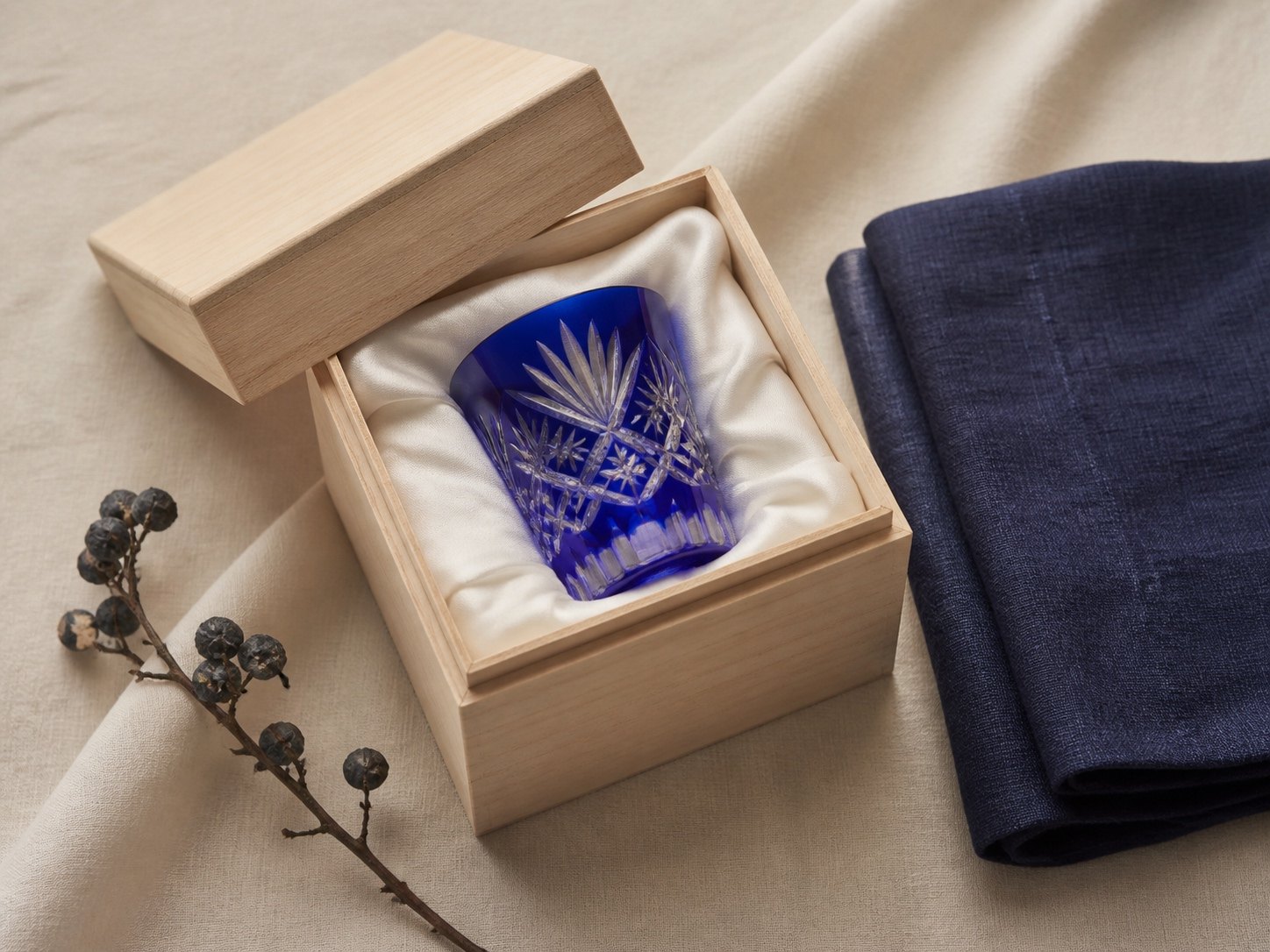
Every piece here ships from Japan through Discovery Japan Mall, with tracking and insurance, and arrives in its paulownia wooden box — in Japanese gift culture, the box is part of the object, so keep it. Prices above are the yen prices at the time of writing; the dollar figures are rough conversions, and the live price is always on the shop’s page.
If you want the background before you buy — the 1834 origin, what each pattern means, and how to tell hand-cut from machine-pressed — read What Is Edo Kiriko? first. It is the piece I wrote to explain why any of this is worth $150.
Frequently Asked Questions
How much does real Edo Kiriko cost?
Genuine Edo Kiriko from an established maker such as Kagami Crystal starts around ¥11,000 (about $75) for a simple tumbler, sits between ¥20,000 and ¥35,000 (about $140–240) for most rock glasses and sake cups, and rises past ¥200,000 for large display pieces and full sets. Anything advertised as Edo Kiriko under about $40 is almost certainly machine-pressed glass, not hand-cut.
Which Edo Kiriko glass should I buy first?
A rock glass or a sake cup. Both are the sizes the craft was designed around, both feel substantial in the hand, and both are used daily rather than kept in a cabinet. If you want the best balance of price and presence, a Kagami rock glass around ¥20,000–27,000 is the classic first piece.
What colors does Edo Kiriko come in?
Traditional overlays are cobalt blue (ruri) and copper red (aka). Kagami also produces green, amber, violet, black and clear pieces. Blue is the most classic and photographs best; black is the rarest and reads as the most modern.
Is Edo Kiriko a good wedding gift?
It is one of the standard Japanese wedding gifts, especially as a pair or a set of five. Sets of five are traditional in Japan because five cannot be divided evenly in two — a quiet wish that the couple will not be separated. Pieces arrive in a paulownia wooden box, which is part of the gift.
How do I care for Edo Kiriko?
Wash by hand in lukewarm water with a soft sponge and mild detergent, then dry with a soft cloth. Avoid dishwashers, boiling water and sudden temperature changes. Never soak in bleach. Cared for this way, a piece easily lasts generations.
Will it arrive safely from Japan?
Kagami pieces ship in their paulownia box inside protective packaging, and every Discovery Japan Mall order includes tracking and shipping insurance. Delivery to the US or Europe typically takes about one to two weeks depending on the carrier you choose at checkout.