The Best Japanese Fountain Pen to Give as a First Pen (2026): Pilot, Platinum or Sailor?
 By Kotaro·Updated Sep 13, 2026·6 min read
This guide contains affiliate links: if you buy through one, the shop may pay me a small commission at no extra cost to you. How I choose and how I earn
A designer in Japan picks five fountain pens — Pilot Capless, Custom 74, Platinum #3776 and Sailor Profit — that make a safe, generous first fountain pen gift, and explains nib sizes, ink and why Japanese pens suit beginners.
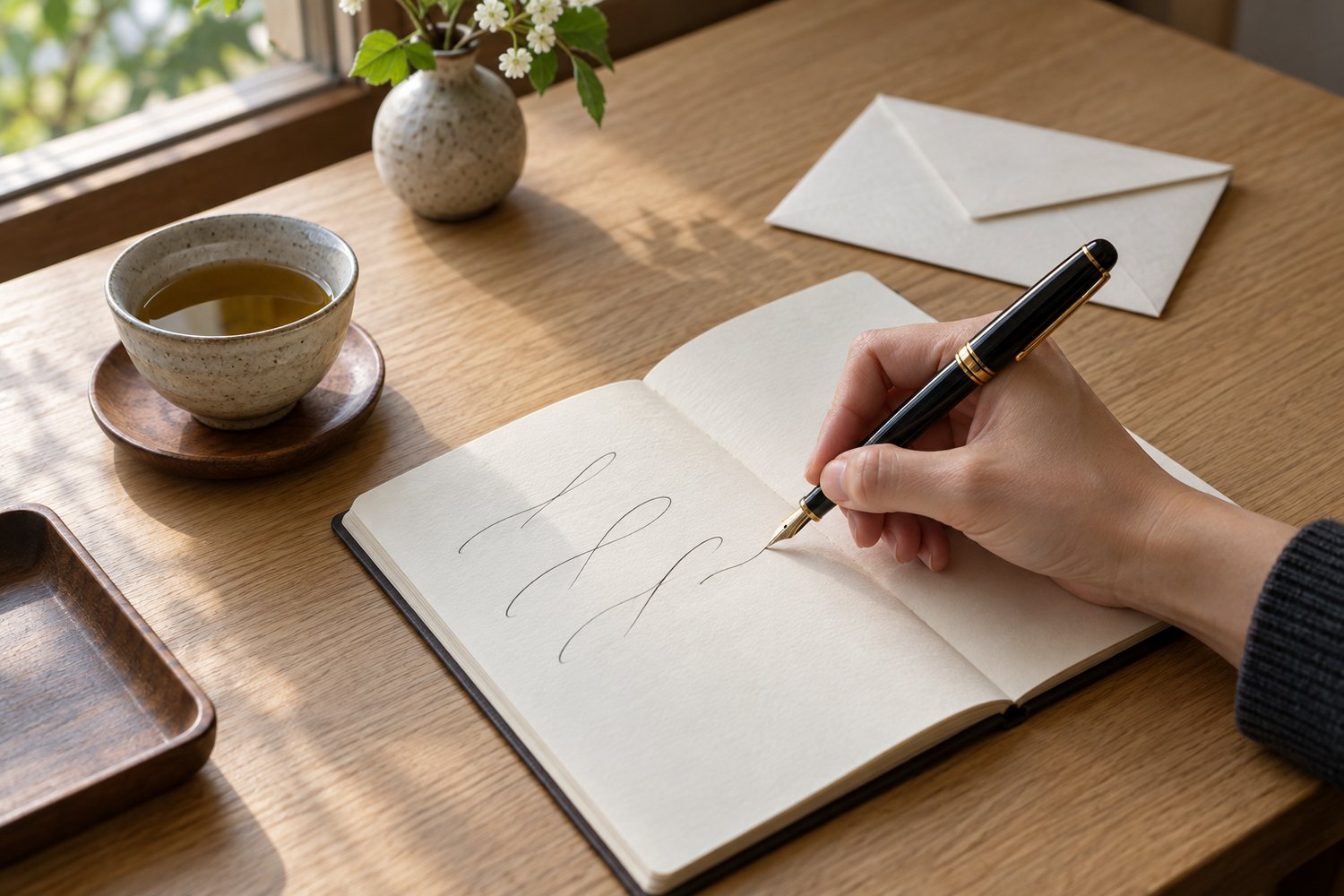
If you want to give someone their first fountain pen, give a Japanese one with a gold nib, in a nib size chosen for their handwriting — the Pilot Custom 74 if they’ll write every day, the Platinum #3776 Century if they won’t, and the Pilot Capless if they take notes on the move. Japanese pens write well straight out of the box, cost less than European pens of the same quality, and arrive in a proper presentation case. Below are five pens I would give, and the two decisions (nib size and ink) that make the gift work.
I’m a designer in Japan, and I write more by hand than most people my age — layouts, notes, letters to clients. The pen I reach for is a Japanese one, not because of nationalism but because Pilot, Platinum and Sailor have spent a century making pens for people who write a great deal of small text. That makes their pens forgiving: they start when you uncap them, they don’t skip, and the nib doesn’t need “breaking in”. For a first pen, that is everything.
Who this is for
- The person who keeps a journal. Paper notebooks, morning pages, a diary. They’ve thought about a fountain pen and never bought one because they didn’t know where to start.
- The new graduate or the new job. A pen is the traditional gift for someone starting out — it says “you’ll sign things now” without saying it.
- The letter writer. The friend who still sends cards. A fountain pen turns that habit into a pleasure.
- The person who takes notes in meetings. For them the Capless: it clicks like a ballpoint, so it actually gets used.
- Occasions: graduation, a new job or promotion, a 30th or 40th birthday, a retirement (the Custom 74 or Sailor Profit), Father’s Day, or a thank-you to a mentor or teacher.
Why a Japanese pen for a first pen
Three practical reasons. First, the nib: Japanese nibs are ground finer and more precisely than most Western ones, and the gold nibs on pens around $200 are smooth in a way that European pens at that price rarely are. Second, reliability: these pens are designed for daily writing, not display, so they start on the first stroke. Third, price: a Japanese gold-nib pen bought from Japan costs about what a steel-nib pen costs in Europe or the US. The gift is one tier better than it looks.
There is one thing to know: Japanese fine nibs tend to run finer than Western ones marked with the same letter, though there’s no fixed conversion between brands. Choose the nib by their handwriting rather than by a rule; the questions to ask are in how to choose between Fine and Medium.
The picks
The one to give: Pilot Custom 74
The Custom 74 is the pen Japanese stationery shops recommend to someone buying their first “real” fountain pen, and they have been recommending it since 1992. A 14k gold nib, a classic black resin body with gold trim, and a price that is roughly half of what a comparable European pen costs. This version has Pilot’s soft Fine-Medium nib — a little springier than the standard nib, which makes handwriting look slightly more expressive without needing any technique.
For someone who won’t write every day: Platinum #3776 Century
Most fountain pens dry out if left uncapped in a drawer for a few weeks, and the beginner blames themselves. The Platinum #3776 (named for the height of Mt. Fuji in meters) has a cap with an inner seal that keeps the nib wet for up to two years. It is the pen for the person who will write beautifully once a month and expects it to work. 14k nib, and the burgundy resin is more distinctive than black without being loud.
For the note-taker: Pilot Capless
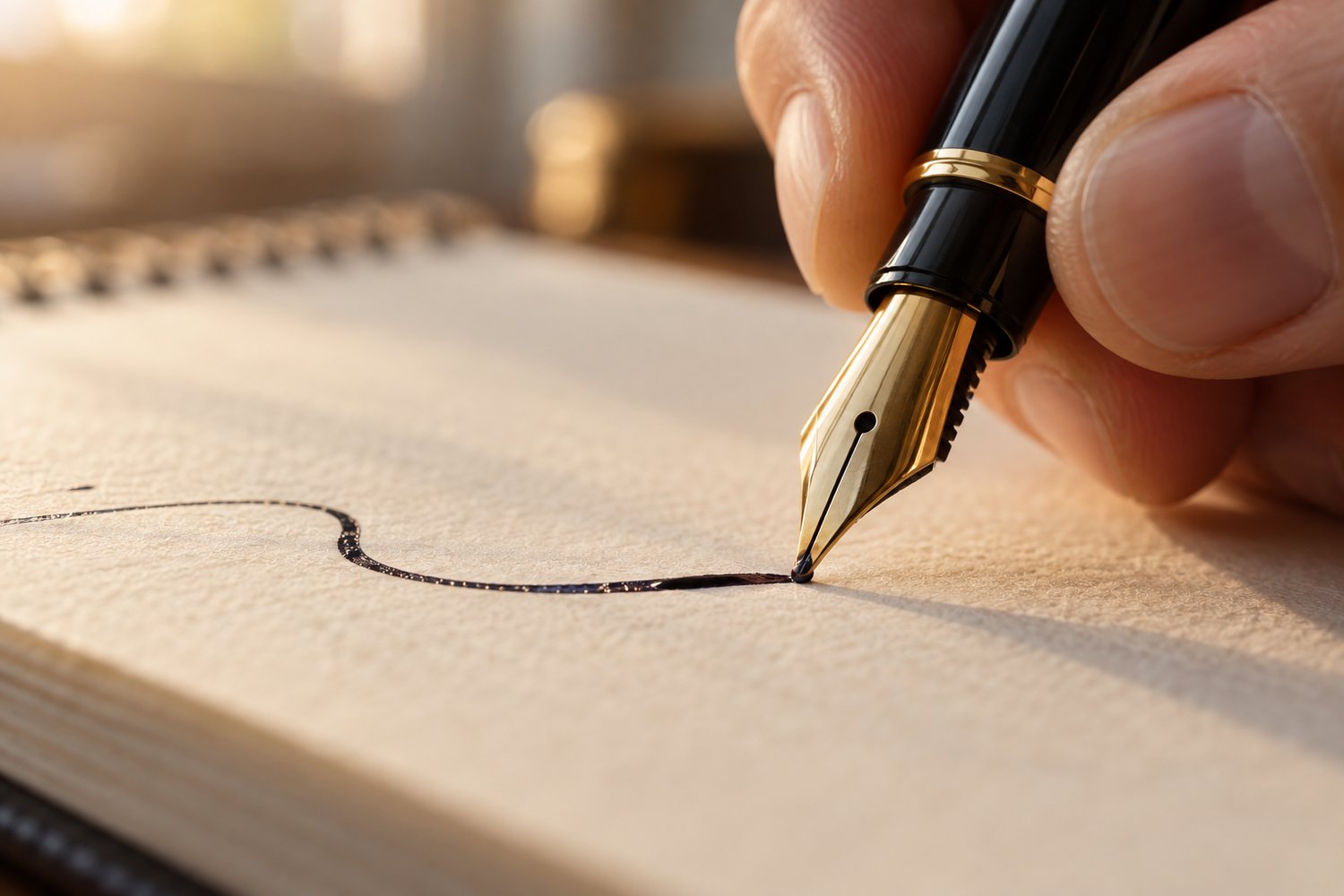
A fountain pen with no cap: you click it, the nib comes out; click again, a shutter seals it. Pilot has made the Capless since 1963, and it has a cult following abroad under the name Vanishing Point. It is the pen for someone who takes notes in meetings, on trains, in the kitchen — anywhere uncapping a pen is a nuisance. 18k gold nib, and a body that looks like an expensive ballpoint until it isn’t. The one linked here is Pilot’s current matte-black Capless (FC-18SR) with a Fine nib.
The slimmer Capless: Decimo, Pearl White
Same mechanism as the Capless, but the Decimo is slimmer and about 20% lighter — better for smaller hands and long sessions. The Pearl White is one of the Japan-market colors that rarely appears abroad, so it is a Capless that nobody in their office will have. Fine nib, which suits the way this pen gets used: quick notes, small writing.
For the traditionalist: Sailor Profit Standard
Sailor is the oldest of the three makers, and the Profit (sold as the “1911” abroad) is its cigar-shaped classic. Sailor nibs are known for a faint feedback on the page — you feel the paper slightly — which many writers find more satisfying than a glassy-smooth nib. This is the pen for the letter writer, the person who cares about how the pen feels rather than how fast it is. Maroon with gold trim, 14k Medium-Fine nib.
Before you buy
- Nib size. Japanese fine nibs tend to run finer than Western ones. Pilot recommends Fine for first-time users and describes Medium as for letters and slightly larger writing. Broad and extra-broad nibs suit signatures and addressing more than everyday notes.
- Cartridge vs bottled ink. Every pen here takes its maker’s cartridges, which are easy to buy abroad. Bottled ink needs a converter — check the product page for “with converter” if you want to include one.
- Left-handed writers. Fountain pens can smear for left-handers, because the hand moves over fresh ink. A finer nib puts down less ink, which can help.
- Box. Each pen arrives in the maker’s presentation box. The shop doesn’t list gift wrapping as a service. Include a card — a first fountain pen deserves a note.
- Ink to add. If you want to make it a set, Pilot’s Iroshizuku inks are the classic pairing and are sold in most countries; it isn’t stocked at this shop, so buy it locally.
- Not for: someone who writes only on a laptop, or a child under twelve. In those cases the Holbein pencils are the kinder gift.
How to buy from Japan
Okurimono Japan doesn’t sell anything. “Check Price” takes you to the product page on Discovery Japan Mall, a Japanese shop that ships to 120+ countries and shows prices in your currency. You pay them directly by card or PayPal; the pen ships from Japan with tracking. The shop says orders usually ship within 5 business days; delivery time after that depends on your address, the carrier and customs.
Prices on this page are approximate conversions from yen at the time of writing; the live price is on the shop. Customs duty, where charged, is collected on delivery. Returns follow the shop’s policy. Full details on How to Buy.
Frequently asked questions
- Which fountain pen is best for a beginner?
- One with a gold nib that writes reliably out of the box and doesn't dry out — which describes most Japanese pens around $200. The Pilot Custom 74 is the classic first pen; the Platinum #3776 Century is the best choice for someone who won't write every day, because its sealed cap keeps ink wet for months.
- Why are Japanese nibs finer than Western ones?
- Japanese writing needs fine lines, and Goulet Pens, a US pen retailer, notes that Japanese Extra Fine and Fine nibs tend to run about a size finer than Western ones. It's a tendency, not a fixed conversion. Choose by the person's handwriting: Pilot recommends Fine for first-time users and describes its Medium as for letters and slightly larger writing.
- What is the difference between Pilot, Platinum and Sailor?
- Japan's three big pen makers. Pilot is the most reliable all-rounder and makes the Capless, the retractable pen. Platinum's #3776 has a cap that seals so the pen never dries out. Sailor nibs give a little feedback on the page that many writers love. Any of the three is a safe gift; the differences are taste.
- Does a fountain pen come with ink?
- Usually with one cartridge, sometimes with a converter for bottled ink. The pens here take their maker's own cartridges, which are sold widely abroad. Adding a bottle of Pilot Iroshizuku ink turns a pen into a complete gift, but it isn't required to start writing.
- Can I ship a fountain pen and ink internationally?
- Yes. Pens are unrestricted. Bottled ink is a liquid and some couriers limit it to small quantities, but a single 50ml bottle is fine with EMS and DHL from Japan. The shop will tell you at checkout if there is a problem.
- Will the pen leak on a plane?
- Modern pens rarely leak if kept nib-up or with the cartridge full. The Pilot Capless has a shutter that seals the nib when retracted and the Platinum #3776 has a sealing cap, so both are good choices for someone who travels.
- Does it come in a gift box?
- Yes. All the pens here ship in the maker's presentation box — Pilot's black box with a cushion, Platinum's and Sailor's similar — which is gift-ready on its own. The shop doesn't gift-wrap, so add paper yourself if you want it.
- Should I buy a pen with a gold nib or a steel nib?
- For a gift, gold. A 14k gold nib is springier and smoother, and it's what separates a $200 Japanese pen from a $40 one. Every pen on this page has a 14k or 18k gold nib.