Why a Japanese Seafarer Started Making Fountain Pens: The Story of Pilot
 By Kotaro·Updated Sep 13, 2026·7 min read
This guide contains affiliate links: if you buy through one, the shop may pay me a small commission at no extra cost to you. How I choose and how I earn
Pilot began with a former ship's engineer trying to stop the tips of chart-drawing pens from wearing out. A short history from Pilot's own centenary records — Ryosuke Namiki and Masao Wada, a gold nib made entirely in Japan, lacquer used to protect pen barrels, offices abroad from 1926 and a deal with Dunhill — and two Pilot pens to give today: the Custom 74 and the Capless Decimo.
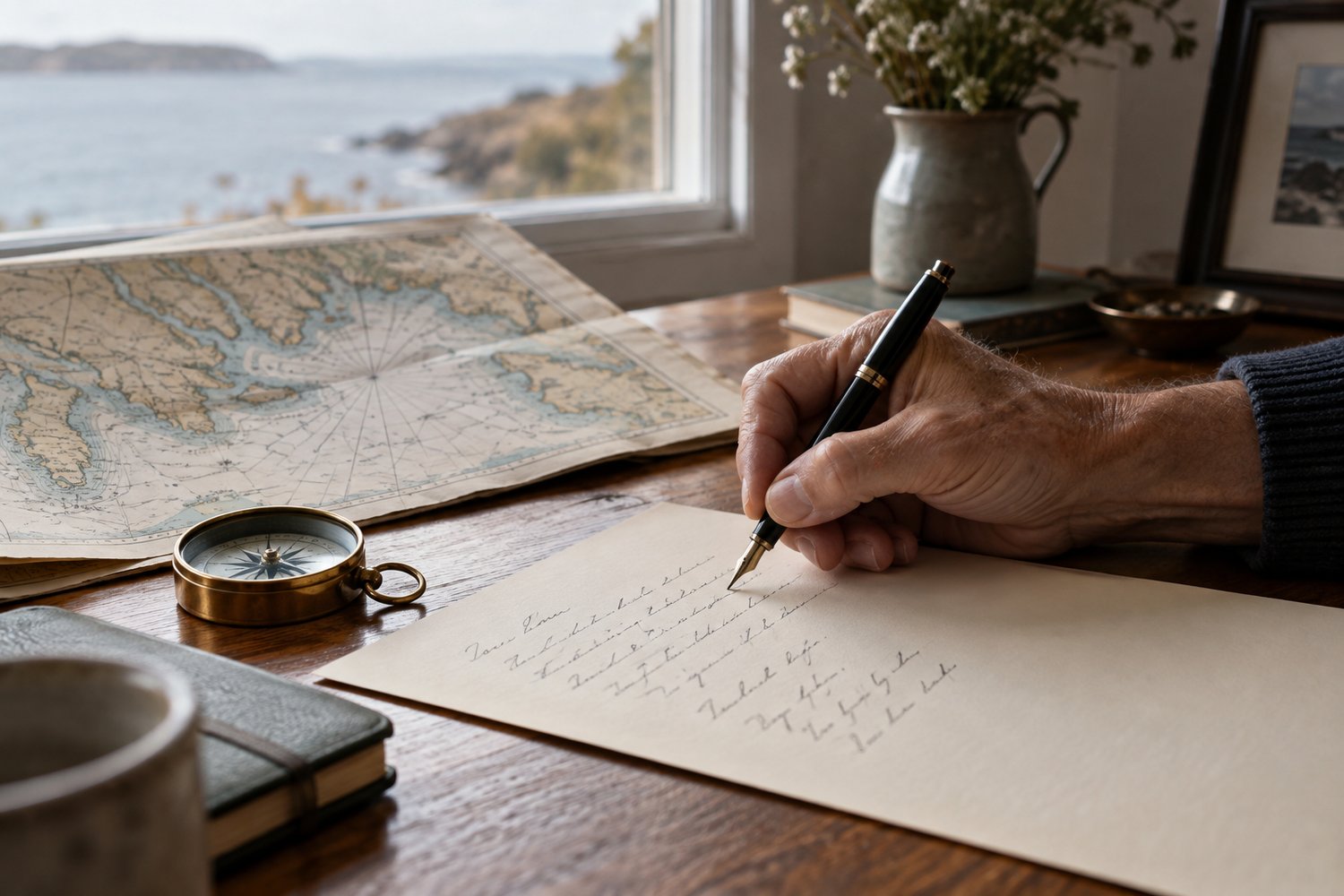
Most pen companies have a founding story about pens. Pilot’s starts at sea.
Its founder, Ryosuke Namiki, was a ship’s engineer. He came ashore to teach, and began tinkering with the pens used to draw navigational charts, whose tips wore down. That problem led him to gold nibs, then to fountain pens, and eventually to a company that took Japanese lacquer pens to London and New York in the 1920s.
This is a short history drawn mainly from Pilot’s own centenary records, with one independent account from a shipping museum. Where they differ, this page says so. At the end are two Pilot pens you can give today, and why each fits a particular kind of writer.
Two men from the merchant marine school
Ryosuke Namiki and Masao Wada both studied at Japan’s government merchant marine school, today the Tokyo University of Marine Science and Technology (Pilot, “The Establishment”).
Pilot’s account says they met at sea. Wada sailed on the merchant ship Ariake Maru, on which Namiki was chief engineer, and after about six months together they shared a dream of making “something Japanese that the world would be proud to use”. A separate account published by the NYK Maritime Museum says they met while Wada was working at Mitsui & Co. (NYK Maritime Museum, in Japanese). Either way, the partnership was real, and it would last.
In 1906 Namiki left the sea and was invited back to teach at his old school; Pilot’s Japanese text calls him a professor.
A problem with pen tips
The problem that started it was small and practical. Ruling pens, used to draw precise lines on navigational charts, wore down at the tip. Namiki’s research moved from stopping that wear to making gold nibs. In 1909 he patented the Namiki Ruling Pen and began making and selling it (Pilot, History).
By 1914 he had machined a nib point from Hokkaido iridosmine, and he resigned his teaching post to work on nibs full time. In January 1916 Wada, who had also left the sea for business, wired him 5,000 yen. On 9 February 1916, Namiki completed a 14-karat gold nib made entirely in Japan. Wada then gave up his own business to join the venture (Pilot, “The Establishment”).
1918: Namiki Manufacturing, and the name “Pilot”
On 27 January 1918, with Wada’s help, Namiki founded Namiki Manufacturing Co., Ltd. The brand was “Pilot”, with a lifebuoy as its mark (Pilot, “The Mark”).
Pilot says Namiki explained the name this way: the pilot is the experienced captain at the head of a convoy, guiding the other ships, so the name meant a leader in fountain pens. The lifebuoy stood for being unsinkable, however hard things got. The first product was a pen with a 14-karat nib on a wooden barrel.
1925: lacquer to protect the pen
Early fountain pens were made of ebonite, a hard rubber. Pilot’s history describes the problem: the material faded and lost its shine with light and moisture.
The answer was Japanese. Pilot says it developed a method of coating barrels with urushi lacquer to prevent that deterioration, and in 1925 obtained patents in Japan and the US for it, calling it a world first; its page also shows a 1925 trademark notice for the name, “Laccanite” (Pilot, Laccanite). Once barrels were lacquered, maki-e, the lacquer art of sprinkling gold and silver powder into designs, could be applied on top.
Pilot brought in the maki-e artist Gonroku Matsuda, later designated a Living National Treasure, and in 1931 a group of maki-e artists, the Kokkokai, formed around him (Namiki, History).
A solution to a material problem became the thing that made Pilot’s pens distinctive abroad.
1926: offices abroad, and Dunhill
According to Namiki’s history, the founders took a few dozen maki-e pens to the West and received an order from a major London firm in 1925. In 1926 Pilot’s timeline lists branches and sales offices in New York, London, Shanghai and Singapore (Pilot, History); the Namiki brand history names the London office on Bishopsgate. Raised-lacquer (taka-maki-e) pens went on sale and were exported the same year.
In 1930 Pilot signed a distribution agreement with Alfred Dunhill Ltd. for sales in Europe. The Dunhill-Namiki pens were sold in London, Paris and New York (Pilot, Dunhill). The NYK Maritime Museum’s account adds that the pens were used by delegates to sign the 1930 London Naval Treaty; Pilot’s own pages checked here don’t mention it, so treat it as that museum’s account.
2026 marks a hundred years since those first offices abroad. It’s a neat anniversary, and what went overseas was a pen with a Japanese finish, lacquer and maki-e.
In 1938 the company took the name The Pilot Pen Co., Ltd., and in 1989 PILOT Corporation.
From that history to a pen you can give
Pilot’s story is about solving problems: a tip that wore out, a barrel that faded. The pens it makes today solve other ones — how to make a first fountain pen easy to write with, how to make a fountain pen quick enough to use like a ballpoint. Choosing between them is about the person: what they write, and how.
These two are modern pens, not maki-e pieces. For a broader guide to a first pen, see a first fountain pen from Japan; for the Capless in depth, is the Pilot Capless a good gift?
Prices are Discovery Japan Mall’s in yen on 13 September 2026, before shipping, and both were listed as in stock.
For someone who writes letters: Pilot Custom 74
Who it suits. A father who still writes letters by hand, or a teacher or mentor who has written for a living: someone who will sit down and write at length.
Why this one. Pilot launched the Custom 74 in 1992. Pilot says it was designed for Japanese writers used to ballpoints, who press harder and preferred a firmer nib (Pilot, Custom 74 press release, 2022, in Japanese). It has a 14-karat gold nib and a classic resin body with a cap. The one linked here has a Soft Fine-Medium nib.
Know before you buy. Nib size matters more than anything else. A fine-medium suits everyday handwriting; someone with large handwriting may prefer medium. Soft nibs flex a little with pressure. Ask the shop what ink comes in the box.
For someone who writes short notes: Pilot Capless Decimo
Who it suits. Someone who jots things down all day — notes in meetings, a line in a diary — and would find unscrewing a cap every time a nuisance.
Why this one. Pilot launched the first Capless in 1963 and a click version in 1964, making a fountain pen as quick to use as a ballpoint (Pilot, Capless, in Japanese). The Decimo, launched in 2005, was the tenth Capless model; its name comes from the Spanish for “tenth”. One click extends the nib; when it’s retracted, a shutter seals it to stop drying and leaks (Pilot, Decimo press release, in Japanese). The one linked here is Pearl White, with a fine nib.
Know before you buy. The clip sits on the nib side, which some people notice when writing. Fine nibs suit small handwriting and notes.
How to buy from Japan
Okurimono Japan doesn’t sell anything. “Check Price” takes you to the product page on Discovery Japan Mall, an independent Japanese retailer (not Pilot’s own shop). You buy and pay there, and the shop handles shipping, returns and support.
- Price. Prices above are the shop’s in yen on 13 September 2026, before shipping and any duties. Shipping is added at checkout.
- Duties and taxes. The shop’s Customs Duties page says they aren’t included and are collected on delivery.
- Returns. The shop’s Returns & Exchanges page accepts returns only for damaged, defective or incorrect items reported within 7 days of delivery, with photos.
- Box and wrapping. Pens ship in Pilot’s retail box; the shop’s listings don’t itemize contents, and gift wrapping isn’t listed as a service.
More on ordering from Japan is on How to Buy; more in the Stationery category.
Sources
Checked 13 September 2026. Pilot and Namiki pages are the company’s own accounts.
- Pilot, History (100th anniversary): 1909 ruling pen, 1916 gold nib, 1918 founding, 1925 lacquer, 1926 offices, 1930 Dunhill, 1938 and 1989 names, 1963 Capless.
- Pilot, “The Establishment”: the founders, the Ariake Maru, 1914 and 1916.
- Pilot, “The Mark”: 27 January 1918, the name and the lifebuoy.
- Pilot, Laccanite: ebonite deterioration and the 1925 lacquer method.
- Pilot, Dunhill: the 1930 agreement.
- Namiki, History: the London order, the London office, Gonroku Matsuda, Kokkokai.
- Pilot Corporation, Company history (Japanese).
- Pilot, Capless (Japanese), and press releases on the Custom 74 and Capless Decimo (Japanese).
- NYK Maritime Museum, Kōseki, June 2001 (Japanese): an independent account of the founders.
Frequently asked questions
- Who founded Pilot?
- Ryosuke Namiki, with the backing of Masao Wada. Both had trained at Japan's government merchant marine school and worked at sea. Namiki founded Namiki Manufacturing Co., Ltd. in 1918; the company became The Pilot Pen Co., Ltd. in 1938.
- Why is the company called Pilot?
- According to Pilot, Namiki explained the name as the pilot who guides a fleet — a hope that the company would lead the way in fountain pens. The logo was a lifebuoy, meaning 'unsinkable'.
- What does lacquer have to do with Pilot?
- Early pen barrels were made of hard rubber, which faded and lost its shine. Pilot says that in 1925 it developed a way to protect them with urushi lacquer, and maki-e decoration followed on top. Those lacquer pens were what Pilot took abroad.
- When did Pilot start selling abroad?
- Pilot's history says it opened branches and sales offices in New York, London, Shanghai and Singapore in 1926, and in 1930 signed a distribution agreement with Alfred Dunhill for sales in Europe.
- Is the Custom 74 a maki-e pen?
- No. The Custom 74 is a modern resin fountain pen with a gold nib, launched in 1992. It's recommended here as a pen for writing, not as a lacquer or maki-e piece.
- Is the Capless Decimo the same as the 1963 Capless?
- It's a descendant. Pilot launched the first Capless in 1963 and a click-operated version in 1964. The Decimo, launched in 2005 as the tenth Capless model, uses a click mechanism with a shutter that seals the nib when it's retracted.