A Japanese Slicing Knife for the Dad Who Carves Christmas Dinner Every Year
 By Kotaro·Updated Sep 26, 2026·9 min read
This guide contains affiliate links: if you buy through one, the shop may pay me a small commission at no extra cost to you. How I choose and how I earn
A Japanese sujihiki for the dad who carves Christmas dinner every year: who it suits, what it can slice, what it should never be used on, and what to check before ordering from Japan.
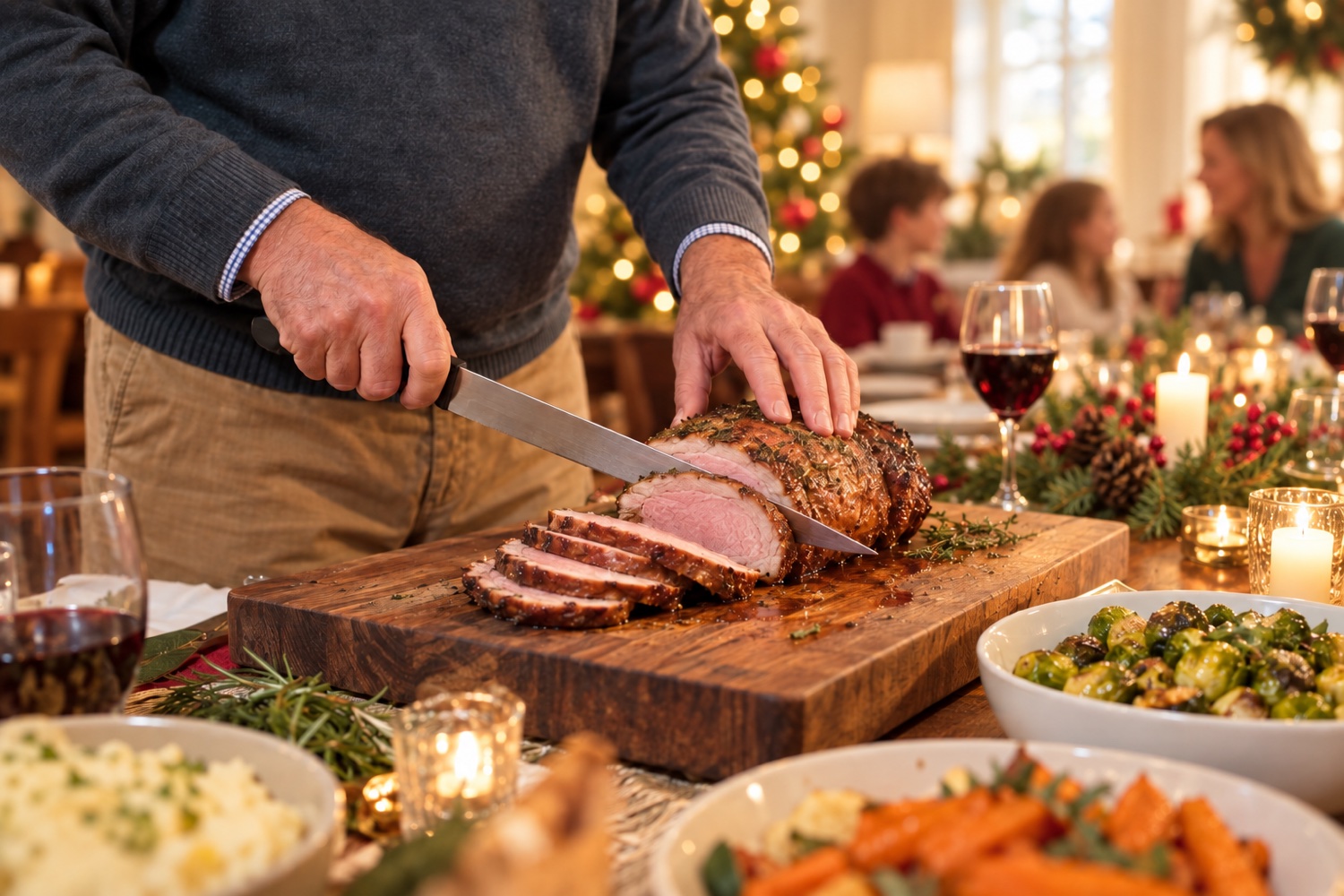
Every family has a moment when Christmas dinner officially begins. For yours, it may be when Dad carries the roast to the table, picks up the knife, and starts carving while everyone waits for the first slice.
By then he has usually been at it for hours. Something went into the oven before anyone else was properly awake. The kitchen has been his all morning. And he is the last one to sit down, because carving is the final job and he is the one doing it.
If that is your father, a slicing knife is a gift aimed at the exact part of the day he has been running for years. This page is about one kind: the Japanese sujihiki. I’m a designer in Japan, not a chef, and I haven’t cooked with the knife below. What follows is what the knife type is for, what it is emphatically not for, the shop’s own specifications, and what to check before ordering from Japan.
The gift is for the dad who enjoys carving
Before anything else: does he actually enjoy this part?
A sujihiki suits him if he cooks anyway through the year, takes on the holiday dinner by choice, already owns a knife he prepped everything with, and would be pleased by a tool made for cutting cooked meat cleanly. For someone like that, a slicing knife is a second knife with a clear job, not a replacement for anything.
It suits him less if Christmas is the one meal he cooks all year, or if what he actually needs is a good all-purpose knife. In that case a santoku or gyuto does far more for him — those are covered in santoku or gyuto as a gift. A specialist knife given to someone without a decent everyday knife is a gift that sits in a drawer.
And there is no rule that says the person who cooks Christmas dinner is unusual, or that carving has to be his job at all. If it’s his, and he likes it, this gift fits.
What a sujihiki is
A sujihiki (筋引) is the Japanese slicing knife: long, narrow and relatively thin, with a pointed tip. MUSASHI JAPAN, a Tokyo knife retailer, translates the name as “flesh slicer” and describes it as a knife for “carving and slicing roasts, turkey, raw meats, fish, and all other proteins”, long enough to “slice with one long stroke instead of sliding the knife back and forth in a sawing motion”, with a reduced surface area that keeps the blade from sticking to the meat.
In practice, the length and the shape are the whole point. A long blade covers the width of the meat in one draw, so there’s less sawing; less sawing means a cleaner cut face and slices that come out closer to the thickness he meant. That matters most on the things people carve in front of other people:
- a boneless beef roast
- prime rib, after it has been separated from the bone
- turkey breast, once it’s off the carcass
- a boneless ham
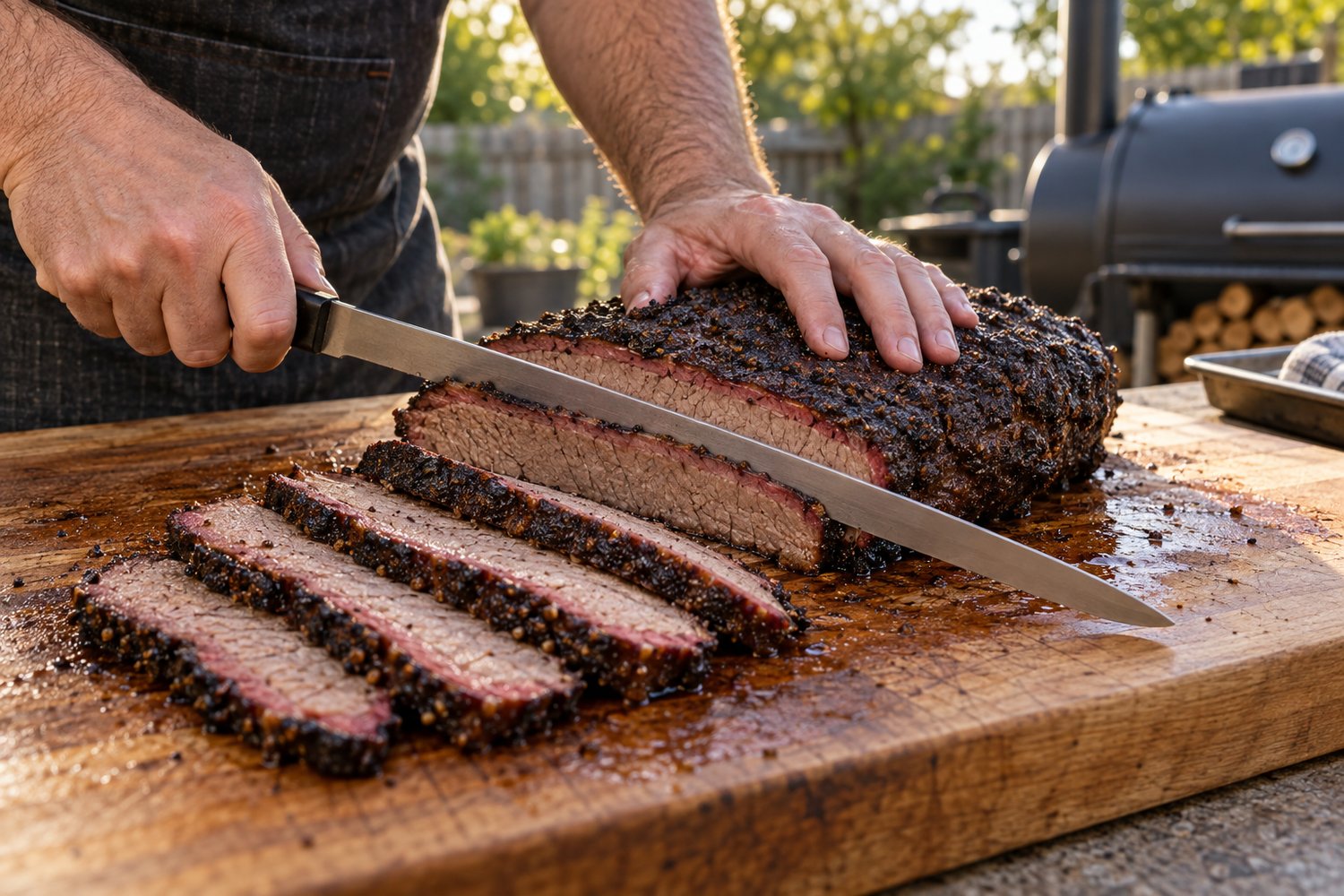
- smoked brisket
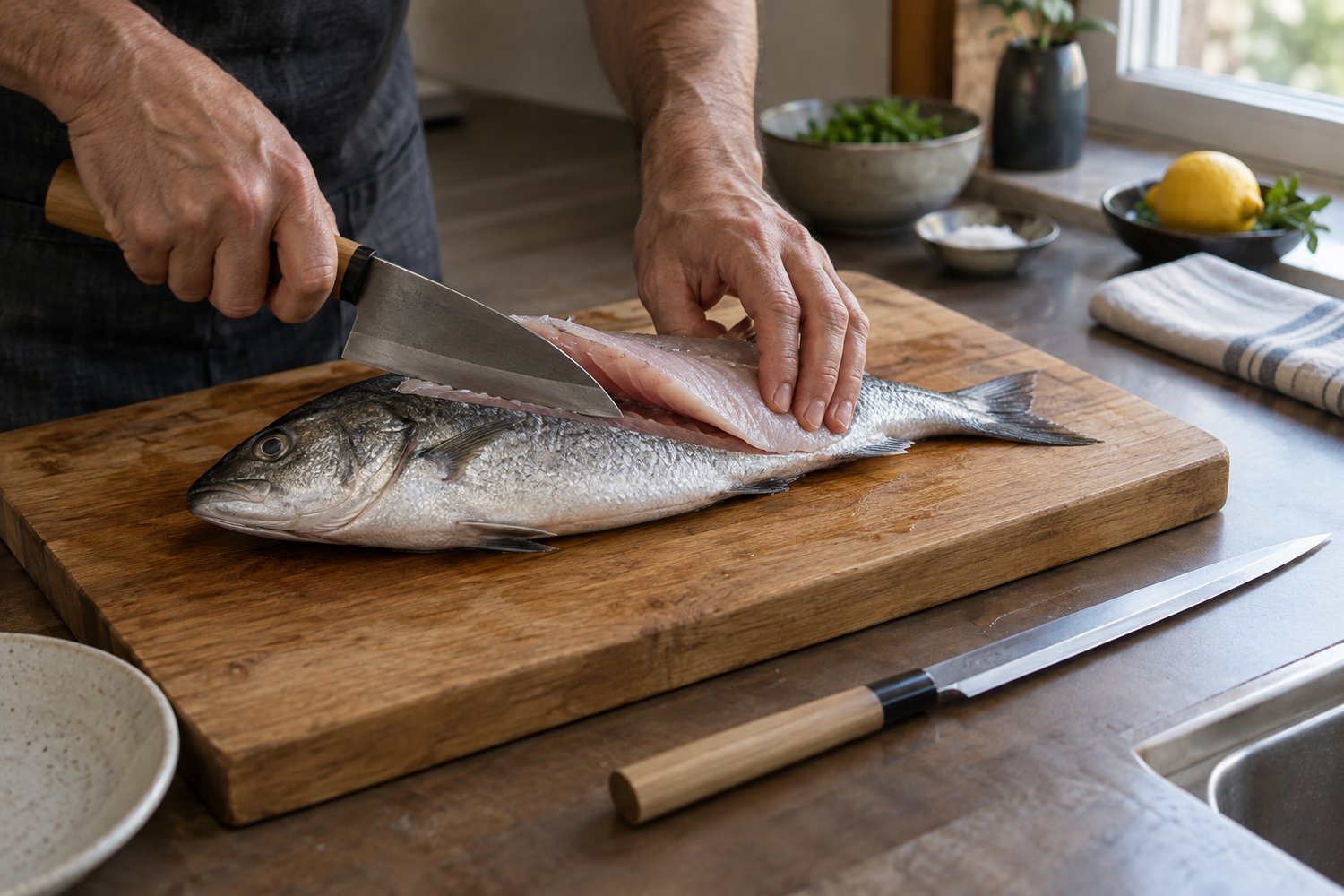
- large pieces of fish
None of this makes the food taste better. The meat is already cooked by the time the knife touches it. What a sharp blade of the right shape does is cut without crushing or tearing, which shows up in how the slices look on the plate and how they hold together.
A sujihiki is not a bone knife
This is the one part worth being blunt about, because it’s how these knives get damaged.
- It is not for bone, joints or frozen food. Those need a knife made for the job.
- Don’t carve a bone-in turkey or a standing rib roast with it in place. Take the meat off the bone first, with the right tool and technique, then slice what you’ve removed.
- Never twist the blade. If the blade binds in the meat, back it out rather than levering it.
- Don’t force it through something hard. If it stops against bone, cartilage or a frozen patch, stop and change tools.
A sujihiki is not a deba, not a bone cleaver and not a butcher’s cleaver. It’s a slicer, used after the hard work is done.
The knife
Hocho Knife is an online knife shop that ships from Japan. The specifications below are from its product page, checked on 26 September 2026, when the knife was listed as in stock at $175.99 before shipping.
Sakai Takayuki 33-Layer VG10 Damascus Sujihiki, 240mm
Who it suits. A father who carves the holiday roast every year, cooks through the rest of the year too, and already has an everyday knife he’s happy with.
Why I chose it. Two of these reasons are facts from the listing, and two are editorial judgment, so here they are separately.
From the listing: it’s sold as double-edged, so it works in either hand. The core is VG10, a Japanese stainless steel, which is more forgiving about rust and wiping-up than a reactive carbon steel — useful in a kitchen busy with six other things. It’s made by Aoki Hamono, a knife company in Sakai, under its Sakai Takayuki name.
My judgment: 240mm is a sensible length for a home kitchen. It’s long enough to draw through a turkey breast or a boneless roast in one stroke, without being the 270–300mm knife that needs a big board and a deep drawer. And a hammered Damascus blade looks like a present when it comes out of the box, which is a fair thing to want at Christmas. The pattern is layered steel, and it says nothing about how sharp the knife is or how long it stays that way.
What it’s for. Slicing cooked, boneless meat: roasts, turkey breast off the carcass, ham, brisket. Also raw boneless meat and large fish.
What it’s not for. Bone, joints, frozen food, prying or twisting. Not a first all-purpose knife.
Hocho Knife’s specifications. VG10 core, 33-layer hammered Damascus stainless, HRC 60 ±1, double-edged. Blade 240mm (9.4 in), overall 365mm (14.4 in). Weight 185g (6.5 oz) — the shop’s listed figure, not one I’ve weighed. Western-style handle in mahogany-toned pakka wood; the shop notes the handle material may change to Japanese-made pakkawood without notice. Made in Japan.
Steel and edge. Stainless doesn’t mean stain-proof, and HRC 60 is a hard edge: it holds well and chips if it meets bone.
Care. Hand-wash, dry immediately, wooden or soft plastic board only, no dishwasher, no twisting, no rapid heating or cooling. The full routine is in the Japanese knife care guide.
Storage. The listing doesn’t mention a sheath, so plan on a knife block, a magnetic rack or a protected drawer insert.
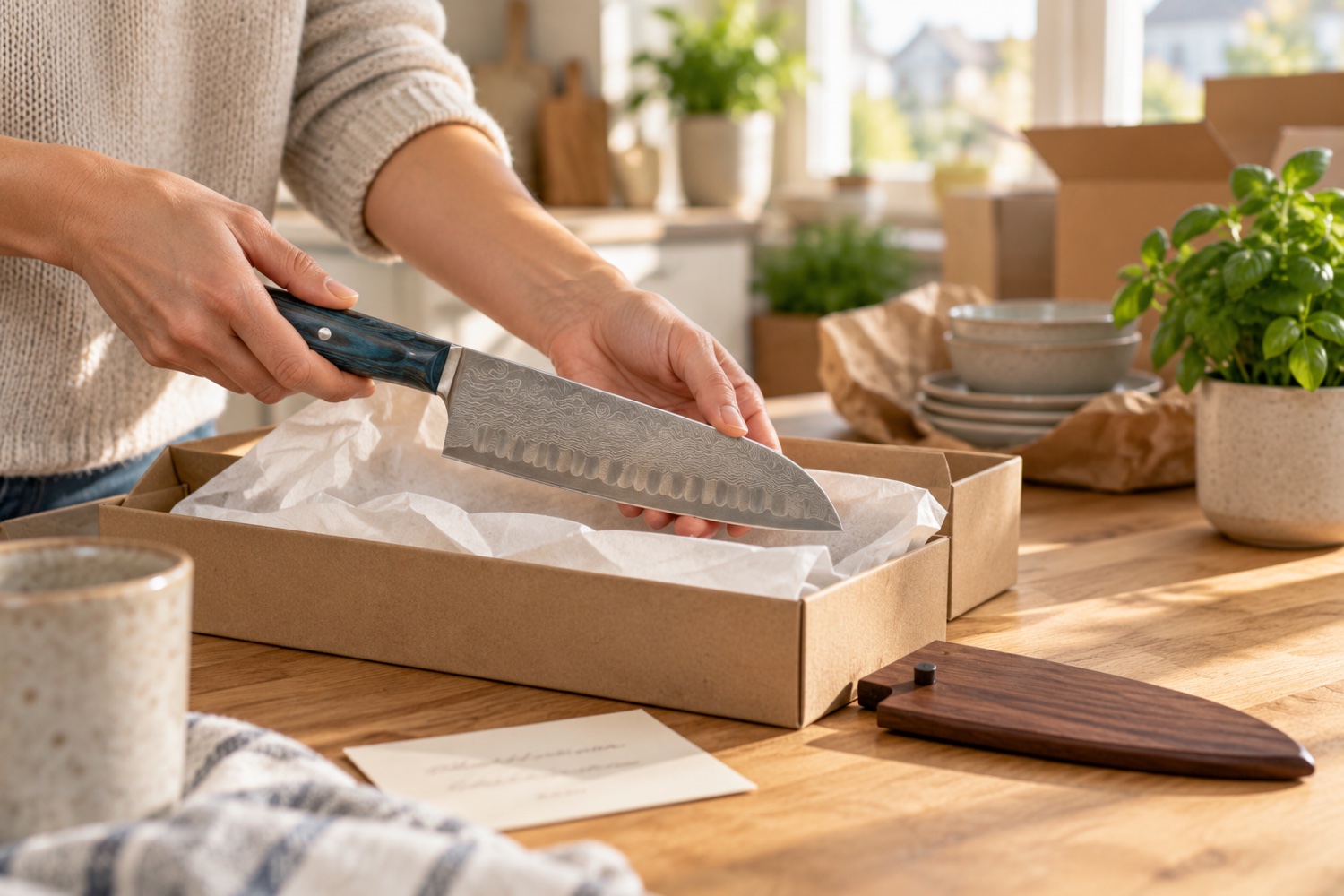
Wrapping. Hocho Knife offers gift wrapping with Japanese-inspired designs and a message card as options at checkout.
If this one isn’t quite right
Same shop, same knife type, two different answers. Both were listed as in stock on 26 September 2026.
If you’d rather spend less. The Sakai Takayuki TUS sujihiki is the same 240mm length for $92.99. Hocho Knife’s specifications: TUS high-carbon stainless steel, double-edged; blade 240mm (9.4 in), spine about 1.7mm, overall 360mm (14.2 in), 140g (4.9 oz), laminated-wood handle, made in Japan. A plain blade instead of a Damascus pattern — it looks like a working knife, and it’s lighter in the hand.
If he carves something wide. A brisket flat, a whole pork loin or a big turkey breast can be wider than a 240mm blade covers in one stroke. The Souma (formerly Fujiwara Kanefusa) molybdenum stainless sujihiki is 270mm (10.6 in), $138.99: AUS-8 molybdenum-vanadium stainless, HRC 57–58, black pakka handle with a stainless bolster, made in Japan. Two things to know: the shop lists its edge as double-edged but 70/30 balanced, better suited to right-handed users, and it doesn’t list the weight or overall length. Measure the board and the drawer first.
Who shouldn’t be given this knife
A more expensive, more specialized knife is not a better present. It’s a worse one for plenty of people:
- Someone who needs a first all-purpose knife. A santoku or gyuto will be used every day; this will not.
- Someone with a small kitchen or a small board. At 365mm overall, it needs room to work and somewhere safe to live.
- Someone who wants one knife for everything, bones included. This isn’t that knife, and using it that way will wreck the edge.
- Someone who puts knives in the dishwasher. Hand-washing isn’t optional here.
- Someone who dislikes long knives. Plenty of cooks feel safer with a shorter blade. That’s a preference, not a mistake.
- Someone who won’t enjoy the upkeep. Drying, storing and eventually sharpening on a stone are part of owning it.
If two or three of those describe your father, the kind gift is a different one.
Before you order
1. The space he actually has. 365mm overall. Check his cutting board, his counter and wherever knives are kept.
2. Storage. The listing doesn’t mention a sheath. A block, a magnetic rack or a drawer insert needs to be part of the plan — or part of the gift.
3. Care. Hand-wash, dry straight away, wooden or soft plastic board, never glass, stone or tile, never twisted, never the dishwasher. Details in the care guide.
4. Presentation. Choose Hocho Knife’s gift wrapping at checkout, or wrap it at home.
Ordering from Japan for Christmas
Okurimono Japan doesn’t sell anything. “Check Price” goes straight to the knife’s page on Hocho Knife, and you order, pay and arrange any return with the shop directly. What its Shipping & Returns page states, as of 26 September 2026:
- Delivery. Up to 3–5 business days of handling time after payment, excluding weekends, Japanese holidays and specific holiday periods, then FedEx or EMS. December is the busiest month for every carrier, so order early — and treat any arrival date as an estimate.
- Shipping cost. Free shipping on orders over $250, for economy or standard shipping.
- US duties. The shop says customers may pay part of the duties at checkout, and that it advances and pays all import duties on eligible orders, so nothing more is due on delivery; some couriers may charge the recipient a small administration fee. Read the checkout total rather than relying on any duty-free threshold; for what changed, see ordering from Japan to the US.
- If something’s wrong. Returns within 14 days of delivery, for items that are unopened and unused with all original packing. Check the parcel when it lands and contact the shop straight away if anything looks wrong — waiting until the 25th can put you past that window.
More on how ordering through this site works is on How to Buy. If the person you’re buying for smokes his own brisket rather than roasting for the family, a slicing knife for the husband who smokes brisket compares three longer sujihiki instead.
A line for the card
Two you can copy, or bend into your own words:
Dad — for every Christmas dinner you’ve made for us, and for the part where you finally get to sit down and eat it.
For the person who makes Christmas dinner feel like Christmas.
The knife is for the carving. The card is for the twenty years of it.
Sources
Checked 26 September 2026.
- Hocho Knife, product pages for the Sakai Takayuki 33-layer VG10 sujihiki, the Sakai Takayuki TUS sujihiki and the Souma molybdenum sujihiki: price, stock and specifications.
- Hocho Knife, Shipping & Returns: handling time, free-shipping threshold, US duties, returns.
- MUSASHI JAPAN, Sujihiki VG-10 Damascus Western Round Handle 240mm: the description of the sujihiki quoted above.
Frequently asked questions
- What is a sujihiki?
- A long, narrow Japanese slicing knife. MUSASHI JAPAN translates the name as 'flesh slicer' and describes it as a knife for carving and slicing roasts, turkey, raw meats and fish, made long enough to cut a slice in one stroke instead of sawing back and forth, with a narrow blade that sticks to the meat less.
- Can he carve a bone-in turkey or a standing rib roast with it?
- Not through the bone. A sujihiki is for boneless meat. The usual approach is to take the meat off the bone first with the right tool, then slice it with the sujihiki. And never twist the blade.
- Is a sujihiki a good first knife for someone who cooks once a year?
- Usually not. It does one job well and little else. Someone who is building a kitchen, or who cooks mainly at the holidays, gets more from a santoku or gyuto, which handle vegetables and everyday prep as well as meat.
- Does it come with a sheath, or gift-wrapped?
- The listing doesn't mention a sheath, so plan on a knife block, a magnetic rack or a drawer insert. Hocho Knife says it offers gift wrapping with Japanese-inspired designs and a message card as options when you order.
- Will it need special care?
- It needs hand-washing, drying straight after use, a wooden or soft plastic board, and sharpening on a whetstone over time. VG10 is a stainless steel and resists rust better than carbon steel, but it isn't dishwasher safe and shouldn't be left wet.
- Will it arrive before Christmas, and will I pay duties?
- No one can promise a date. Hocho Knife says it takes up to 3–5 business days after payment to ship, excluding weekends and Japanese holidays, then sends by FedEx or EMS. December is the busiest month for carriers, so order early. For US orders, the shop says it advances and pays import duties on eligible orders, so nothing more is due on delivery.
- What if it arrives weeks before Christmas and something is wrong with it?
- Check the parcel when it arrives rather than on Christmas morning, and contact Hocho Knife straight away if anything looks wrong. Its returns page allows returns within 14 days of delivery for items that are unopened and unused, with all original packing, so don't use the knife until you're sure you're keeping it.