A Japanese Slicing Knife for the Husband Who Smokes Brisket
 By Kotaro·Updated Sep 26, 2026·9 min read
This guide contains affiliate links: if you buy through one, the shop may pay me a small commission at no extra cost to you. How I choose and how I earn
He already has the smoker, the thermometer and the rub he swears by. A Christmas gift guide for his wife or partner: why a Japanese sujihiki suits the last step of a long smoke — slicing the meat — when a long BBQ slicer is the better choice instead, three knives from Hocho Knife with the shop's specifications, and how to order in time from Japan.
He already has the smoker. He has a probe thermometer, maybe two. He has a rub he mixes himself or a bottle he won’t let anyone move. On a Saturday he’s up before everyone else, trimming, seasoning, lighting the fire, and then spending most of the day checking on something that won’t be ready until dinner.
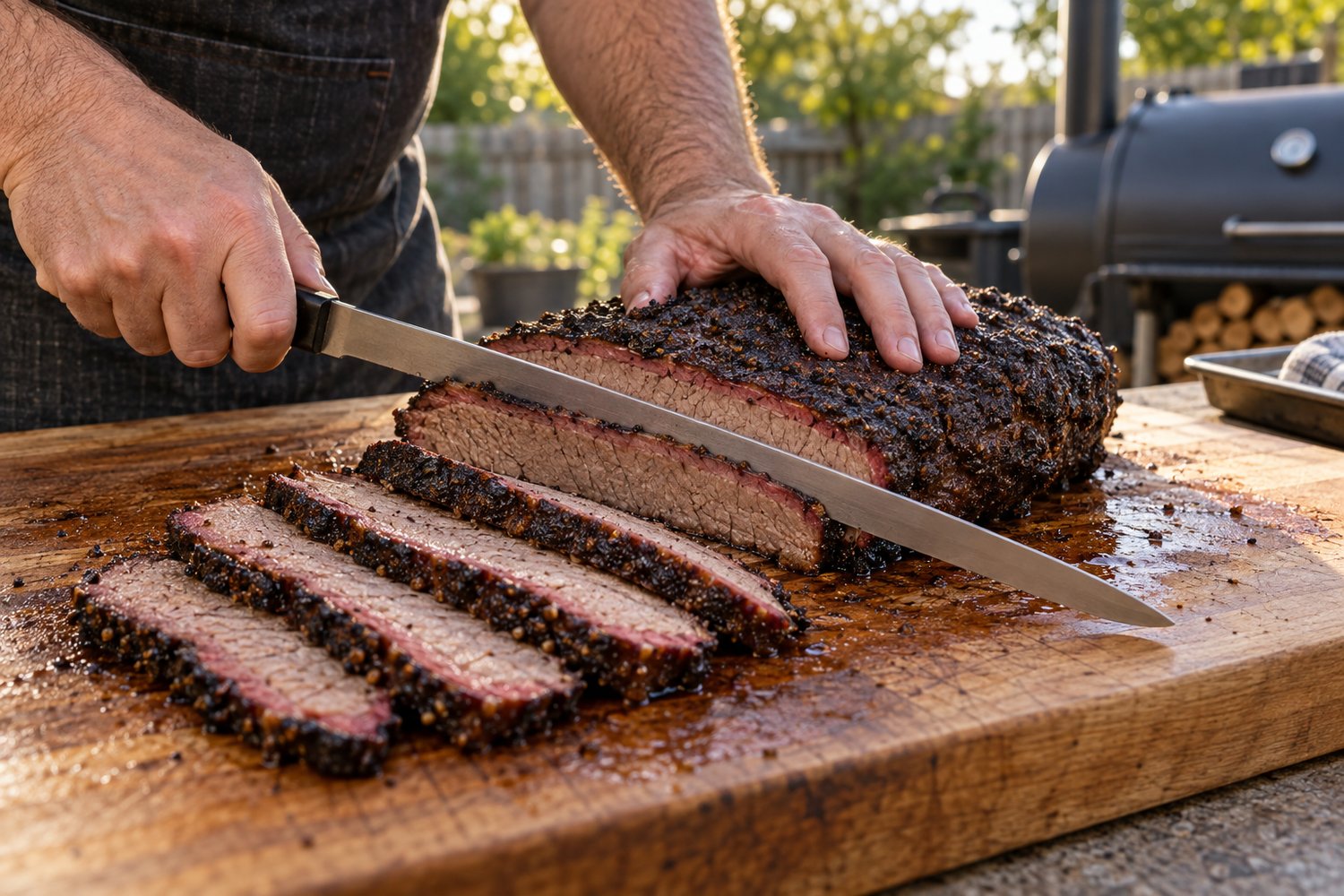
So what do you give him for Christmas? Another sauce feels small. Another gadget feels like clutter. Before you decide, watch what happens at the very end of that long day: the meat comes off, it rests, and then he slices it. Look at what he’s slicing it with.
That last step is what this page is about. I’m a designer in Japan, not a pitmaster, and I haven’t used the knives below. What follows is what the knife type is for, when it isn’t the right choice, the shop’s listed specifications, and what to check before you order from Japan for Christmas.
What he enjoys isn’t only the eating
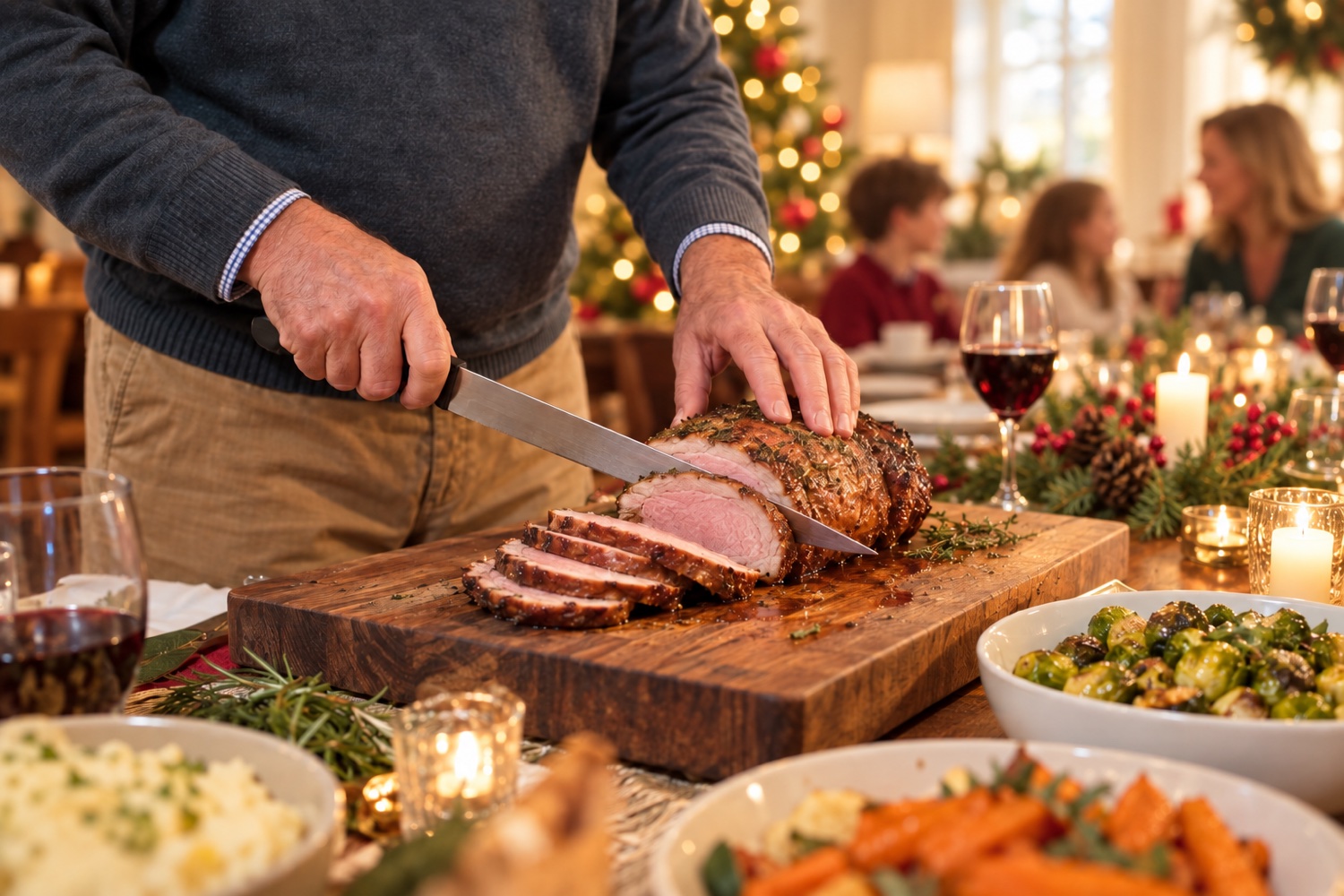
A long smoke is a whole day of small decisions: which cut, which wood, which rub, when to wrap, when to pull. The eating is the reward, but the day is the hobby. And it ends with a job that everyone watches: carving the meat on a board in front of family or friends.
That’s why a slicing knife is a good gift for this person specifically. It belongs to the part of the day he already cares about, and it’s used at the moment the work gets shown. A good knife won’t make his brisket better. It is simply a tool made for the job he finishes every cook with.
First, look at what he uses now
Five things to find out, most of them by watching one cook.
- Does he already have a long slicer he likes? If there’s a 12- or 14-inch slicer in the drawer that he reaches for every time, the gift is already solved — by him. Don’t push a replacement. A sheath, a good board or a whetstone might be the better present.
- What does he usually smoke? Brisket, pork loin, prime rib, turkey breast, tri-tip? Or mostly pork shoulder he pulls apart and ribs he cuts between the bones? A slicing knife earns its place with the first list, not the second.
- How wide is what he slices? A knife should be longer than the slice it cuts, so one stroke goes all the way through. Next time he’s carving, notice how wide the meat is where he cuts it.
- Board and drawer. A 270mm knife is about 15–16 inches overall. Check that his cutting board and the drawer or block where knives live can take that.
- Will he hand-wash, dry and sharpen? Every knife below needs hand-washing, drying and, over time, a whetstone. If he puts everything in the dishwasher, a Japanese knife isn’t the kind gift it looks like. What the care involves is in the Japanese knife care guide.
What a sujihiki is, and when a BBQ slicer is the better pick
A sujihiki (筋引) is the Japanese slicing knife: long, narrow, relatively thin, with a pointed tip. MUSASHI JAPAN, a Tokyo knife retailer, translates the name as “flesh slicer” and describes it as a knife for “carving and slicing roasts, turkey, raw meats, fish, and all other proteins”, made long so you “slice with one long stroke instead of sliding the knife back and forth in a sawing motion”, with a narrow blade that reduces sticking. The three here are double-edged — sharpened on both sides — though one is ground 70/30, which the shop says suits right-handed users better.
A santoku — the knife in the weekend cook guide — is shorter, taller and made for prep: vegetables, trimming, dicing. It’s the wrong length for carving a large piece of cooked meat.
A long BBQ slicer is the other obvious choice, and a fair one. Traeger’s guide to cutting brisket recommends “a blade that’s long, sharp, and serrated”, says the serrated edge helps with the tougher parts of the meat, and mentions a 14-inch slicer; Traeger’s own BBQ slicing knife measures 15.4 inches overall (its blade length isn’t listed). A sujihiki has a plain edge, and the 270mm knives below are about 15–16 inches overall — similar in total size, with a shorter cutting edge than a 14-inch slicer.
So which? A sujihiki suits the husband who likes a plain, sharp edge, carves roasts and loins as well as brisket, and is willing to keep it sharp on a stone. A long serrated slicer suits the one who cuts full packer briskets across their widest part, wants the length of a 14-inch blade, or doesn’t want to sharpen on a stone. Neither is “better”; they’re built for different habits.
What a sujihiki is not. It isn’t for bones, frozen meat, prying or twisting. It isn’t a do-everything knife. And the rippled “Damascus” pattern on one of the knives below is the look of layered steel, not a measure of how well it cuts.
Three to consider
All three are sold by Hocho Knife, an online knife shop that ships from Japan. Specifications are from Hocho Knife’s product pages; prices are the shop’s in US dollars on 26 September 2026, before shipping, and all three were listed as in stock that day.
| Molybdenum 270mm | VG10 Damascus 240mm | Hygienic 270mm | |
|---|---|---|---|
| Suits | Brisket flat, whole loin, turkey breast | Roasts and tri-tip on a normal board | Carving outdoors; resin handle |
| Blade | 270mm (10.6 in) | 240mm (9.4 in) | 270mm (10.6 in) |
| Overall | Not listed | 365mm (14.4 in) | Not listed |
| Weight | Not listed | 185g (6.5 oz) | Not listed |
| Steel / handle | AUS-8 molybdenum stainless / pakka wood | VG10 Damascus / pakka wood | Molybdenum stainless / resin |
| Price | $138.99 | $175.99 | $103.99 |
For brisket flats and whole loins: Souma (formerly Fujiwara Kanefusa) Molybdenum Stainless Sujihiki, 270mm
Who it’s for. The husband who slices a brisket flat, a whole pork loin or a turkey breast, and wants the length to do it in one pull.
Why this one. It’s a long, plain slicer with a Western-style handle that feels familiar to someone used to American knives, from a Seki maker now called Souma, formerly Fujiwara Kanefusa.
Hocho Knife’s specifications. AUS-8 molybdenum-vanadium stainless, HRC 57–58; blade 270mm (10.6 in); black pakka wood handle with a stainless bolster; made in Japan. The edge is listed as double-edged but 70/30 balanced, better suited to right-handed users. The page doesn’t list the overall length or weight.
Know before you buy. At 10.6 inches of blade it’s shorter than a 12–14 inch BBQ slicer. If he cuts whole packers across the widest point, check that width against 270mm first. If he’s left-handed, choose the 240mm knife below instead. It needs a board and a drawer that take a 15-inch knife.
For roasts and tri-tip: Sakai Takayuki 33-Layer VG10 Damascus Sujihiki, 240mm
Who it’s for. The husband who smokes prime rib, pork loin roasts and tri-tip more often than whole briskets, and carves on a normal-size board.
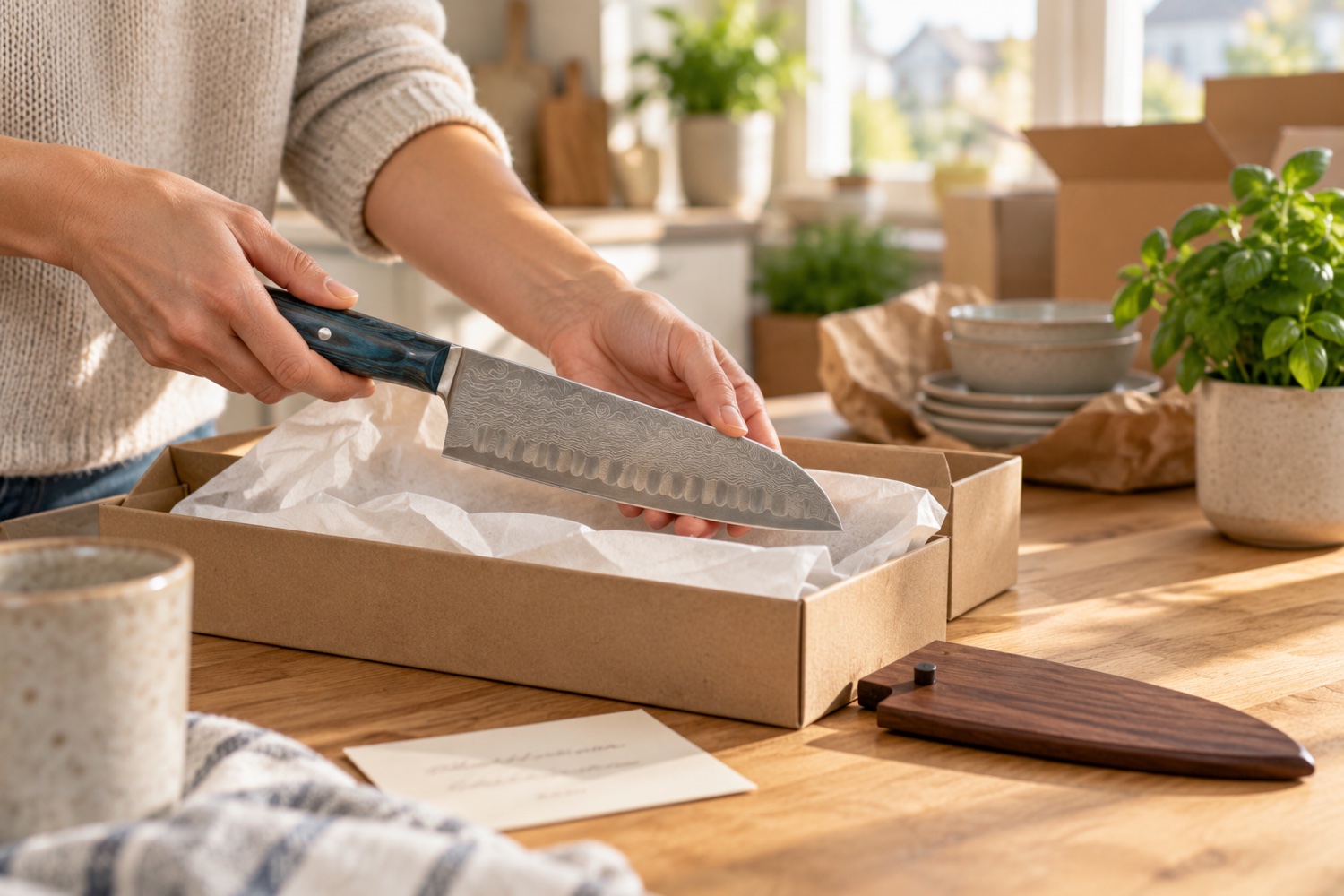
Why this one. 30mm shorter than the 270s, which makes it easier to handle on a smaller board and in a standard drawer, while still long enough to slice most roasts in one stroke. The hammered, layered blade makes it the most visually distinctive of the three. It’s evenly double-edged, so it works in either hand.
Hocho Knife’s specifications. VG10 core, 33-layer hammered Damascus stainless, HRC 60 ±1, double-edged; blade 240mm (9.4 in), overall 365mm (14.4 in), 185g (6.5 oz); pakka wood handle; made in Japan by Aoki Hamono in Sakai, under its Sakai Takayuki name.
Know before you buy. Not the one for a full brisket. The Damascus pattern is decoration from the layered construction, not a cutting advantage.
For carving out by the smoker: Sakai Jikko Standard Hygienic Sujihiki, 270mm
Who it’s for. The husband who carves outside next to the smoker, and wants a knife with no wood to soak up grease or water.
Why this one. Same 270mm length as the first pick, with a molded resin handle rather than wood, and the least expensive of the three. It’s made by Sakai Jikko, and the shop says each blade in this series is hand-finished after the order comes in.
Hocho Knife’s specifications. Molybdenum stainless steel; blade 270mm (10.6 in); POM (polyoxymethylene) resin handle; made in Japan. The page doesn’t list the weight or overall length.
Know before you buy. Because of the hand-finishing, the shop asks for 5–10 business days of handling time instead of the usual 3–5 — allow for that before Christmas. A resin handle feels different from wood; still hand-wash only.
Before you make it a surprise
A slicing knife is personal: length, weight and handle all come down to his hand and his board. It’s fine to find out first. A few natural ways:
- While he’s carving: “Is that knife long enough for that, or do you end up sawing?”
- After a cook: “What would make slicing easier next time?”
- Or simply: “If you could replace one tool out there, what would it be?”
If the answer is “I’d love a proper long slicer,” you have your gift. If it’s “this one’s perfect,” believe him, and give him something else. And if he has strong opinions, choosing it together is a good gift too. A more expensive knife isn’t a surer one; the right length for what he cooks is.
Ordering from Japan for Christmas
Okurimono Japan doesn’t sell anything. “Check Price” goes straight to the knife’s page on Hocho Knife, and you order, pay and arrange any return with the shop directly. What its Shipping & Returns page states, as of 26 September 2026:
- Processing and delivery. Up to 3–5 business days of handling time after payment (5–10 for the hand-finished hygienic slicer), excluding weekends and Japanese holidays, then FedEx or EMS. For Christmas, order well ahead; carriers are busiest in December, and no one can promise a date.
- Shipping cost. Free shipping on orders over $250, for economy or standard shipping.
- US duties. The shop says customers may pay part of the duties at checkout, and that it advances and pays all import duties on eligible orders, so nothing more is due on delivery; some couriers may charge the recipient a small administration fee. Check the total at checkout rather than relying on any rule of thumb about duty-free limits.
- Returns. Within 14 days of delivery, for items that are unopened and unused with all original packing; the shop pays return shipping only when the error was its own. Check the parcel when it arrives and contact the shop straight away if anything looks wrong.
- Wrapping. Hocho Knife offers gift wrapping and a message card as options at checkout.
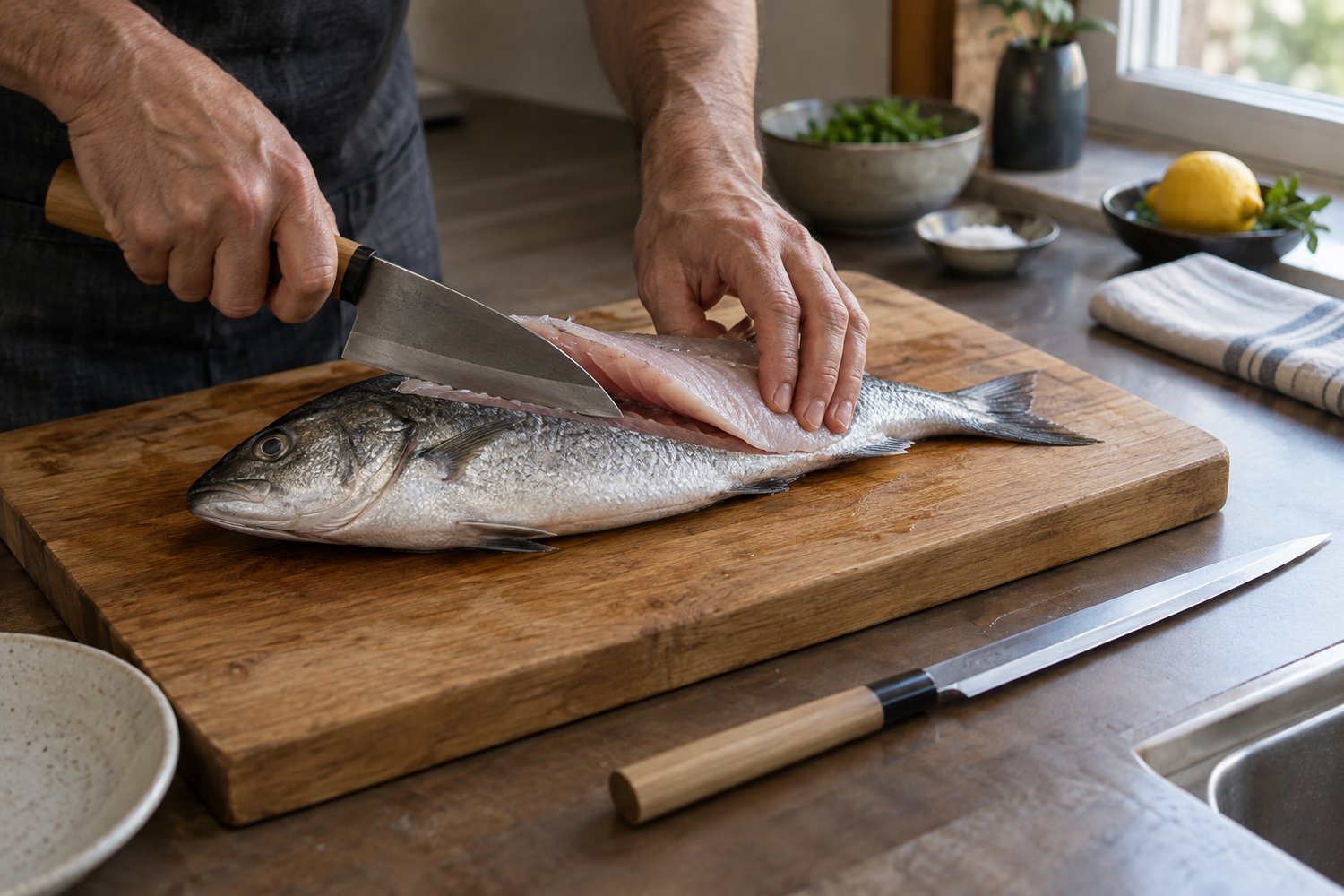
More on ordering from Japan is on How to Buy. For fish rather than meat, see knives for the sashimi lover; for a first all-purpose knife, santoku or gyuto as a gift. If you’re buying for a father who carves the family’s Christmas roast rather than smoking his own brisket, a slicing knife for the dad who carves Christmas dinner looks at one shorter sujihiki for that job.
One more thing
You don’t have to add to his hobby. He’s already built it: the smoker, the fire, the waiting. The best gift here is one that shows you’ve watched how he does it — right down to the last cut on the board.
Frequently asked questions
- What is a sujihiki?
- A long, narrow Japanese slicing knife. MUSASHI JAPAN translates the name as 'flesh slicer' and describes it as a knife for carving and slicing roasts, turkey, raw meats and fish, made long so a slice can be cut in one stroke rather than sawn. The three here are double-edged; one is ground 70/30, which the shop says suits right-handed users better.
- Is a sujihiki good for brisket?
- It can be. A sujihiki is made for slicing boneless cooked meat, and a 270mm (10.6 in) blade covers most of a slice in one pull. But a common American choice is a longer slicer — Traeger's brisket guide recommends a long, serrated blade and mentions a 14-inch slicer. If he cuts whole packer briskets across their widest part, or already owns a 12- to 14-inch slicer he likes, a sujihiki isn't the obvious upgrade.
- Which length should I choose — 240mm or 270mm?
- Match the length to what he slices and where. The 270mm knives suit a brisket flat, a whole pork loin or a turkey breast, and need a board and a drawer that fit a knife about 15–16 in overall. The 240mm knife suits roasts and tri-tip on a normal board. Longer isn't automatically better; it's better if the meat is wide enough to need it.
- Can it cut through bones or frozen meat?
- No, and don't twist the blade. A sujihiki is for cooked, boneless meat (and raw boneless meat and fish). Ribs, bone-in shoulders and frozen blocks need a different knife.
- Does stainless steel mean no maintenance?
- No. All three blades are stainless steels, which resist rust better than carbon steel, but they still need hand-washing, drying and occasional sharpening on a whetstone. None should go in a dishwasher, and none should be left wet on the board overnight after a long cook.
- Does it come with a sheath, or gift-wrapped?
- The listings don't mention a sheath, so plan on a knife block, a magnetic rack or a blade guard. Hocho Knife says it offers gift wrapping with Japanese-inspired designs and a message card as options when you order.
- Will it arrive before Christmas, and will I pay duties?
- Hocho Knife says it takes up to 3–5 business days after payment to ship (5–10 for the hand-finished resin-handled slicer), excluding weekends and Japanese holidays, then sends by FedEx or EMS. December is busy for every carrier, so order early and don't count on a date. For US orders, the shop says it advances and pays import duties on eligible orders, so nothing more is due on delivery.
- What if it arrives damaged — and what if I'm keeping it until Christmas?
- Check the parcel when it arrives and contact Hocho Knife straight away if anything looks wrong. Its returns page allows returns within 14 days of delivery for items that are unopened and unused, with all original packing, so don't use the knife until you're sure you're keeping it.