Japanese Knife Care: A Practical Guide for Your First Japanese Knife
 By Kotaro·Updated Sep 13, 2026·10 min read
This guide contains affiliate links: if you buy through one, the shop may pay me a small commission at no extra cost to you. How I choose and how I earn
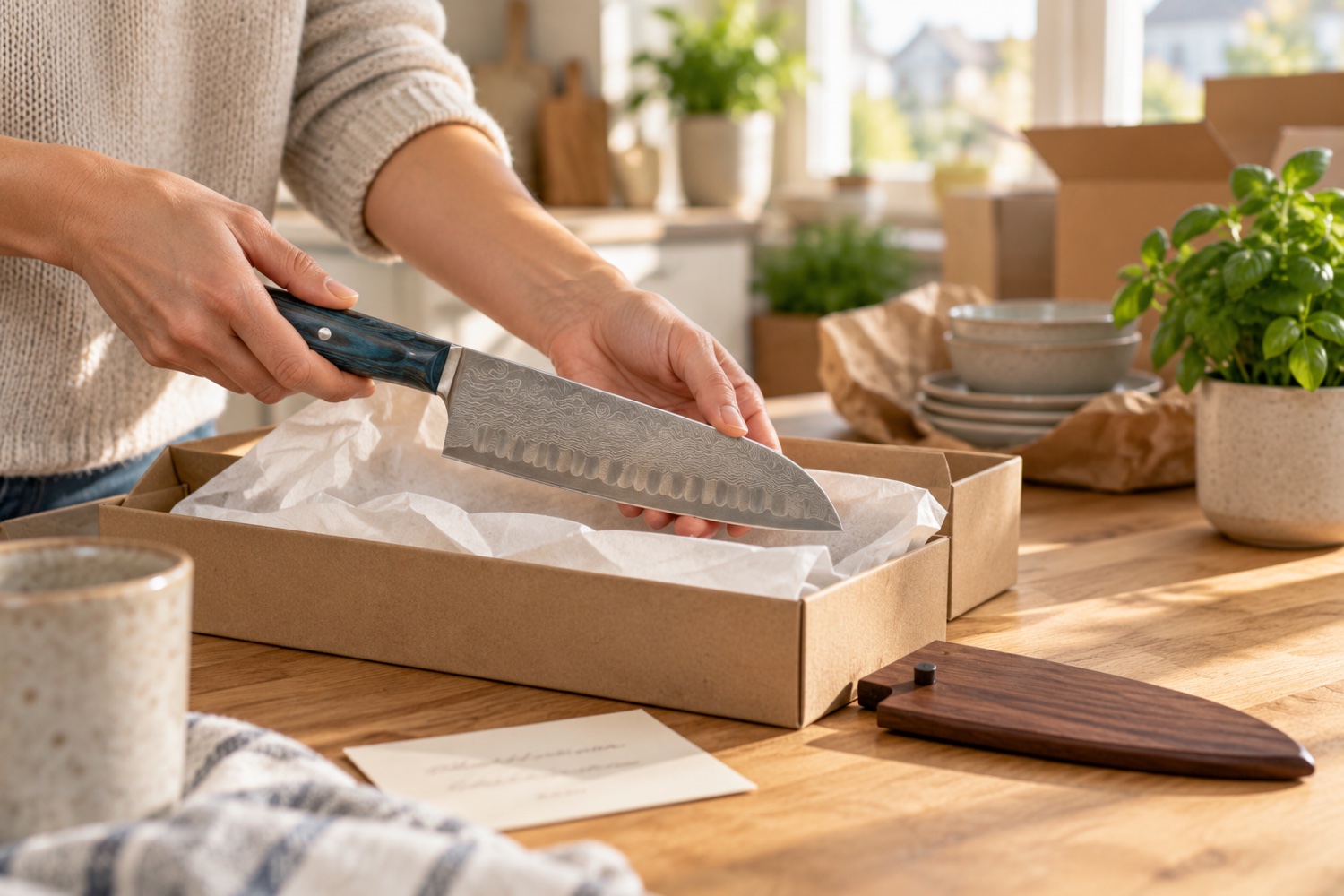
You've bought, been given, or are about to give a Japanese knife. Day-to-day care comes down to a few habits: wash by hand, dry right away, use the right board, cut with the right knife, and store the edge safely. What makers and knife shops actually say — including where Shun, Korin, GLOBAL and MUSASHI disagree — and a short care note to include with a gift.
A Japanese kitchen knife isn’t fragile, but it is particular. Most of what keeps one in good shape comes down to five habits:
- Wash it by hand.
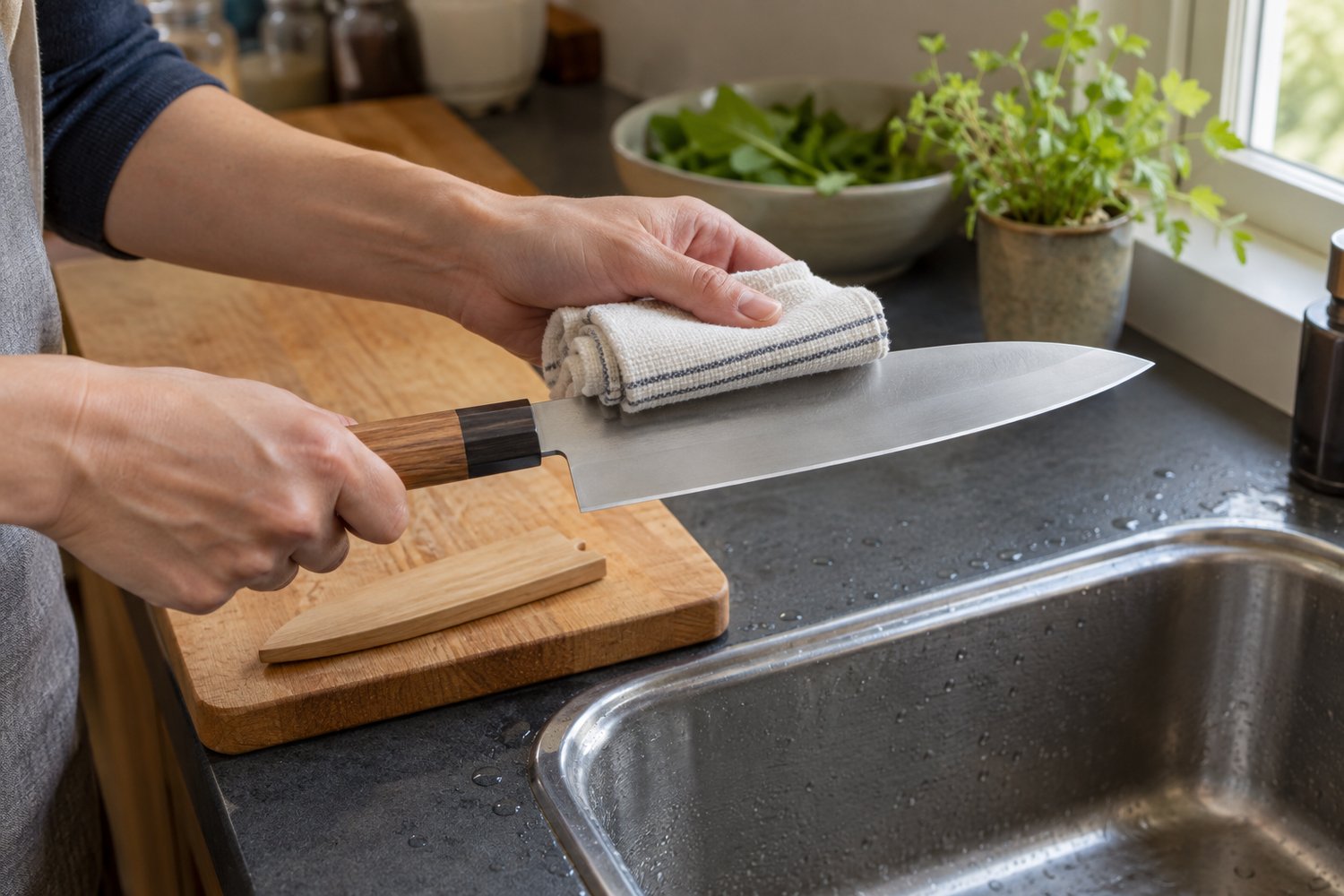
- Dry it straight away.
- Cut on a suitable board.
- Use it for the jobs it was made for.
- Store it so the edge is protected.
That’s the whole routine for most home cooks. The rest of this page explains each habit, where makers and shops agree, and where they don’t. When your knife came with its own care instructions, those come first: Japanese knives vary a lot in steel, shape and edge, and the maker knows its knife best.
I’m a designer in Japan, not a knife maker or sharpener. What follows is drawn from the published care guidance of Shun (Kai USA), the knife shop Korin in New York, GLOBAL’s UK distributor, and MUSASHI JAPAN, the shop this site links to for knives. Where they differ, this page says so rather than picking a winner.
Can it go in the dishwasher?
No. Every source checked for this guide says to wash Japanese knives by hand.
- Why not the dishwasher. Shun explains that dishwashers expose knives to prolonged moisture, high heat and contact with other utensils, all of which can damage the blade and handle (Shun, caring for your Japanese knives). Korin says the dishwasher can cause rust and discoloration on both stain-resistant and carbon knives (Korin, knife care).
- How to wash. Warm water, mild dish soap and a soft sponge or cloth, per Shun. Shun also advises against citrus-extract and bleach-based soaps, which it says promote rust (Shun, use and care).
- Hold it safely. Wash with the edge facing away from you, one side at a time. Don’t run your fingers along the edge to clean or dry it.
- Don’t soak it, and don’t leave it wet. Shun lists soaking in the sink among the things to avoid, and says not to leave a knife sitting in soapy water.
Dry it right away
Wipe the knife dry with a towel as soon as you’ve washed it, blade and handle, and before you put it away. Shun’s guidance is to towel-dry immediately; MUSASHI’s is to wipe dry after washing (MUSASHI, maintenance).
For carbon steel knives, Korin goes further: wipe the blade dry during use, too, not just at the end (Korin, carbon knife care).
Stainless or carbon steel: which do you have?
Japanese knives come in both, and the care is a little different. Check the product description, the box or the shop’s page for the steel name.
| Stainless (e.g. VG-10, AUS-10, Silver Steel #3) | Carbon steel (e.g. White Steel, Blue Steel, SK) | |
|---|---|---|
| Rust | Resistant, not rust-proof. Can spot if left wet | Rusts readily if left wet |
| During use | Rinse and dry after acidic foods (MUSASHI) | Wipe dry during use, not only after (Korin) |
| Color change | Little | Often darkens with use; acidic food can discolor it |
| Everyday care | Hand-wash, dry right away | The same, with more attention to drying |
Two things to watch for when you read a label:
- “High-carbon” doesn’t always mean carbon steel. Many stainless knives are marketed as “high-carbon stainless”. The steel name tells you more than the phrase does.
- Clad knives are mixed. Some knives have a carbon steel core wrapped in stainless steel. The sides behave like stainless, but the exposed edge is carbon steel and needs carbon-steel care. Check how your knife is built rather than assuming from the outside.
Discoloration and rust
Patina. Carbon steel often darkens with use into a grey, blue or brownish film called a patina. Korin says discoloration from acidic foods doesn’t affect a carbon knife’s performance, and Shun describes the darkening on its carbon steel knives as natural and protective.
Rust. Rust usually looks orange-brown and can feel rough or flaky. It’s what the drying habits above are there to prevent. Shun notes that rust isn’t a manufacturing defect and isn’t covered by its warranty (Shun, FAQ).
Not sure which it is? Color alone isn’t a reliable test. Take a clear photo and ask the shop or the maker. Korin, for example, mentions a professional cleaning service for minor rust.
Be careful with rust removers. Harsh abrasives, scouring pads and steel wool can scratch the finish or the edge; MUSASHI lists harsh chemicals and steel wool among the things to avoid. If a maker recommends a specific product for light rust, use that, as directed. For anything more than a small spot, ask a professional.
Cutting boards, and what not to cut
Boards. The sources agree on wood and on avoiding hard surfaces; they differ on plastic.
- Wood. Shun prefers medium-soft woods such as hinoki; GLOBAL recommends wooden boards, especially cherry (GLOBAL UK); MUSASHI says wood.
- Plastic. MUSASHI’s product pages and maintenance page recommend “wood or soft plastic”. Shun, on the other hand, lists plastic and acrylic among surfaces to avoid. If your knife’s maker says which it prefers, follow that.
- Never on glass, stone, tile, ceramic or metal. Every source says so. That includes glass cutting boards, marble or granite counters, and serving plates.
Use the right knife for the job. Thin Japanese blades are made to slice cleanly, not to hack or pry.
- Bones and frozen food. Shun, Korin, GLOBAL and MUSASHI all say not to use an ordinary knife on bones or frozen food. Some Japanese knives are built for heavier work — a deba is thick and made for breaking down fish, for example — but that doesn’t make every Japanese knife suitable for it. For what a deba is for, see the deba and yanagiba guide for anglers.
- Don’t twist. If the blade gets stuck in something dense, like a winter squash, lift it straight out rather than twisting it sideways. Shun and MUSASHI both warn that twisting can chip the edge.
- Don’t scrape with the edge. To move chopped food across the board, use the spine (the back of the blade), as Shun suggests.
Not all Japanese knives are the same. A santoku, a nakiri, a sujihiki and a yanagiba each have their own job. If you’re still choosing, the weekend cook’s santoku guide and santoku or gyuto as a gift explain what each type does.
Honing, sharpening and sharpeners
The difference.
- Honing straightens an edge that has bent slightly with use, without removing much metal. It’s done with a rod.
- Sharpening grinds a new edge. It’s done on a whetstone (a flat sharpening stone), a sharpener, or by a professional.
Honing steels: makers disagree. This is where it matters most to follow your knife’s own guidance.
- Shun recommends regular honing with a suitable honing steel between sharpenings, and sells one with a built-in angle guide. It advises against using a diamond steel for routine honing, since that removes metal (Shun, FAQ).
- Korin says not to use a sharpening steel on its Japanese knives, because it can damage the blade (Korin, knife care).
So there’s no single rule for “Japanese knives”. Use a honing steel only if your knife’s maker or shop recommends one, and in the way they describe.
Pull-through and electric sharpeners. Again, it depends on the knife. Shun sells a manual pull-through sharpener matched to the angle of its knives. GLOBAL recommends whetstones or pull-through sharpeners but says to avoid electric ones. A sharpener made for a different edge angle, or for Western knives, may not suit yours. Check that a sharpener is compatible with your specific knife before using it.
Single-bevel knives are different. Some Japanese knives, such as the yanagiba and deba, are sharpened on one side only. Others are double-bevel (sharpened on both sides), and some are sharpened asymmetrically. They aren’t sharpened the same way, and many sharpeners and rods are designed only for double-bevel edges. Shun, for instance, recommends professional service for the back of single-bevel blades.
If you’ve never sharpened a knife. Start with the maker’s or shop’s own instructions for your model, or use a sharpening service that knows Japanese knives. Some makers offer their own service; Shun offers free sharpening for eligible knives (see the service section below). How often a knife needs sharpening depends on how much and how it’s used, so this guide doesn’t set a schedule.
Storing it
- Dry it completely first. Every source says so. Don’t put a damp knife away, and don’t put a wet knife into a sheath or cover.
- Protect the edge. Don’t toss a knife loose into a drawer, where it knocks against other tools. Options include a saya (a wooden sheath made for the knife), a blade guard, an in-drawer knife tray, a knife roll or case, or a magnetic strip.
- Knife blocks: another difference. Shun suggests blocks are fine if you insert the knife spine-first rather than pushing the edge down against the slot. MUSASHI, by contrast, advises against knife blocks, saying they can dull the edge and harbor mold. Use whatever your maker suggests.
- Keep knives out of children’s reach.
Oil. You don’t need to oil every knife every time. Some sources suggest it in specific cases:
- MUSASHI includes a thin coat of non-acidic, edible oil applied with a cloth after drying in its care steps.
- Korin recommends tsubaki (camellia) oil for carbon knives.
If you use oil, use a food-safe product that your maker or shop recommends, and follow their instructions. For a stainless knife used every day, drying properly matters far more.
If your knife came from Japan
A knife bought in Japan and a knife bought from a US dealer don’t always come with the same service.
- Shun, for example, says it only provides warranty and sharpening service to customers who bought their knives in the USA, Canada or Mexico, through Kai USA or its authorized dealers. If you bought elsewhere, it asks you to contact Kai USA before sending anything (Shun, FAQ).
- Other makers and shops have their own terms. Don’t assume one brand’s policy applies to another.
- Before sending a knife for sharpening or repair, check with the maker or the shop you bought it from.
For what the shops this site links to say about warranty and returns, see How to Buy.
If you’re giving a Japanese knife
- Low-maintenance person? Choose stainless. A stainless knife is more forgiving of a knife left on the board for a while.
- Giving carbon steel? Tell them it needs drying during and after use, and that it will darken. Some people love that; others won’t.
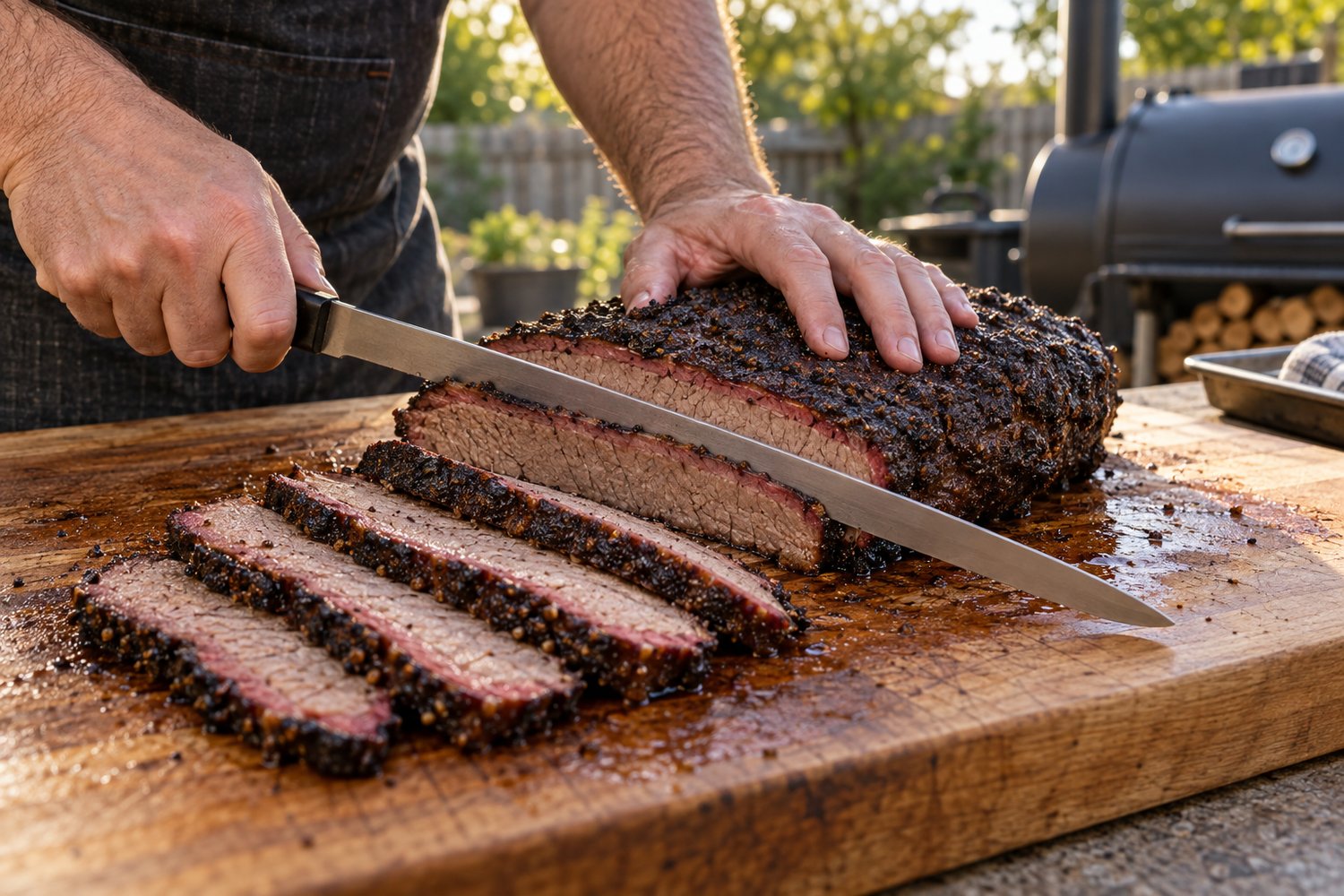
- Price isn’t the point. The most expensive or most specialized knife isn’t the best gift for everyone. The right one fits how they cook and what they’ll actually do after dinner. If they carve a lot of meat, for example, the slicing knife guide is a better starting point than a sashimi knife.
- Include the model name and the care link. Write down the exact model name and the link to the maker’s or shop’s care page, and put it in the box. Care advice varies by knife, and that’s the one that applies.
A care note you can copy
Print this, add the model name and care link, and tuck it into the box.
Caring for your new knife Model: ________ · Care guide: ________
- Wash by hand with warm water and mild soap. No dishwasher.
- Dry it right away, blade and handle.
- Cut on wood (or the board the maker recommends). Never on glass, stone or plates.
- Use it for its job — not on bones, frozen food, or by twisting.
- Check the care guide above for how this model should be sharpened and stored.
Sources
Checked 13 September 2026.
- Shun (Kai USA), Caring for your Japanese knives: hand-washing, dishwasher, soaking, boards, storage.
- Shun, Use and care: soaps to avoid, drying, boards, what not to cut, twisting.
- Shun, FAQ: honing steels, sharpeners, rust and warranty, service for knives bought outside the USA, Canada or Mexico.
- Korin, Knife care: dishwasher, sharpening steels, tsubaki oil.
- Korin, Carbon knife care: drying during use, acidic food and discoloration, rust cleaning service.
- GLOBAL (UK), How long should a GLOBAL knife last? (8 July 2026): boards, dishwasher, sharpeners, storage.
- MUSASHI JAPAN, Maintenance: washing, drying, oil, boards, storage, knife blocks, rust removal cautions.
Frequently asked questions
- Can Japanese knives go in the dishwasher?
- The makers and shops checked for this guide all say no. Shun explains that dishwashers expose knives to prolonged moisture, high heat and contact with other utensils; Korin says the dishwasher can cause rust and discoloration. Wash by hand with warm water, mild dish soap and a soft sponge, then dry right away.
- Do stainless Japanese knives rust?
- They resist rust, but they aren't rust-proof. Shun describes its stainless knives as rust-resistant, not rust-proof, and Korin says even stain-resistant knives should be dried promptly. Left wet, any steel can spot.
- Should I use a honing steel on a Japanese knife?
- It depends on the knife and the maker. Shun recommends regular honing with a suitable honing steel. Korin says not to use a sharpening steel on its Japanese knives. Follow the guidance for your specific knife, and if there isn't any, ask the shop or maker before using one.
- What cutting board should I use?
- Wood is the choice all the sources here agree on. Views on plastic differ: MUSASHI recommends wood or soft plastic, while Shun lists plastic among surfaces to avoid and prefers soft woods such as hinoki. Everyone says to avoid glass, stone, ceramic and metal.
- Is the dark color on my carbon steel knife rust?
- Not necessarily. Carbon steel often darkens with use, and Korin says discoloration from acidic foods doesn't affect performance. Orange-brown, flaky or rough spots are more likely rust. Color alone isn't a reliable test, so if you're unsure, send a photo to the shop or maker.
- My knife came from Japan. Can the US maker service it?
- Not always. Shun, for example, provides warranty and sharpening service only for knives bought in the USA, Canada or Mexico from Kai USA or its authorized dealers. Other brands have their own rules. Check with the maker or the shop you bought from before sending a knife anywhere.
- What should I tell someone I'm giving a Japanese knife to?
- The model name and a link to the maker's or shop's care page, plus the basics: hand-wash, dry right away, use a wood (or suitable soft) board, keep it for the jobs it's made for, and check how that model should be sharpened. There's a short care note at the end of this guide you can copy.