Santoku or Gyuto as a Gift? How to Choose for a Home Cook
 By Kotaro·Updated Sep 26, 2026·9 min read
This guide contains affiliate links: if you buy through one, the shop may pay me a small commission at no extra cost to you. How I choose and how I earn
Giving a Japanese knife to someone who cooks, for a housewarming, a birthday or no reason at all? How to choose between a santoku and a gyuto by their kitchen, their board and the knife they already use, plus three Japanese knives from Hocho Knife with the shop's own specifications.
A Japanese knife is a lovely thing to give someone who cooks. It gets used every day, and a good one is still in the drawer years later. But the right knife isn’t the most expensive or the best-looking one. It’s the one that fits how they already cook: the food they make, the board they cut on, and the knife their hand is used to.
For most home cooks, the choice comes down to two Japanese all-purpose knives, the santoku and the gyuto. This page helps you choose between them for someone else’s kitchen, not your own. I’m a designer in Japan, not a chef, and I haven’t used the knives below. What follows is what MUSASHI JAPAN, a Tokyo knife retailer, and Korin, a New York knife shop, say about the two shapes, and what to find out before you buy.
Santoku and gyuto at a glance
These are general tendencies. Individual knives vary, so check the listing for the exact knife.
| Santoku | Gyuto | |
|---|---|---|
| Blade shape | Tall blade, fairly straight edge, rounded tip | Slimmer blade, curved edge, pointed tip |
| Typical length | 150–180mm (about 6–7 in), per MUSASHI | 210–300mm (about 8.3–12 in), per MUSASHI |
| Suits | Push cuts through vegetables, boneless meat and fish | Rocking and long slicing cuts; also meat, fish, vegetables and fruit |
| Work space | Fits a smaller board and a narrow counter | Wants a longer board and room to move the tip |
| Check before buying | Blade length, weight, handle style | Blade length and overall length against their board |
Both are all-purpose knives. Neither is “the women’s knife” or “the men’s knife”, and the gyuto isn’t a meat-only knife.
Where the shapes come from, per MUSASHI’s guide to all-purpose knives: the santoku combines the gyuto’s length range with the straight edge of the nakiri, the Japanese vegetable knife. The gyuto was originally designed for slicing meat, but is versatile enough for fish, vegetables and fruit. MUSASHI suggests the choice largely comes down to personal preference. The santoku’s shorter blade suits the push cuts many home cooks already use; the gyuto’s longer, curved blade makes a rocking chop and longer cuts easier (MUSASHI, all-purpose Japanese knives).
What to find out about them first
You don’t need to ask outright. Look around their kitchen, or ask a couple of casual questions.
- The knife they use most, and its length. If it’s an 8-inch (about 200mm) chef’s knife, a gyuto will feel familiar. If it’s a 6- or 7-inch knife, or a santoku, stay in that range.
- What they cook most. Lots of vegetables, weeknight stir-fries and boneless meat suit either. Long slicing jobs and big batches of chopping favor a gyuto’s length.
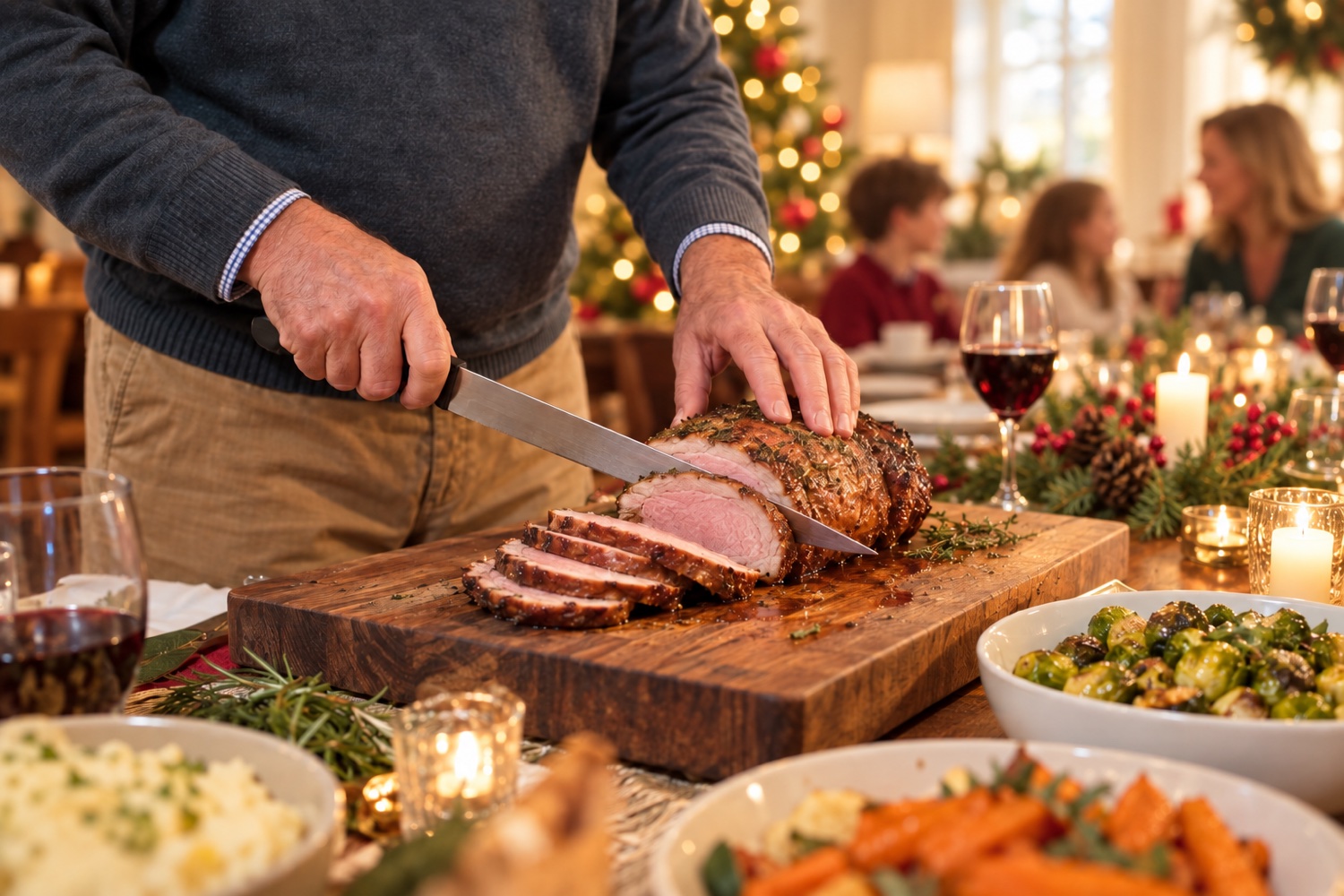
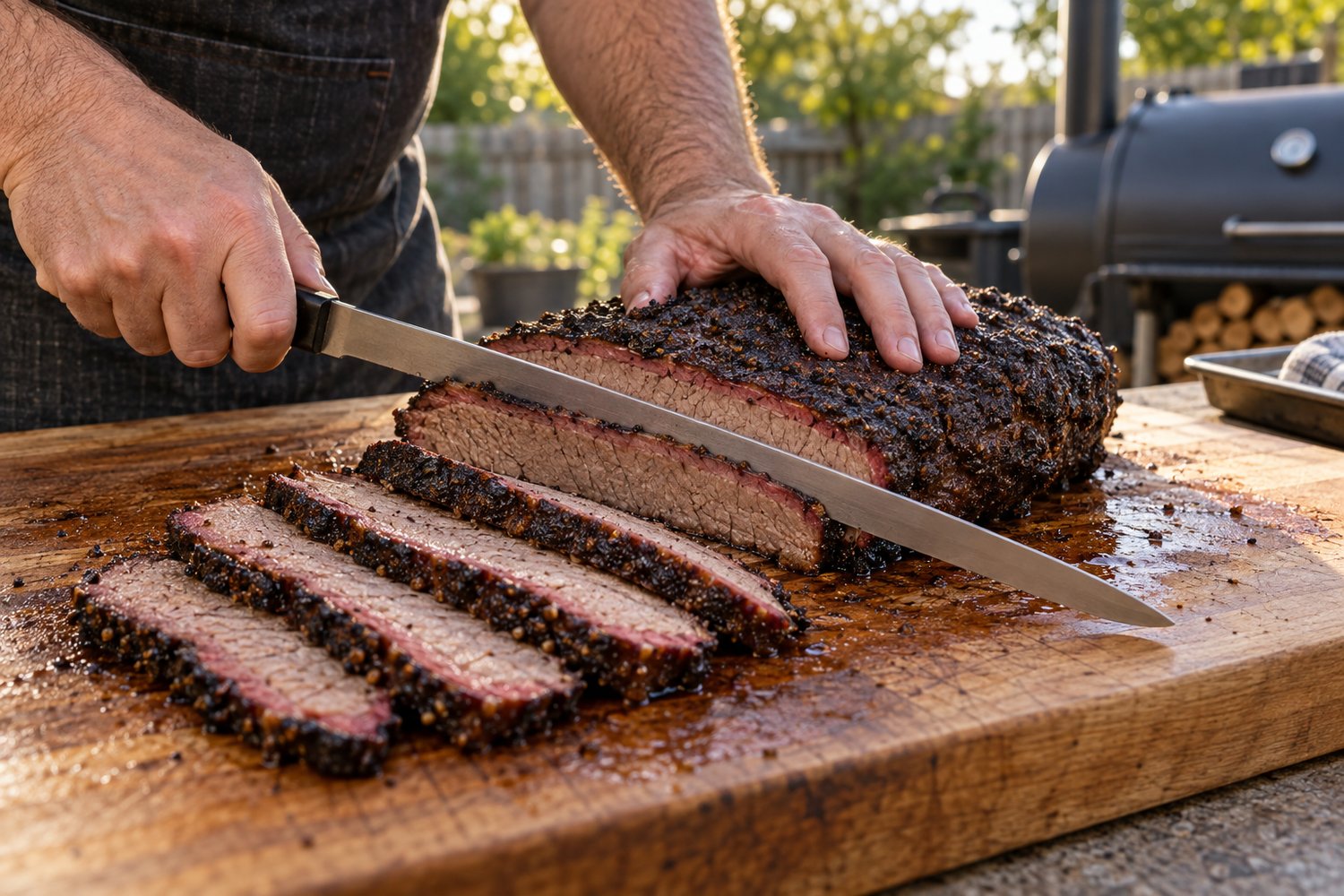
- Whether they cut large things. A whole cabbage, a big squash or a roast is easier with a longer blade. But no kitchen knife here is for bones or frozen food; those need a knife made for the job.
- Their board and counter. Measure, or guess from photos. A long knife on a small board means the tip runs off the edge.
- How they feel about care. Every knife here is stainless, hand-wash only, and needs sharpening eventually.
- Replacement or addition. Would they be happiest with a better version of the knife they already use, or with a different shape to try? A replacement should match their current length. An addition can be the other shape.
When a santoku is the better gift
- Their board is small, or their counter is narrow. A 160–180mm blade fits where a 210mm one might not.
- They already cook with a shorter knife and like it.
- They mostly push-cut: slicing straight down through vegetables, onions, herbs and boneless meat.
- They like a tall blade. Korin notes the santoku’s high profile keeps the knuckles well above the board (Korin, santoku).
- It’s for a new or small kitchen, such as a first apartment or a housewarming, and you don’t know the board size yet.
When a gyuto is the better gift
- They already use an 8-inch chef’s knife and reach for it for everything.
- They cook in volume, or often slice long items such as a roast or a big fillet.
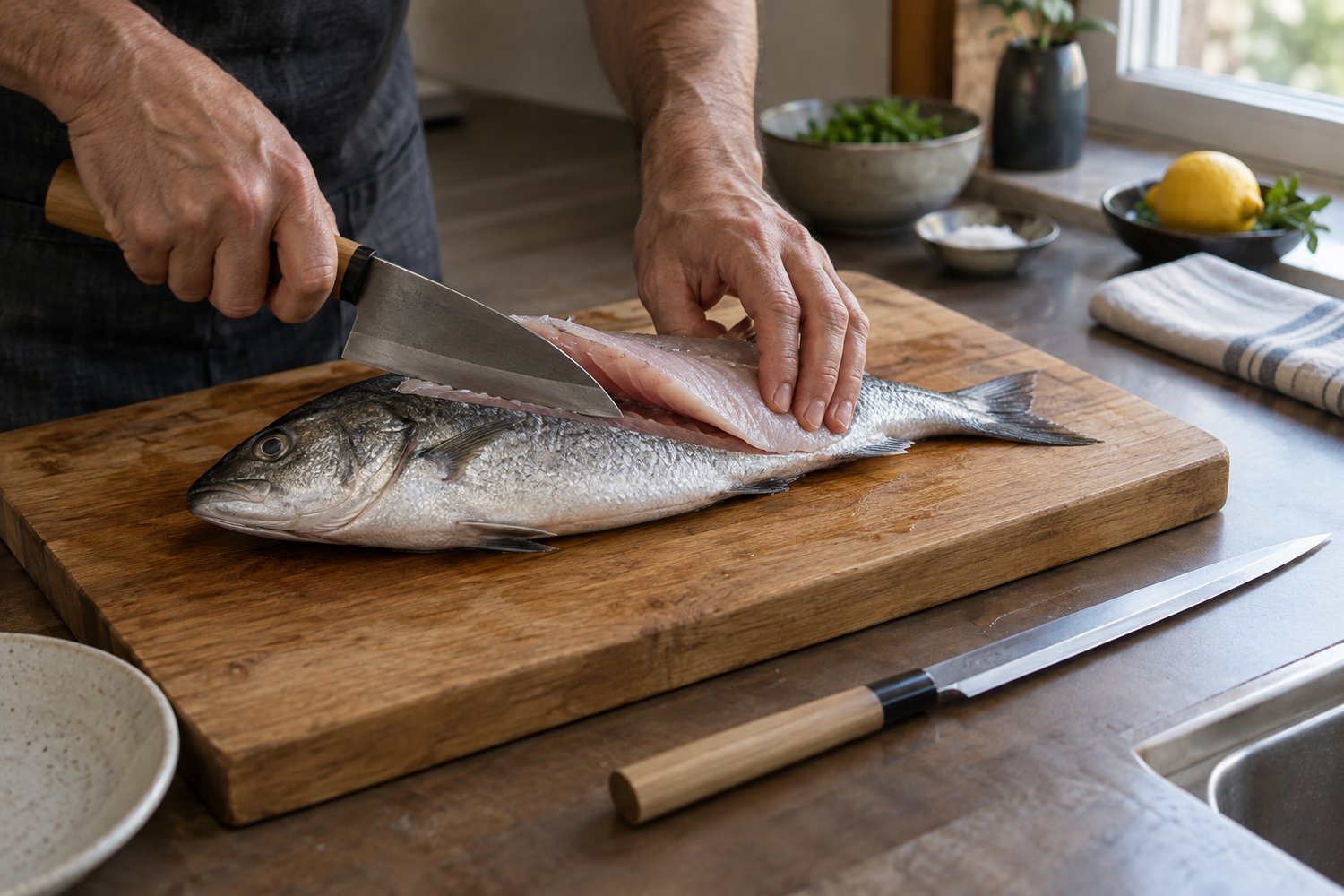
- They use a rocking motion when they chop herbs or vegetables. MUSASHI notes the gyuto’s curved edge enables the rocking chop.
- Their board and counter have room for a blade of 210mm (8.3 in) or more, plus the handle behind it.
- They like a pointed tip for detail work such as scoring or trimming.
If you’re torn and can’t ask, the safer gift is usually the shape closest to the knife they already use.
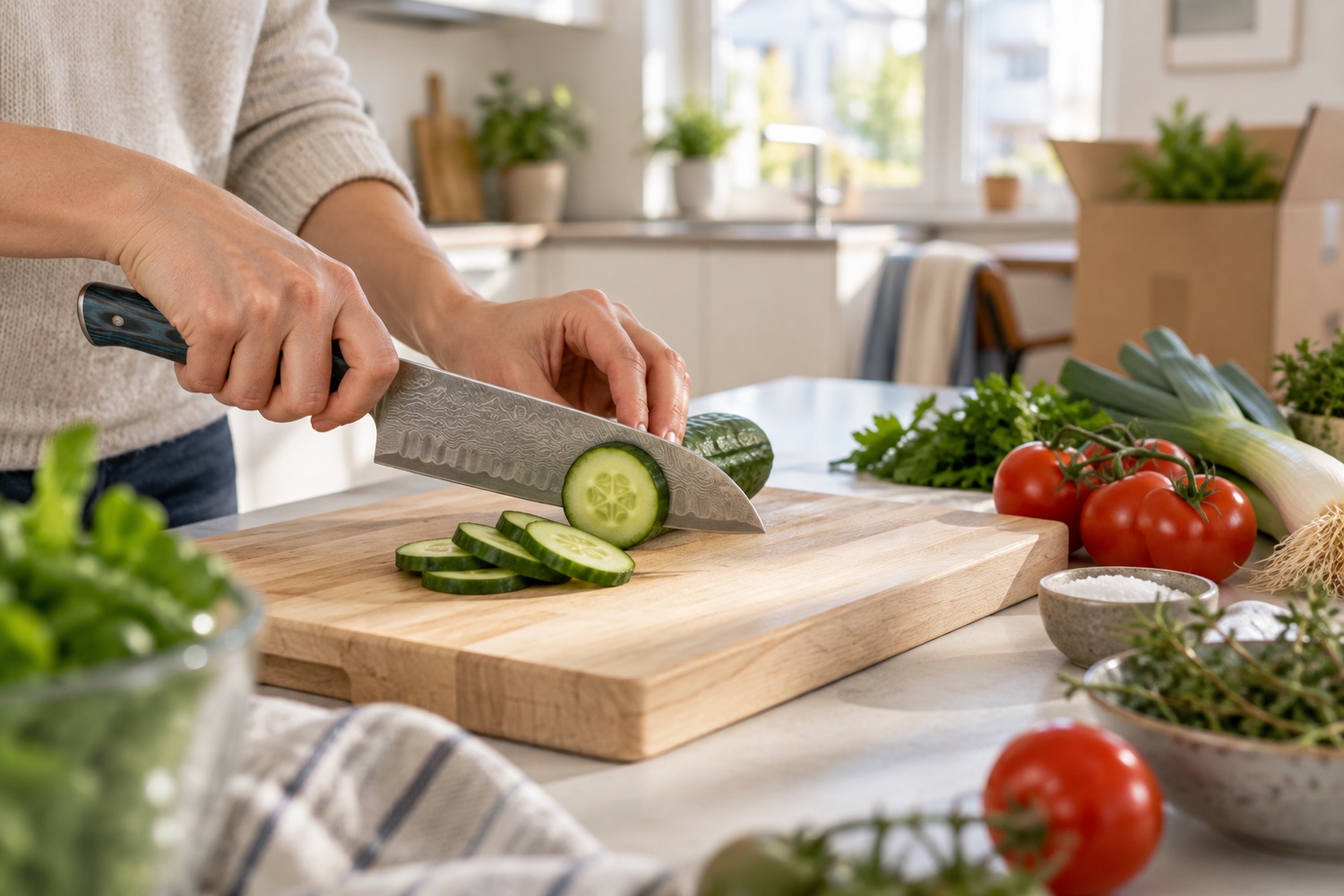
Three knives from Hocho Knife
All three are sold by Hocho Knife, an online knife shop that ships from Japan. Specifications are from Hocho Knife’s product pages. Prices are the shop’s US dollar prices on 26 September 2026, before shipping; all three were listed as in stock, and prices and stock change.
For most home kitchens: Sakai Takayuki 33-Layer VG10 Damascus Santoku, 180mm
Who it suits. A home cook with a standard board who likes a fairly short knife, or who already uses a santoku and would enjoy a better one.
Why this one. 180mm is the long end of the santoku range, so there’s room for a big onion or a cabbage half without moving up to a gyuto. It’s made in Sakai, one of Japan’s old knife towns, by Aoki Hamono under its Sakai Takayuki name. The core is VG10, a stainless steel, wrapped in 33 layers of hammered Damascus steel. The layered pattern is a finish; it isn’t, by itself, a measure of how well a knife cuts. The handle is a Western-style one in mahogany-toned laminated wood.
Not for. Bones, frozen food, or someone who wants one long knife for slicing roasts.
Hocho Knife’s specifications. VG10 core, 33-layer hammered Damascus stainless, HRC 60 ±1; double-edged (either hand); blade 180mm (7.1 in); overall 305mm (12 in); 178g; handle pakka wood (the shop notes the handle material may change to Japanese-made pakkawood without notice). Made in Japan. Price $150.99.
For the cook with room on the board: Sakai Takayuki 33-Layer VG10 Damascus WA Gyuto, 210mm
Who it suits. A home cook who already uses an 8-inch chef’s knife, cooks in volume, or likes to rock-chop, and has a board to match.
Why this one. It’s the same maker and the same 33-layer VG10 blade as the santoku above, so the main difference is the shape, which makes the two easy to compare, or to give a couple one of each. One difference to know: this gyuto has a Japanese-style (wa) handle in zelkova wood, which is lighter and sits further back in the hand than a Western handle. At 150g it’s lighter than the santoku, despite the longer blade. 210mm is a manageable length for a home board.
Not for. A small board or a narrow counter, someone who dislikes long knives, or a cook who strongly prefers a Western-style handle.
Hocho Knife’s specifications. VG10 core, 33-layer hammered Damascus stainless, HRC 60–61; blade spine about 2.0mm; double-edged (either hand); blade 210mm (8.3 in); overall 360mm (14.2 in); 150g; Japanese zelkova handle with a mahogany bolster. Made in Japan. Price $211.99.
For a first kitchen, or a smaller budget: Kanetsune KC-950 Santoku, 165mm
Who it suits. A first apartment, a housewarming where you don’t know the kitchen yet, or anyone who wants a proper Japanese santoku without spending much. It’s the lowest-priced of the three by a wide margin.
Why this one. At 165mm it’s a little shorter than the santoku above, and at 120g it’s light in the hand. It’s made by Kanetsune in Seki, another of Japan’s knife towns, in DSR-1K6, a high-carbon stainless steel, with a hammered finish on the blade.
Not for. Long slicing jobs or large ingredients, where a longer blade does more per stroke.
Hocho Knife’s specifications. DSR-1K6 high-carbon stainless, HRC 58–59; blade spine about 1.5mm; double-edged (either hand); blade 165mm (6.5 in); overall 295mm (11.6 in); 120g; laminated-wood handle with a plastic bolster. Made in Japan. Price $49.99.
If it’s a housewarming gift
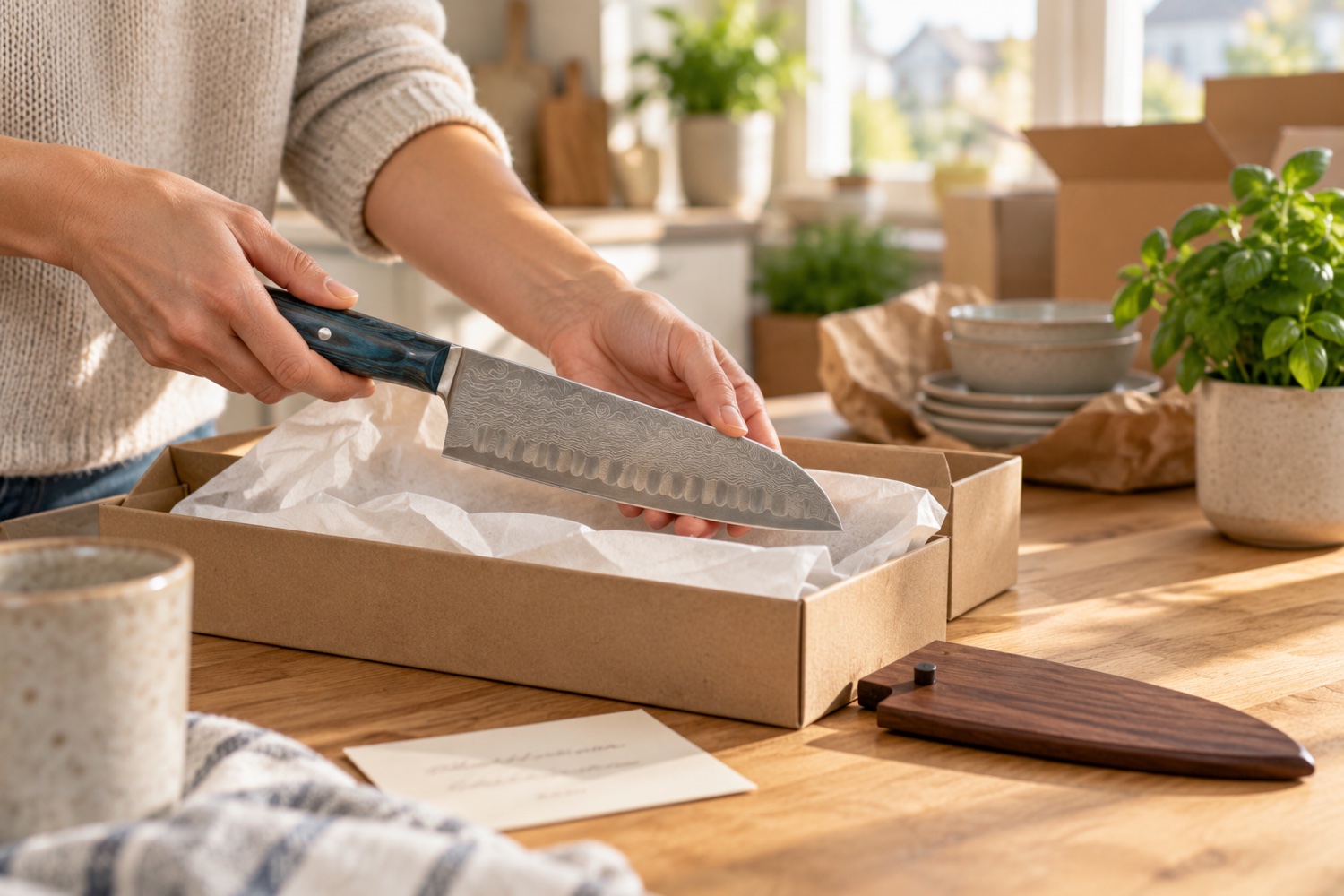
A new kitchen often doesn’t have its knife storage sorted yet. A blade guard or fitted wooden sheath (saya) protects the edge in a drawer; Hocho Knife sells these separately, so ask which fits the knife you choose. If you don’t know the size of their new board, the shorter santoku is the safer choice. And if the household cooks mostly vegetables, a nakiri is worth a look; see a nakiri for the partner who loves their CSA box. For more ideas that stay under $100, see Japanese Christmas gifts under $100.
Before you give it: a last check
- Size. Blade length matches the knife they already use, and the overall length fits their board.
- Care. Hand-wash, dry, no dishwasher, a wooden or soft plastic board, and a whetstone now and then. The fuller routine, with a care note you can copy into the card, is in the Japanese knife care guide.
- Returns. Hocho Knife accepts returns within 14 days of delivery for items that are unopened and unused, with all original packing (Shipping & Returns). Check the box when it arrives, carefully.
- Wrapping. Hocho Knife offers gift wrapping and a message card as options at checkout.
The best version of this gift is the one that disappears into their routine: the knife they pick up without thinking, on an ordinary evening, because it suits the way they cook. That’s what you’re choosing for.
How to buy from Japan
Okurimono Japan doesn’t sell anything. “Check Price” goes straight to the knife’s page on Hocho Knife, an online knife shop that ships from Japan. You pay Hocho Knife directly, and it handles shipping, returns and support.
What Hocho Knife’s Shipping & Returns page states, as of 26 September 2026:
- Handling time. Up to 3–5 business days after payment before the order ships, excluding weekends and Japanese holidays. Shipping is by FedEx or EMS (Japan Post).
- Free shipping. On orders over $250, for economy or standard shipping.
- US duties. The shop says that for US orders, customers may pay part of the duties at checkout, and that it advances and pays all import duties on eligible orders, so nothing more is due on delivery. It also notes that some couriers may charge the recipient a small administration fee. Check your order total before you pay.
More on ordering from Japan is on How to Buy. For a single santoku chosen for a weekend cook, see a Japanese knife for the weekend cook; for knives by sushi menu, see what knife you need for a sushi night.
Frequently asked questions
- Santoku or gyuto: which should I give?
- Choose by the person's kitchen and habits, not by which knife is 'better'. MUSASHI JAPAN describes both as all-purpose knives. A santoku is shorter (MUSASHI gives 150–180mm) with a straighter edge suited to push cuts. A gyuto is longer (210–300mm) with a curved edge that allows a rocking motion. A smaller board and a cook used to a short knife point to a santoku. A bigger board and a cook who already uses an 8-inch chef's knife point to a gyuto.
- Is a gyuto only for meat?
- No. The name comes from the Japanese for 'beef knife', and MUSASHI says it was originally designed for slicing meat, but it describes the gyuto as an all-purpose knife that handles fish, vegetables and fruit as well.
- Is a santoku a smaller, 'easier' knife?
- It's shorter, not lesser. Korin describes the santoku, meaning 'three virtues', as a multi-purpose knife for meat, fish and vegetables, and notes that its tall blade keeps the knuckles well above the board. Plenty of experienced cooks prefer one.
- Are these knives left-handed friendly?
- All three knives in this guide are listed by Hocho Knife as double-edged, meaning sharpened on both sides, so they work in either hand. Some Japanese knives are single-bevel and right- or left-handed by design; check the listing before ordering any other knife.
- Can the knife go in the dishwasher?
- No. The makers and knife shops checked for our care guide all say to wash Japanese knives by hand and dry them right away, and to use a wooden or soft plastic board.
- Can I have the knife gift-wrapped?
- Hocho Knife says it offers gift wrapping with Japanese-inspired designs and a message card, chosen as options when you order. Check the options on the product page before checkout.
- Can the knife be returned?
- Hocho Knife's shipping and returns page says items can be returned within 14 days of delivery if they are unopened and unused, with all original packing, and that it pays return shipping only when the error was its own. So if you want to check the knife, do it with care, and don't use it before you're sure.