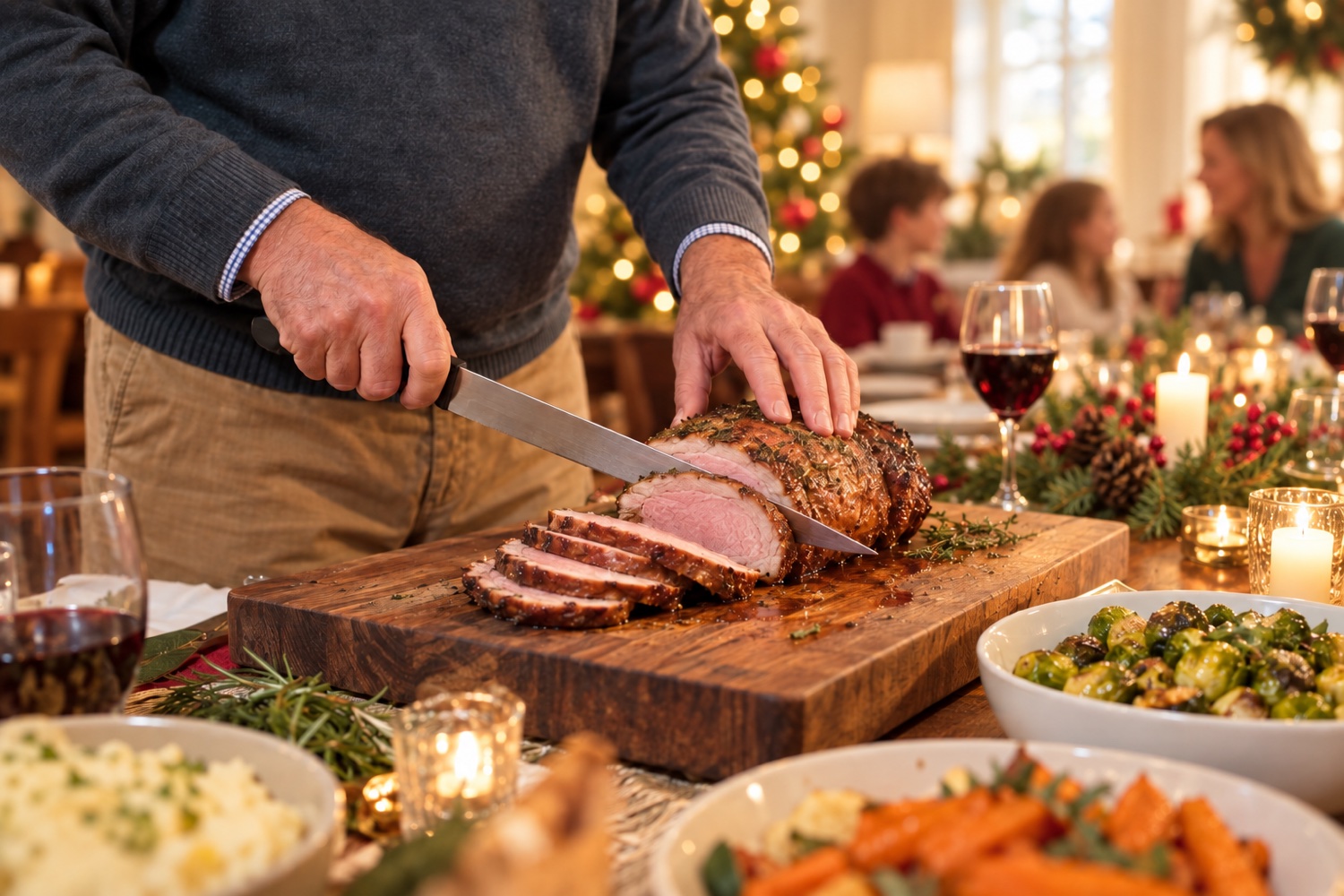
A Japanese Knife for the Weekend Cook in Your Life
 By Kotaro·Updated Sep 26, 2026·7 min read
This guide contains affiliate links: if you buy through one, the shop may pay me a small commission at no extra cost to you. How I choose and how I earn
A gift guide for the person who spends Saturdays cooking: why a Japanese santoku suits weekend home cooking, one knife to consider — a 33-layer VG10 Damascus santoku made in Sakai — its listed specs, what to check about their kitchen and habits before buying, and whether to surprise them or ask.
There’s someone you know who cooks properly on the weekend. They find a recipe, shop for it, and spend longer in the kitchen than a weeknight allows.
If you’re choosing a gift for that person, look past the finished dish for a moment and think about the time they spend making it.
That time is what they look forward to all week. A knife they’ll use in it is one kind of gift for it — and a Japanese knife is a good candidate.
This page is about one knife: a santoku, the Japanese all-purpose kitchen knife, in a version made in Sakai and sold by Hocho Knife. I’m a designer in Japan, not a chef, and I haven’t cooked with this particular knife, so what follows is the shop’s listed specifications, what they mean for weekend cooking, and what to check about the person before you buy. For sashimi knives, or for choosing between a santoku and a gyuto, there are separate guides linked on this page.
A gift for the time, not just the result
A weekend cook doesn’t need a knife to get dinner on the table faster. They need — or would enjoy — a knife that makes the two hours of prep feel better: something that stays sharp, sits well in the hand, and looks like it belongs to someone who cares.
That’s the honest case for giving a knife. It isn’t that an expensive knife makes anyone cook better, and it isn’t that everyone will be delighted. It’s that for a person who already likes the process, the tool is part of the pleasure.
First: what do they usually cook?
The right knife depends on what’s on the board. For most weekend home cooking, that is vegetables first, then boneless meat and fish.
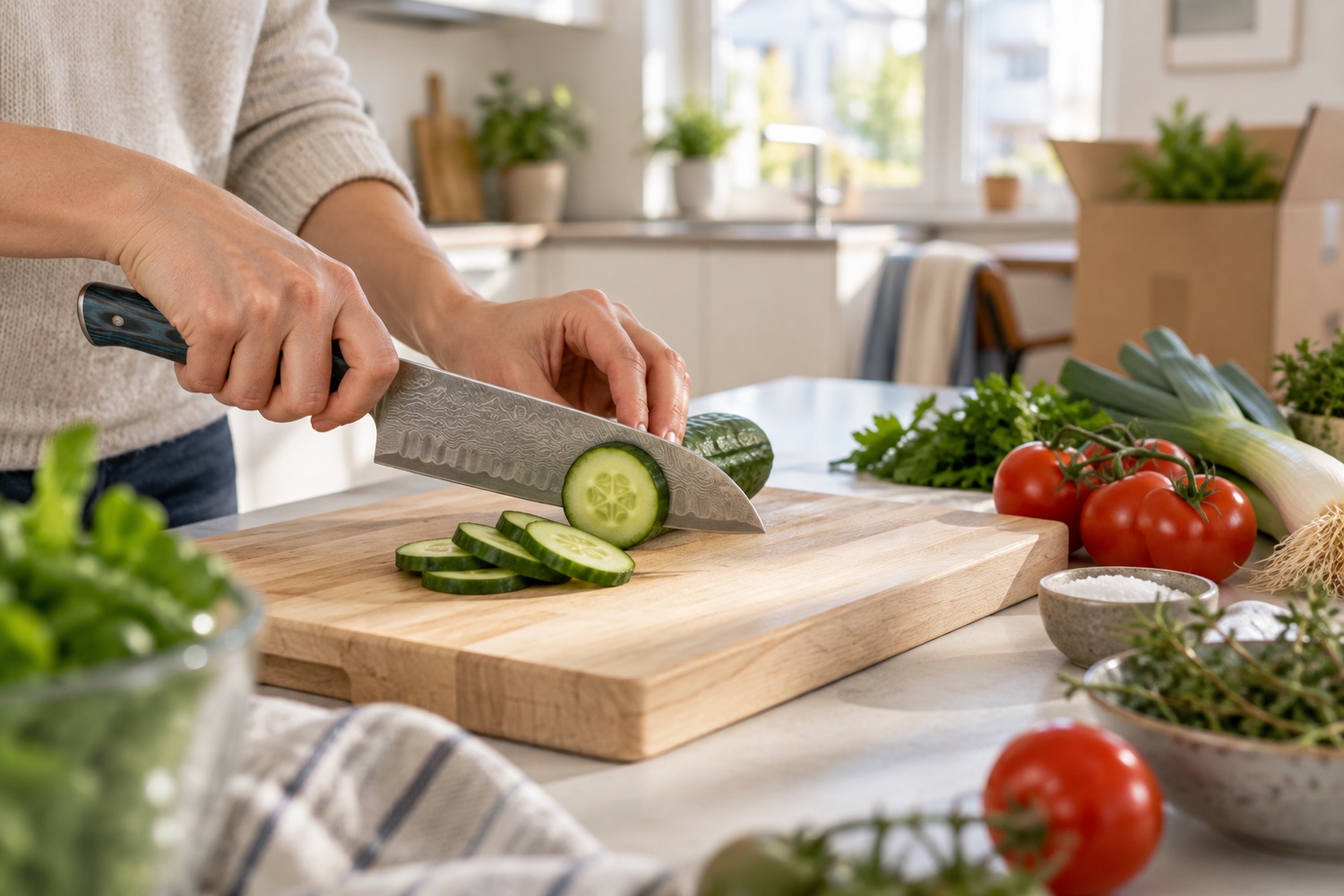
- Vegetables — onions, carrots, herbs, greens, squash. This is the bulk of most prep, and the job a santoku is designed around: MUSASHI JAPAN describes it as taking the features of the nakiri, the Japanese vegetable knife.
- Boneless meat and fish fillets — slicing, dicing, trimming. Also santoku territory; it borrows from the gyuto, the Japanese chef’s knife.
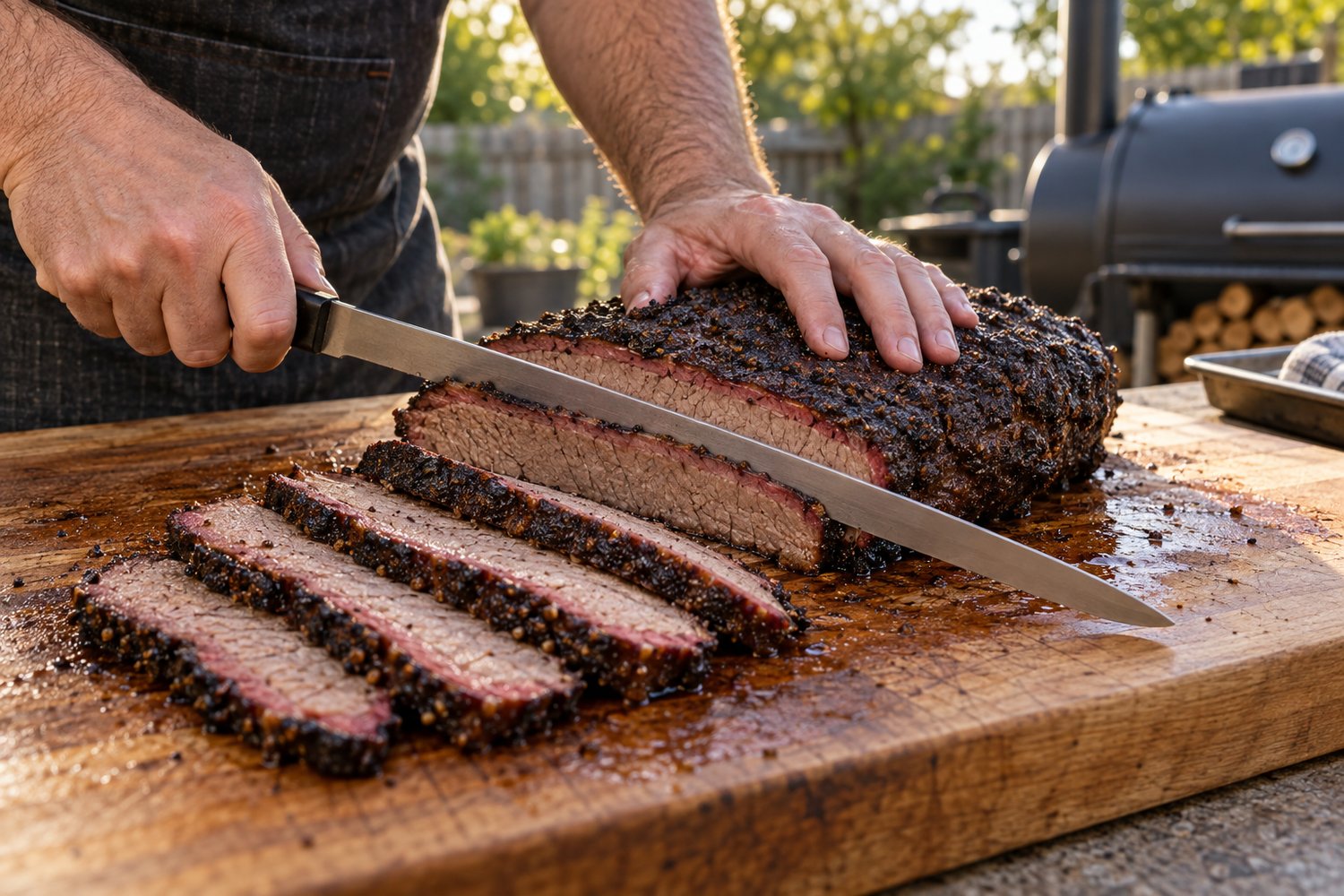
- Bones, frozen food, hard squash rinds, crusty bread — not this knife, and never twist the blade. A cook who breaks down whole chickens wants a heavier knife alongside; a bread lover wants a serrated one.
- Raw fish for sashimi — a different tool entirely, covered in knives for the sashimi lover. For hand rolls and maki at home, see which knife you need for a sushi night.
One thing not to assume: not every santoku is the same. Some Japanese knives are single-bevel (sharpened on one side, right-handed only). The knife below is listed by Hocho Knife as double-edged, so it works in either hand — but check that line on any other santoku you consider.
The knife: Sakai Takayuki 33-Layer VG10 Damascus Santoku, 180mm
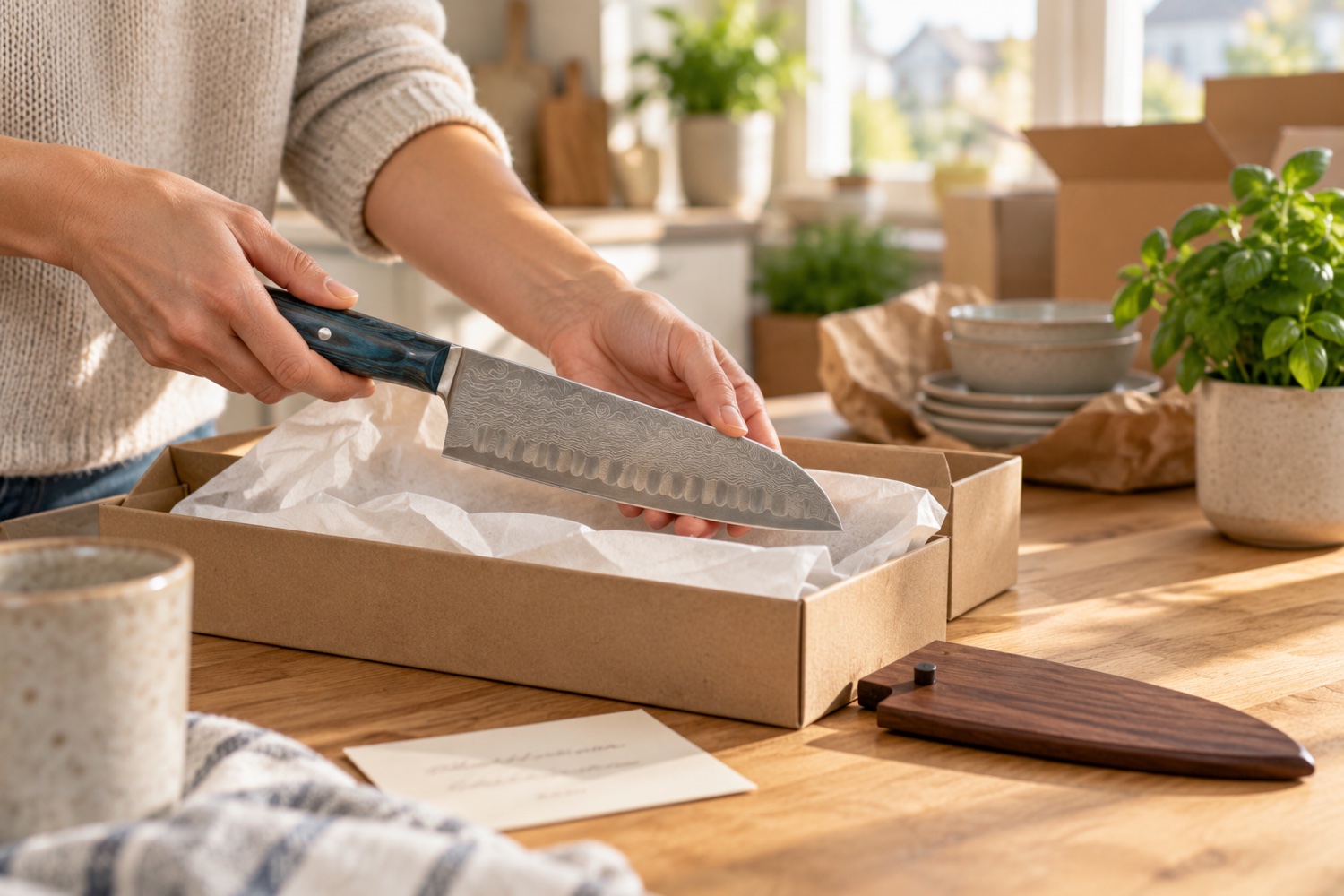
What it looks like. A 180mm santoku with the flat-ish edge and rounded tip of the type, a hammered Damascus blade — a VG10 core wrapped in 33 layers of stainless steel, which gives the rippled grain — and a Western-style handle in mahogany-toned pakka wood. On a wooden board it reads as a chosen object rather than kitchen equipment.
What it’s made of, per Hocho Knife. Core VG10, a Japanese stainless steel, in 33-layer hammered Damascus stainless; hardness HRC 60 ±1; double-edged; pakka wood handle (the shop notes the handle material may change to Japanese-made pakkawood without notice). Made in Japan by Aoki Hamono, under its Sakai Takayuki name.
Size and weight, per Hocho Knife. Blade 180mm (about 7.1 in); overall 305mm (about 12 in); weight 178g (about 6.3 oz).
Why it fits a weekend cook. The 180mm blade is the larger of the two common santoku sizes (165mm is the other), which gives more room for a big onion or a squash without moving up to a 210mm chef’s knife. (If you’re weighing the two shapes, see santoku or gyuto as a gift.) At 178g it has a little heft without being heavy. The double-edged grind means no handedness problem. And stainless steel forgives a knife left on the board for an hour, which a carbon-steel blade wouldn’t.
A word on the pattern and the steel. The Damascus pattern is the visible result of laminated construction; it is not, by itself, a measure of how well the knife cuts. Likewise, VG10 is a widely used steel with a good reputation, but the steel name doesn’t guarantee a finished knife — heat treatment, grind and sharpening do. This guide reports what the shop states and doesn’t go further.
If they already own good knives. A santoku still adds something to a Western set: it is shorter than a chef’s knife and suited to fine vegetable work. If they already own a Japanese santoku they like, a second one is duplication — see the questions below.
If this one isn’t quite right
The santoku above is the middle of the range, not the only sensible choice. Two others from the same shop, both listed as in stock on 26 September 2026:
If you’d rather spend less. The Kanetsune KC-950 santoku is the same shape at about a third of the price. Hocho Knife’s specifications: DSR-1K6 high-carbon stainless, HRC 58–59, hammered finish, double-edged; blade 165mm (6.5 in), spine about 1.5mm, overall 295mm (11.6 in), 120g (4.2 oz), laminated-wood handle, made in Seki by Kanetsune. It’s a lighter knife with a plainer finish than the Damascus one. It still needs hand-washing and drying.
If they cook for a crowd, or work on a big board. The gyuto is the longer, pointier chef’s-knife shape: better for large cuts of meat, a whole cabbage, a pile of prep. This one has the same 33-layer VG10 blade as the santoku above, with a Japanese-style (wa) handle in zelkova wood. Hocho Knife lists HRC 60–61, double-edged, blade 210mm (8.3 in), overall 360mm (14.2 in), 150g, made in Japan. A 210mm blade needs a board and a drawer to match. How to choose between the two shapes.
Before you buy: their kitchen and their habits
- What they use now. If their main knife is an 8-inch chef’s knife, a 180mm santoku is a slightly smaller, lighter alternative for daily prep. If they cook with a small paring knife and nothing else, it’s a step up in size — still manageable.
- Is 180mm right? Blade length, not overall length. On a small cutting board or for small hands, a 165mm santoku, like the Kanetsune above, may sit better.
- Handedness. Double-edged per Hocho Knife, so either hand. Grip is personal.
- Cutting board and storage. Use a wooden or soft plastic board — a glass or stone board will damage the edge. Storage should keep the edge from knocking against other knives: a block, a magnetic strip, or a blade guard.
- Care. Hand wash, dry, no dishwasher; no bones, no frozen food, no twisting; sharpen on a whetstone when it dulls. The everyday routine is in the Japanese knife care guide. Ask yourself whether the person will do this. A weekend cook who enjoys the process usually will; someone who wants a dishwasher-safe tool won’t.
- Wrapping. Hocho Knife offers gift wrapping and a message card as options at checkout; a sheath or blade guard is a separate purchase.
Surprise, or choose it together?
A knife is a personal tool — the weight, the handle, the length all come down to the hand that uses it. If the person already has opinions about knives, asking what they want is not a lesser gift; it’s a considered one. Three short questions do it:
- “What’s the knife you reach for most, and how long is the blade?”
- “Do you like a lighter knife or a heavier one?”
- “Would you actually sharpen a knife on a stone, or would you rather not?”
If they don’t have strong opinions yet, the santoku above is a reasonable surprise: the most general-purpose type, in a stainless steel, for either hand.
How to buy
Okurimono Japan doesn’t sell anything. “Check Price” goes straight to the knife’s page on Hocho Knife, an online knife shop that ships from Japan. You pay Hocho Knife directly, and it handles shipping, returns and support.
What Hocho Knife’s Shipping & Returns page states, as of 26 September 2026: a handling time of up to 3–5 business days after payment, then FedEx or EMS (Japan Post); free shipping on orders over $250; returns within 14 days of delivery for unopened, unused items with all original packing. For US readers: the shop says customers may pay part of the duties at checkout, and that it advances and pays all import duties on eligible orders, so nothing more is due on delivery; some couriers may charge the recipient a small administration fee. Check the total at checkout before you pay.
Prices on this page are Hocho Knife’s US dollar prices on 26 September 2026; all three knives were listed as in stock, and prices and stock change. General guidance on ordering from Japan is on How to Buy; more knives are in the Kitchen Knives category.
One more thing
Picture the person on a Saturday afternoon, board out, radio on, something taking longer than it needs to because they want it to. That’s the time you’re giving to. Choose for that.
Frequently asked questions
- Is a Japanese knife a good gift for someone who cooks as a hobby?
- Usually, yes — with two conditions. The person should enjoy the cooking itself, not just the result, because a good knife is a tool you notice while using it; and they should be willing to hand-wash and occasionally sharpen it. A knife doesn't make anyone a better cook by itself, and this guide doesn't claim it will.
- What is a santoku, and what is it good for?
- A Japanese all-purpose kitchen knife. MUSASHI JAPAN, a Tokyo knife retailer, describes the santoku as combining the features of a nakiri (vegetable knife) and a gyuto (chef's knife), and as the most widely used knife in Japanese households. It suits vegetables, boneless meat and fish fillets. It is not for bones, frozen food or hard items.
- Is the knife in this guide right- or left-handed?
- Hocho Knife lists it as double-edged, which means it is sharpened on both sides and can be used in either hand. Some Japanese knives are single-bevel and right-handed only; this one is not.
- How big is it?
- Hocho Knife's specifications: 180mm blade (about 7.1 in), 305mm overall (about 12 in), 178g. Blade length and overall length are different numbers — the 180mm is the cutting edge, not the whole knife.
- Is it made in Japan?
- Hocho Knife's product page lists it as made in Japan by Aoki Hamono, which makes knives under the Sakai Takayuki name in Sakai, Osaka, one of Japan's traditional blade-making towns.
- What care does it need?
- The usual rules for a Japanese knife: don't twist the blade, don't cut bone, frozen or hard items, and use a wooden or soft plastic cutting board. VG10 is a stainless steel, so it resists rust, but it should still be hand-washed and dried. It will need sharpening on a whetstone over time.
- Can it be gift-wrapped?
- Hocho Knife says it offers gift wrapping with Japanese-inspired designs and a message card as options when you order. A blade guard or sheath is a separate purchase; ask the shop which fits.
- What about shipping, duties and returns?
- Hocho Knife ships from Japan by FedEx or EMS after a handling time of up to 3–5 business days, with free shipping on orders over $250. For US orders it says it advances and pays import duties on eligible orders, so nothing more is due on delivery. Returns are accepted within 14 days of delivery for unopened, unused items with all original packing.