A Japanese Nakiri for the Partner Who Loves Their CSA Box
 By Kotaro·Updated Sep 26, 2026·6 min read
This guide contains affiliate links: if you buy through one, the shop may pay me a small commission at no extra cost to you. How I choose and how I earn
For the partner who picks up a farm share every week and spends Sunday turning cabbage, greens and herbs into the week's meals: why a Japanese nakiri, the flat-edged vegetable knife, makes sense as a second knife next to their chef's knife or santoku. One knife from Hocho Knife with its specifications, what it isn't for, and how to order from Japan.
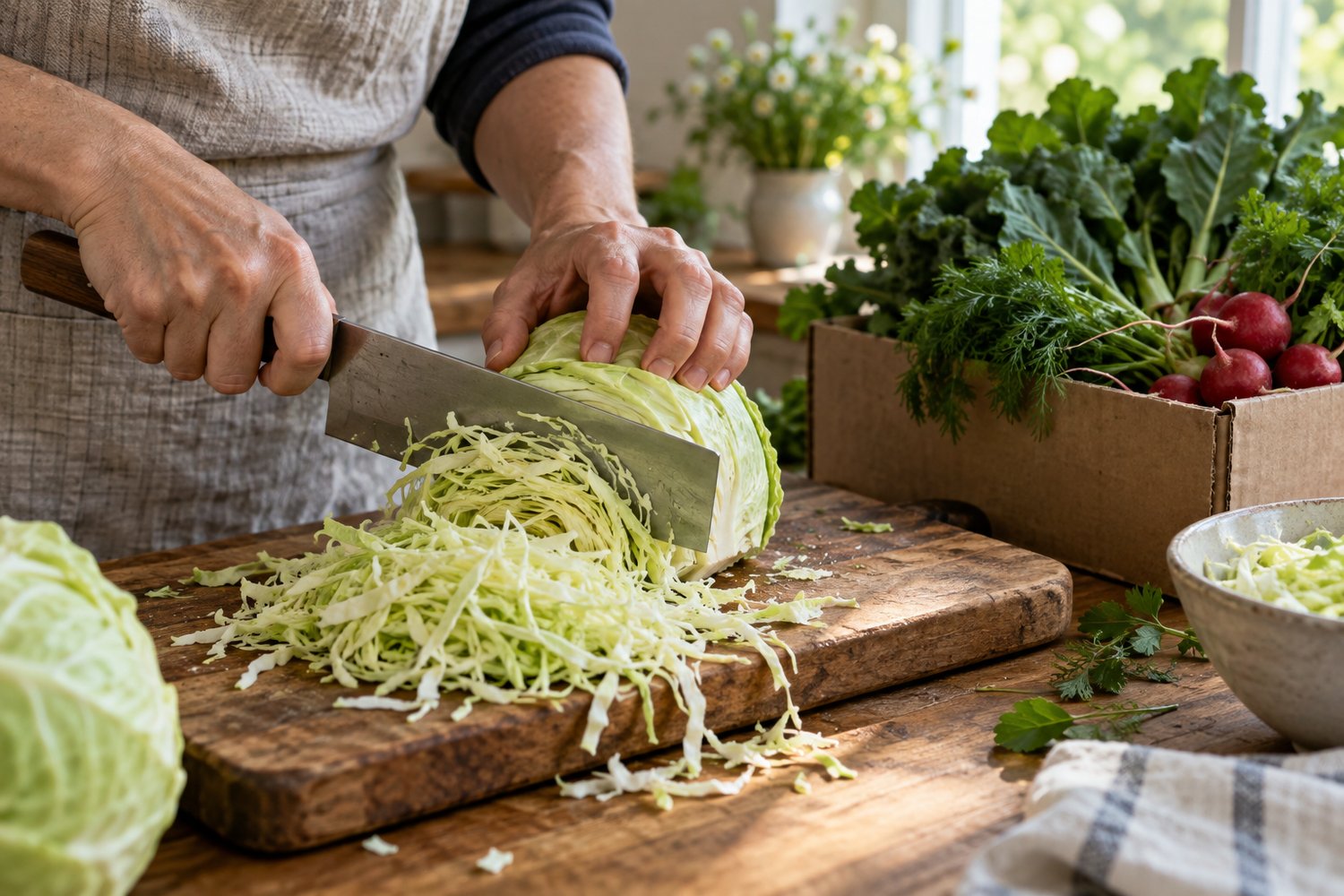
Every week the box arrives. A farm share, a CSA box, a farmers’ market haul: whatever it’s called in your house, it comes with more vegetables than you’d ever buy on purpose. A whole cabbage. Two bunches of greens. A fistful of herbs. Radishes with the leaves still on.
And every week, usually on a Sunday, the person you live with turns it into the week’s food. You’ve watched it happen: the board comes out, the sink fills, and an hour goes by in washing, trimming, slicing and bagging.
If you’re looking for a gift for that person, look at what they’re cutting with. There’s a Japanese knife made for exactly this job.
I’m a designer in Japan, not a chef, and I haven’t cooked with the knife below. What follows is what the knife type is for, the shop’s listed specifications, what it can’t do, and what to check before you order from Japan. It isn’t a health claim: a knife won’t make anyone eat better. It’s a tool for time they already spend.
A second knife, not a first one
This page is for someone who already has a main knife: a Western chef’s knife, a santoku, whatever they reach for first. If they don’t, start with santoku or gyuto as a gift, which covers choosing a first all-purpose knife.
A nakiri is an addition. It earns its place in a kitchen where the biggest job of the week is a large amount of vegetables, and where that job repeats, week after week, all season.
What a nakiri does differently
The shape. A nakiri has a rectangular blade with a flat edge and a squared-off tip. Most chef’s knives have a curved edge meant to rock on the board; a santoku sits in between. The nakiri’s straight edge meets the board along its whole length.
What that means on the board. A straight push-cut, or a slice down and forward, goes all the way through in one motion. That suits a stack of chard leaves, a head of cabbage cut into ribbons, a pile of scallions, a bundle of herbs. MUSASHI JAPAN, a Tokyo knife retailer, describes the nakiri as made mainly for vegetables and “best for cutting Napa and cabbage into strips”, and also suitable for peeling, chopping and making garnishes (MUSASHI JAPAN, nakiri).
The wide blade. The tall, flat side is handy for scooping cut vegetables off the board and into a bowl or a storage box, which is half of what a Sunday prep session is.
What it isn’t for. Bones, frozen food and very hard things, and nothing that needs a twisting cut. A dense winter squash is better started with a heavier knife, and then finished with the nakiri once it’s in pieces. Nor is it a knife for carving meat or filleting fish.
One knife to consider: Sakai Takayuki 33-Layer VG10 Damascus WA Nakiri, 160mm
Who it suits. The person who works through a CSA box or a big market haul every week, already has a main knife, and is comfortable washing and drying a knife by hand.
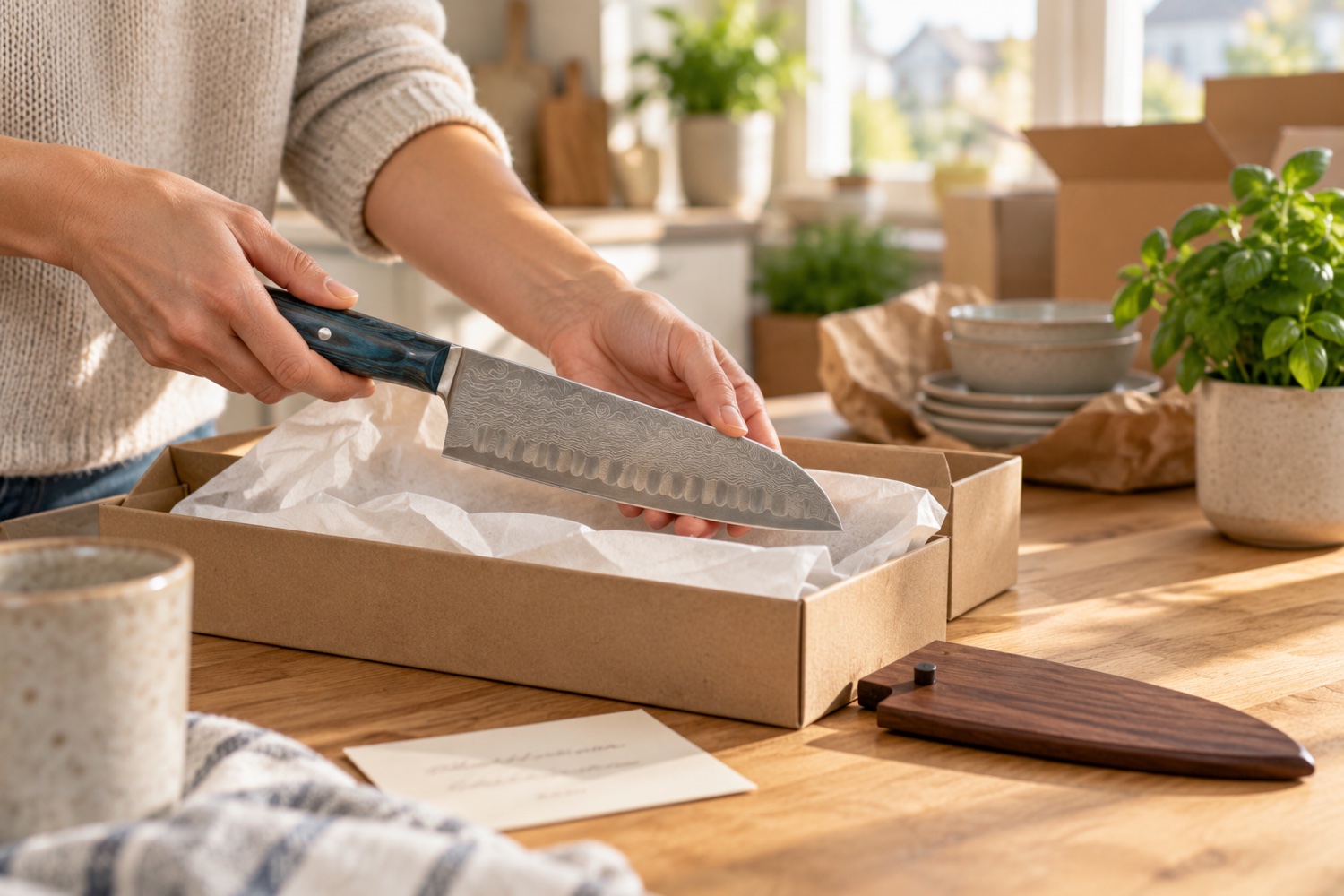
Why this one. It’s a good-looking version of a practical tool: a VG10 stainless core in a hammered 33-layer Damascus blade, double-edged so it works in either hand, and a Japanese-style (wa) handle in zelkova wood, which is light and sits a little further back in the hand than a Western handle. At 160mm (6.3 in), it’s long enough to go through a cabbage half and short enough for an ordinary cutting board. It’s made in Sakai by Aoki Hamono under its Sakai Takayuki name.
Hocho Knife’s specifications. VG10 core, 33-layer hammered Damascus stainless, HRC 60–61; blade spine about 2.0mm; double-edged; blade 160mm (6.3 in); overall 315mm (12.4 in); 140g (4.9 oz); Japanese zelkova handle with a mahogany bolster; made in Japan. Price $163.99.
Know before you buy. Blade length and overall length are different numbers: 160mm is the edge, and the whole knife is 315mm. VG10 is a stainless steel, which helps against rust, but it still needs hand-washing, drying straight away and, over time, sharpening on a whetstone. The Damascus pattern is the look of layered steel, not a measure of sharpness. If the person puts every knife in the dishwasher, a Japanese knife isn’t the gift it looks like.
Sheath and wrapping. A sheath or blade guard is sold separately. Hocho Knife offers gift wrapping and a message card as options at checkout.
If this one isn’t quite right
Two alternatives from the same shop, both listed as in stock on 26 September 2026:
If you’d rather spend less, or prefer a Western handle. The Kanetsune KC-940 nakiri, at $97.99 instead of $163.99. Hocho Knife’s specifications: VG1 high-carbon stainless, HRC 59–60, hammered finish, double-edged; blade 165mm (6.5 in), spine about 2.0mm, overall 285mm (11.2 in), 174g (6.1 oz), laminated-wood Western-style handle with a stainless bolster; made in Seki by Kanetsune. Same shape and the same job; a slightly softer steel that will need sharpening a little sooner, and a heavier knife in the hand.
If they don’t have a good everyday knife yet. A nakiri is a second knife. If their main knife is a supermarket one, a santoku does more for them: vegetables, meat and fish on the same blade. The Kanetsune KC-950 santoku is 165mm (6.5 in), 120g (4.2 oz), 295mm (11.6 in) overall, made in Seki, at $49.99. Buy the nakiri when they already have something they like to prep with.
Before you buy: questions about their kitchen
- What’s their main knife now? If it’s a santoku, a nakiri is a close cousin with a flatter edge; if it’s a big chef’s knife, the nakiri is a shorter, flat-edged knife just for vegetables.
- How much do they actually cut? A full box every week is the case for a nakiri. An occasional salad isn’t.
- Board and storage. A wooden or soft plastic board, and somewhere the edge won’t knock against other knives: a block, a magnetic strip, or a sheath.
- Handedness. Double-edged, so either hand is fine.
- Care. Hand-wash, dry, sharpen on a stone. If you’re not sure they’ll sharpen, a medium-grit whetstone makes the gift complete. More in the Japanese knife care guide.
- Ask, if you can. “What’s the knife you’d reach for if you had a whole cabbage to get through?” is a natural question on a Sunday.
A bit of context
Vegetables and fiber are having a moment. Whole Foods Market’s Trends Council, in its forecast for 2026 published in October 2025, listed “Focus on Fiber” among the year’s food trends. That’s a grocer’s forecast about products on shelves, not evidence about CSA boxes or knives. The reason to give a nakiri is simpler: the person already spends that hour at the board, and it’s a tool made for it.
How to order from Japan
Okurimono Japan doesn’t sell anything. “Check Price” goes straight to the knife’s page on Hocho Knife, an online knife shop that ships from Japan. You pay Hocho Knife directly, and it handles shipping, returns and support.
What Hocho Knife’s Shipping & Returns page states, as of 26 September 2026:
- Shipping. A handling time of up to 3–5 business days after payment, then FedEx or EMS (Japan Post). Free shipping on orders over $250.
- US duties. The shop says customers may pay part of the duties at checkout, and that it advances and pays all import duties on eligible orders, so nothing more is due on delivery. Some couriers may charge the recipient a small administration fee. Check the total at checkout before you pay.
- Returns. Within 14 days of delivery, for items that are unopened and unused with all original packing; the shop pays return shipping only when the error was its own.
Prices on this page are Hocho Knife’s US dollar prices on 26 September 2026; the knives were listed as in stock, and prices and stock change. More on ordering from Japan is on How to Buy; for a first all-purpose Japanese knife, see the weekend cook’s santoku.
One more thing
The gift isn’t the vegetables, and it isn’t a new habit. It’s a better tool for an hour they already enjoy, the one you’ve watched from the other side of the kitchen every Sunday.
Frequently asked questions
- What is a nakiri?
- A Japanese vegetable knife with a flat, rectangular blade and a squared-off tip. MUSASHI JAPAN describes it as made mainly for vegetables, best for cutting napa cabbage and cabbage into strips, and suitable for peeling, chopping and making garnishes.
- Why give a nakiri to someone who already has a chef's knife or santoku?
- Because it does one repetitive job, a lot of vegetables, in a particular way. The flat edge meets the board along its whole length, so a straight push-cut goes through a stack of greens or a cabbage half without rocking. It's an addition for someone who preps a lot of vegetables, not a replacement for their main knife.
- Can a nakiri cut squash, bones or frozen food?
- It's not the right knife for those, and it shouldn't be twisted in a cut. Very hard winter squash is better started with a heavier knife.
- Is the nakiri in this guide right- or left-handed?
- Hocho Knife lists it as double-edged, meaning it's sharpened on both sides and works in either hand.
- How do you look after it?
- Hand-wash and dry it, use a wooden or soft plastic board, and sharpen it on a whetstone when it dulls. VG10 is a stainless steel, which helps with rust, but it still shouldn't be left wet or put in a dishwasher.
- Does it come with a box or sheath, and can it be gift-wrapped?
- Hocho Knife says it offers gift wrapping with Japanese-inspired designs and a message card as options when you order. A sheath or blade guard is a separate purchase; ask the shop which fits.
- What about shipping, duties and returns to the US?
- Hocho Knife ships from Japan by FedEx or EMS after a handling time of up to 3–5 business days, with free shipping on orders over $250. For US orders it says it advances and pays import duties on eligible orders, so nothing more is due on delivery. Returns are accepted within 14 days of delivery for unopened, unused items with all original packing.