The Best Japanese Knife to Give a Sashimi Lover (2026): Yanagiba, Sujihiki or Deba?
 By Kotaro·Updated Sep 26, 2026·7 min read
This guide contains affiliate links: if you buy through one, the shop may pay me a small commission at no extra cost to you. How I choose and how I earn
Which knife suits someone who loves sashimi: the single-bevel yanagiba, the double-edged sujihiki, or a deba for whole fish. Five knives from Hocho Knife with the shop's own specifications, and what to check before you give one.
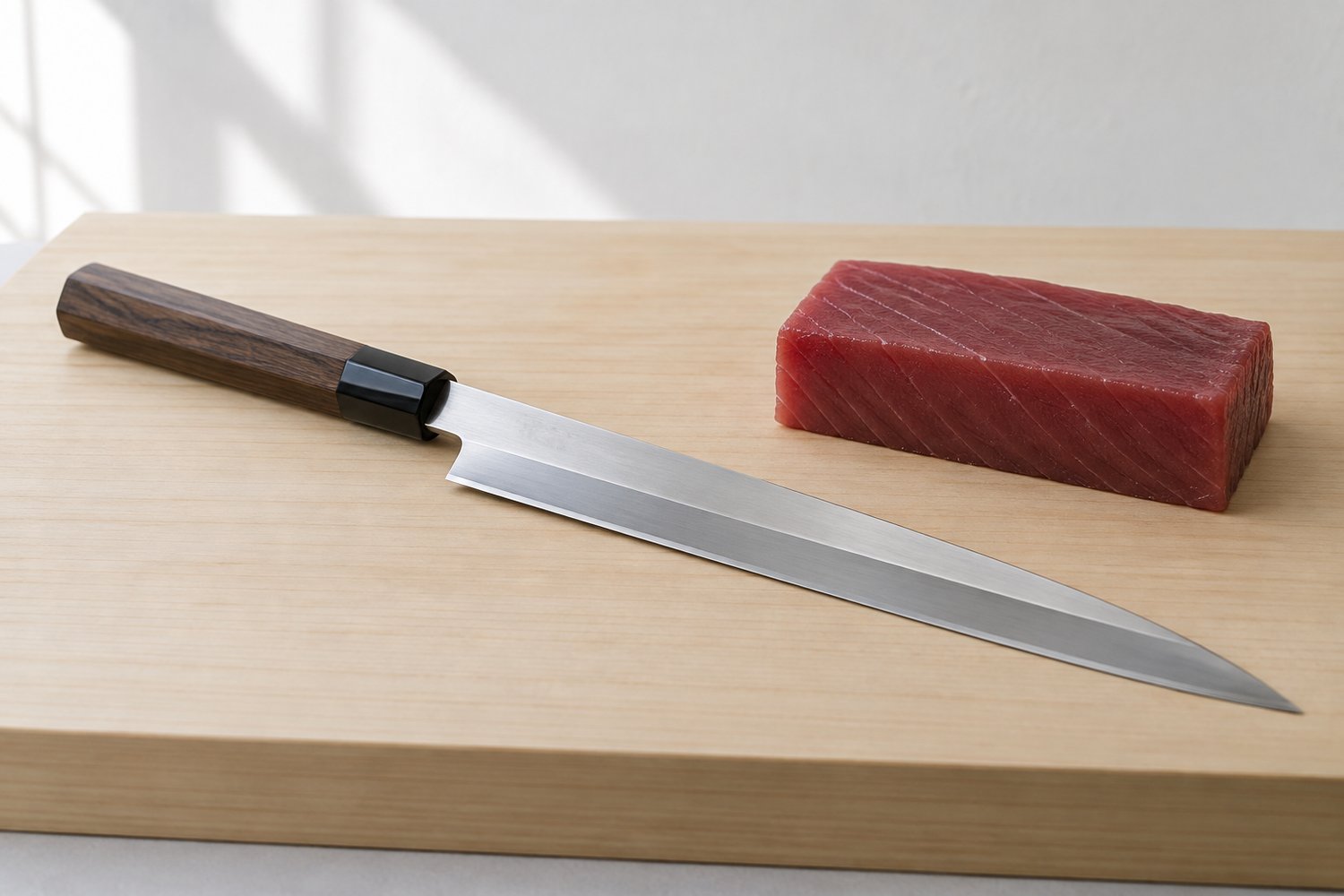
If you’re giving a knife to someone who loves sashimi, the traditional answer is a yanagiba, the long, single-bevel slicer. If they’re left-handed or cook broadly, a sujihiki is often the better gift. A deba is the third knife worth knowing. It isn’t for slicing; it’s for taking a whole fish apart. This guide explains which one fits which person, and what to check before you order.
I’m a designer in Japan, not a chef, and I haven’t used the knives below. What follows is what knife shops, including MUSASHI JAPAN and Korin, state about the types, and what Hocho Knife lists for the knives, and what that means for choosing a gift. Sashimi is a dish where the knife shows in the result. MUSASHI puts it this way: dull or unsuitable knives can crush the delicate texture of fish, which affects both taste and appearance (MUSASHI, knives for sushi and sashimi).
Who this is for
- The person who already makes sashimi at home. They buy fish to eat raw, and slice it with a chef’s knife because that’s what they have. A yanagiba is the traditional tool for that job.
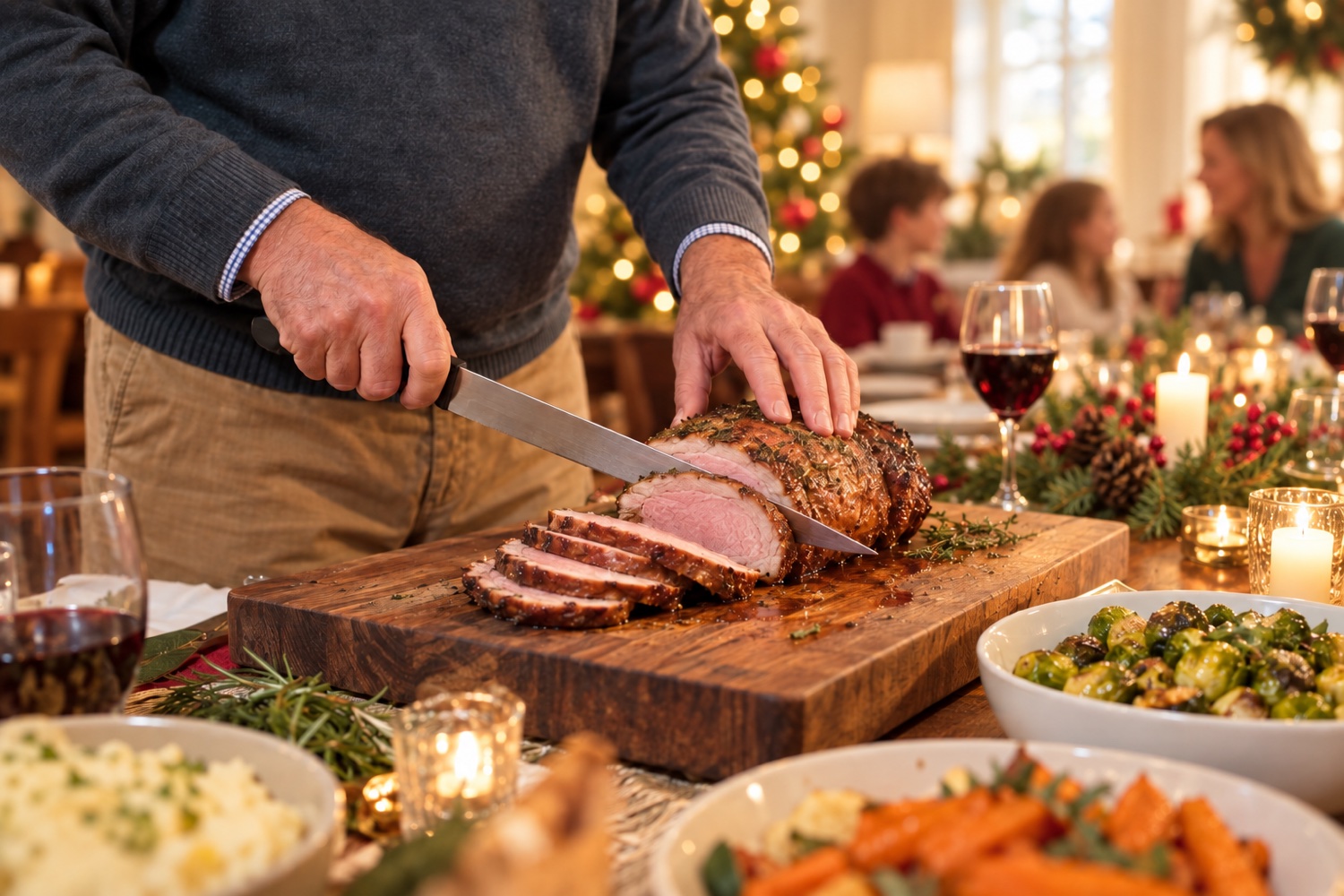
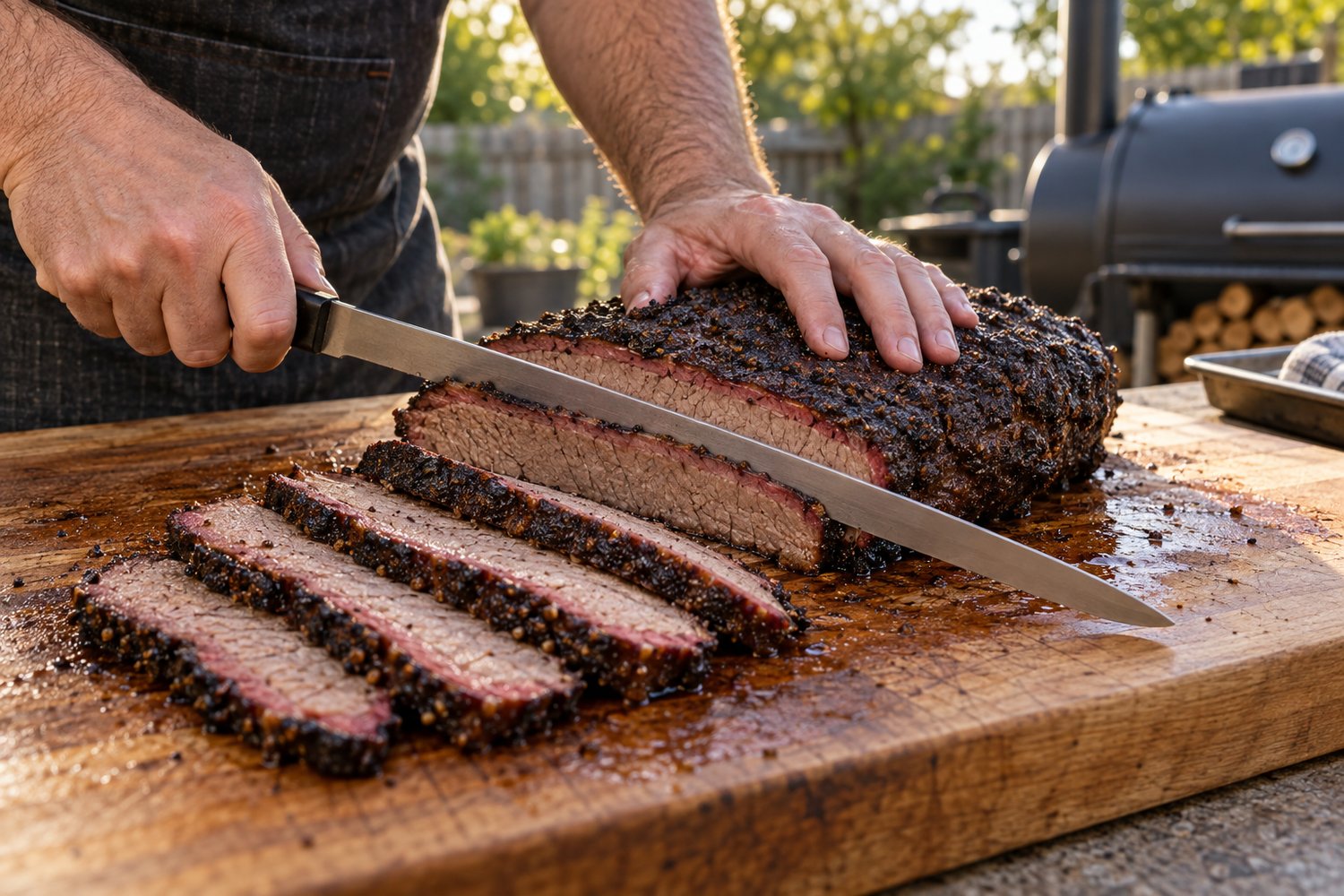
- The cook who does a bit of everything. Fish sometimes, roasts often, and they’d rather not look after a carbon-steel blade. A sujihiki slices fish and does the Sunday roast too.
- The angler. They bring fish home whole. What they need first is not a slicer but a deba, the thick knife that takes a fish apart. There is a separate guide to a deba-and-yanagiba set for the angler who cleans their own catch.
- The sushi-night host. If they make hand rolls and maki more often than sashimi, start from the menu instead: see which knife you need for a sushi night at home.
- Occasions: a milestone birthday, a housewarming for someone who cooks, a retirement gift for a lifelong fish person, or a wedding gift for a couple who host.
Why the knife matters for sashimi
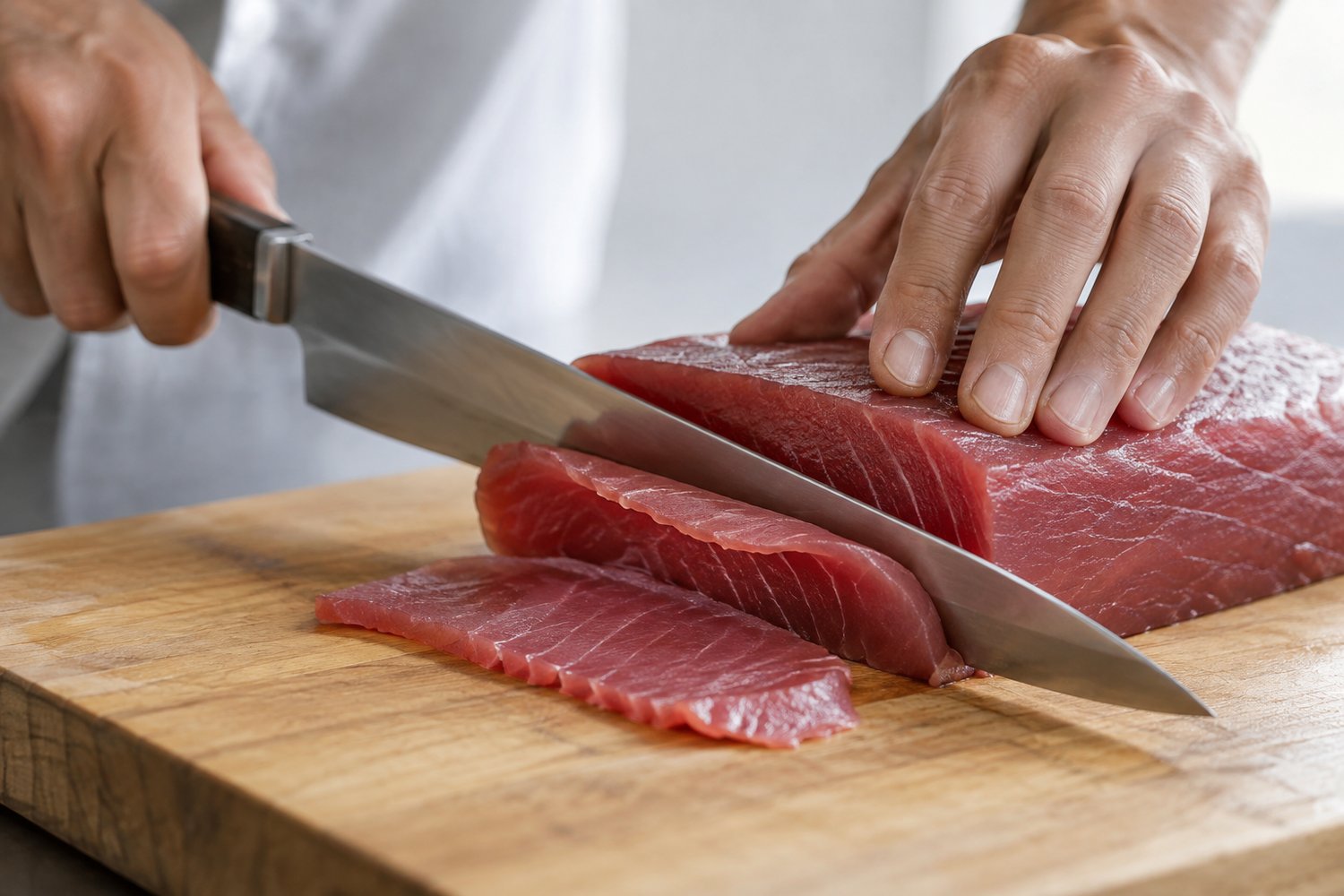
Sashimi is cut, not cooked, so the slice is the craft. Two features of the yanagiba are aimed at it.
- Length. MUSASHI describes the yanagiba’s long, thin blade as able to slice through an ingredient in long, uninterrupted strokes. Its technique guide recommends pulling the knife through soft foods like fish, from the heel to the tip, to minimize damage (MUSASHI, push cut vs pull cut).
- A single bevel. Traditional Japanese knives are sharpened on one side only. Korin explains that the back is slightly concave, which reduces contact and friction with what’s being cut (Korin, Japanese knife FAQ).
That doesn’t make other knives useless for fish. MUSASHI describes the gyuto, the Japanese chef’s knife, as good for slicing fish for sushi and sashimi too. The yanagiba is the specialist version of that job.
The picks
All five are sold by Hocho Knife, an online knife shop that ships from Japan. Specifications are from Hocho Knife’s product pages. Prices are the shop’s US dollar prices on 26 September 2026, before shipping; all five were listed as in stock, and prices and stock change.
The traditional choice: a Blue No.2 yanagiba from Sakai Takayuki
The classic form. Blue No.2 (aogami 2) is a carbon steel. The handle is magnolia wood with a buffalo-horn ring. It’s sold under the Sakai Takayuki name of Aoki Hamono, a knife company in Sakai, one of Japan’s best-known knife-making cities; for its history, see how tobacco knives helped build Sakai’s knife tradition.
Why carbon steel: MUSASHI JAPAN’s sushi-knife guide says high-carbon steel holds a sharp edge longer and is favored by traditional sushi chefs. It also says these knives need regular maintenance to prevent rust. Give it to the person who will enjoy that routine.
Hocho Knife’s specifications. High-carbon Blue Paper No.2 steel; single-edged (right-handed); blade 270mm (10.6 in); overall 415mm (16.3 in); 180g (6.3 oz); magnolia handle with a buffalo-horn ring; made in Japan. Price $417.99.
The stainless yanagiba: Masamoto VG, 270mm
The same length and single-bevel form, in stainless steel from Masamoto, a long-established Tokyo knife maker. Stainless steel is more forgiving if the knife isn’t dried straight away, though it should still be washed and dried after use. Choose it over the Blue No.2 version if the recipient is busy or shares a kitchen — and if the budget stretches: it’s the most expensive knife on this page.
Hocho Knife’s specifications. Cobalt-alloy VG10 with stainless steel; blade 270mm (10.6 in) per the product name; made in Japan. The page lists a Masamoto magnolia saya (sheath) as an option but doesn’t list the weight or overall length. Price $823.99.
The double-edged alternative: a sujihiki
A sujihiki is a long, narrow slicer with a double-edged blade, so it works in either hand and is sharpened like a Western knife. Korin describes it as a slicer for boneless protein and as the Western-style equivalent of the yanagi. It is related to the yanagiba, not the same knife. It slices roasts and raw meat as well as fish. If you’re unsure which person you’re buying for, this is the practical choice.
Hocho Knife’s specifications. Sakai Takayuki 33-layer hammered Damascus with a VG10 core, HRC 60 ±1; double-edged (either hand); blade 240mm (9.4 in); overall 365mm (14.4 in); 185g (6.5 oz); pakka wood handle, Western style; made in Japan. Price $175.99.
For whole fish: a small deba
If the person catches or buys fish whole, the slicer is the second knife they need. The first is a deba: a sturdy fish knife with a thick blade, used for working around the bones and cutting them. This one is a small ai-deba, a slightly thinner deba, in stainless steel — sized for mackerel, trout and other smaller fish rather than a whole salmon.
Hocho Knife’s specifications. Sakai Takayuki INOX stainless (AUS8A); single-edged (right-handed); blade 120mm (4.7 in); overall 240mm (9.4 in); 150g (5.3 oz); magnolia handle; made in Japan. Price $112.99.
The small one they’ll use daily: a petty knife
Not a sashimi knife. A petty is a second knife for fine work: decorative cuts, vegetables and peeling fruit. It pairs well with any of the knives above.
Hocho Knife’s specifications. Sakai Takayuki 33-layer hammered Damascus with a VG10 core, HRC 60 ±1; double-edged (either hand); blade 150mm (5.9 in); overall 255mm (10 in); 87g (3.1 oz); pakka wood handle; made in Japan. Price $136.99.
Before you buy
- Handedness. The yanagiba and deba here are single-edged and right-handed. Hocho Knife lists left-handed versions separately. For a left-handed recipient, choose the sujihiki, or check those listings.
- Steel and care. Blue No.2 is carbon steel and can rust if left wet. The stainless knives here are more forgiving. Match the steel to the person, not to the price.
- Size. Measure the cutting board and the counter. The Blue No.2 yanagiba is 41.5cm (16.3 in) long overall and need room to draw the whole blade through the fish.
- Cutting board. Use a soft plastic or wooden board, never twist the blade, and don’t cut bone, frozen or hard items with a slicer.
- Sharpening. All of these are sharpened on a whetstone. Single-edged knives use a different method from double-edged ones (MUSASHI, how to sharpen). If the recipient doesn’t own a whetstone, consider adding one.
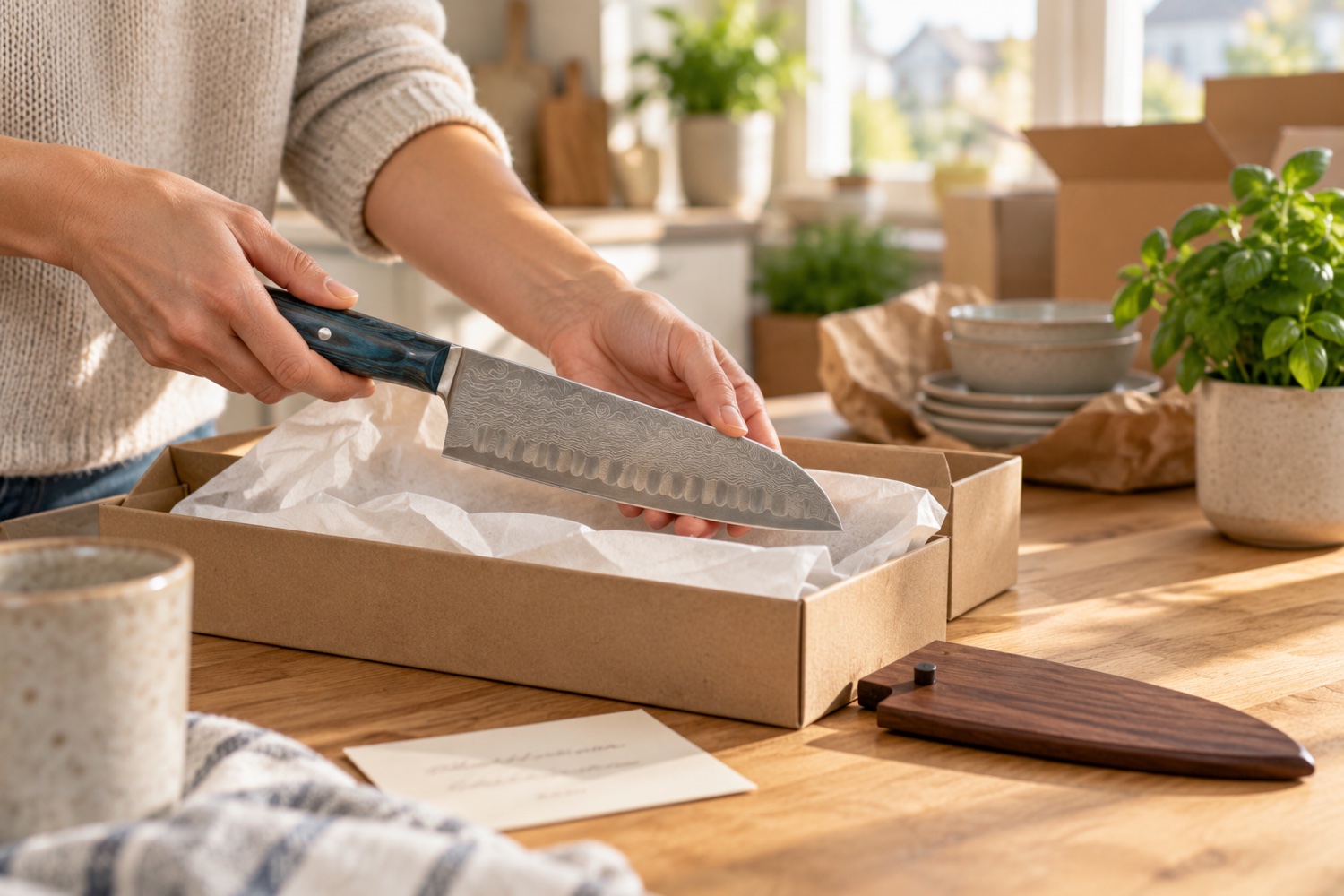
- Sheath and wrapping. Sheaths are sold separately where listed. Hocho Knife offers gift wrapping and a message card as options at checkout.
- Not for: someone who will put it in the dishwasher, or a first-time cook who wants one knife for everything. In those cases a santoku is the kinder gift; see the weekend cook’s santoku. Day-to-day care is in the Japanese knife care guide.
How to buy from Japan
Okurimono Japan doesn’t sell anything. “Check Price” goes straight to the knife’s page on Hocho Knife, an online knife shop that ships from Japan. You pay Hocho Knife directly, and it handles shipping, returns and support.
What Hocho Knife’s Shipping & Returns page states, as of 26 September 2026:
- Shipping. A handling time of up to 3–5 business days after payment, then FedEx or EMS (Japan Post). Free shipping on orders over $250.
- US duties. The shop says customers may pay part of the duties at checkout, and that it advances and pays all import duties on eligible orders, so nothing more is due on delivery. Some couriers may charge the recipient a small administration fee. Check the total at checkout before you pay.
- Returns. Within 14 days of delivery, for items that are unopened and unused with all original packing; the shop pays return shipping only when the error was its own.
Prices on this page are Hocho Knife’s US dollar prices on 26 September 2026; the knives were listed as in stock, and prices and stock change. More on ordering from Japan is on How to Buy; more knives are in the Kitchen Knives category.
Frequently asked questions
- What knife do Japanese chefs use for sashimi?
- Traditionally a yanagiba: a long, narrow, single-bevel slicer. Korin, the New York knife shop, describes it as used in a long drawing motion to cut precise slices of sashimi, and lists it with the deba and usuba as the core of a traditional Japanese knife collection. It is a specialist knife for slicing fish, not an all-purpose one.
- Yanagiba or sujihiki — which one should I give?
- Give a yanagiba if the person already slices their own sashimi and would enjoy learning to sharpen a single-bevel blade. Give a sujihiki if they cook broadly, are left-handed, or you're not sure. It's double-edged, works in either hand, and slices roasts as well as fish.
- Are Japanese single-bevel knives right-handed only?
- A standard yanagiba or deba is ground for a right-handed user. Left-handed versions exist; Hocho Knife lists them separately with 'Left Handed' in the name. Korin notes that a traditional single-bevel knife can't be converted from one hand to the other. If the recipient is left-handed, choose a double-edged knife such as a sujihiki, or check the shop's left-handed listings before ordering.
- Will a carbon-steel knife rust?
- It can, if it's left wet. Blue and White steels are carbon steels, and they need regular care to prevent rust. Wash and dry the knife right after use. If the recipient is unlikely to do that, choose a stainless version.
- What size yanagiba is right for a home cook?
- The yanagiba in this guide are 270mm; shops also list shorter and longer ones. A longer blade covers more of the fish in one stroke but needs more room on the board and counter. Measure the cutting board before choosing: the Blue No.2 yanagiba here is 41.5cm (16.3 in) long overall.
- Can the knives be gift-wrapped?
- Hocho Knife says it offers gift wrapping with Japanese-inspired designs and a message card as options when you order. A sheath or blade guard is a separate purchase; ask the shop which fits.
- What about shipping, duties and returns to the US?
- Hocho Knife ships from Japan by FedEx or EMS after a handling time of up to 3–5 business days, with free shipping on orders over $250. For US orders it says it advances and pays import duties on eligible orders, so nothing more is due on delivery. Returns are accepted within 14 days of delivery for unopened, unused items with all original packing.
- How do you sharpen a yanagiba?
- On a whetstone, using the method for single-edged knives. MUSASHI's guide describes working mainly on the front face, with less work on the flat back, and finishing on the back. It takes some practice. If the recipient has never used a whetstone, consider a sujihiki, or add a whetstone to the gift.